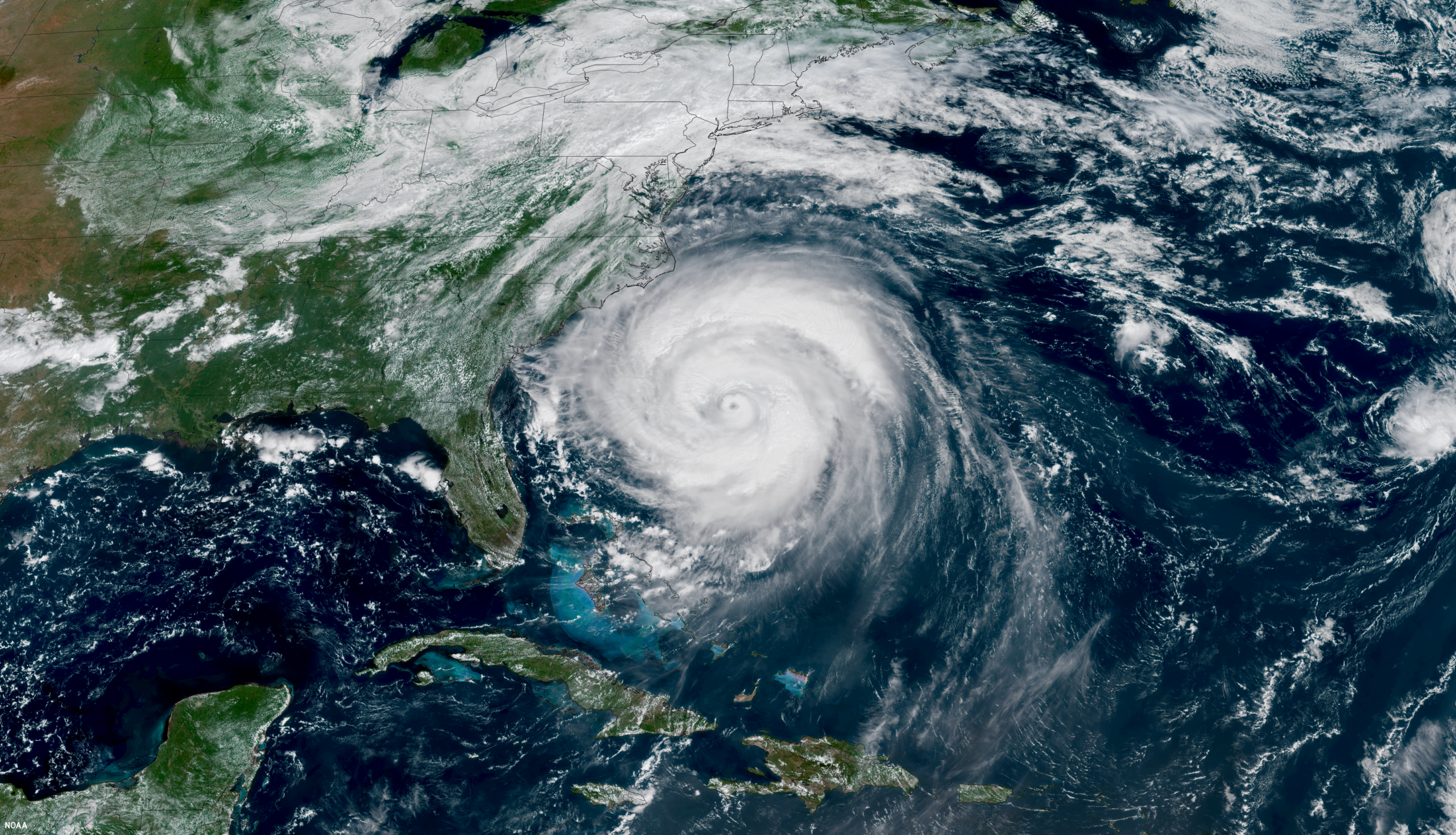
Image of Hurricane Milton from NOAA’s GOES-16 satellite on Oct. 8, 2024. (Image credit: NOAA)
Each year hurricane season lasts from June through November. NOAA released its 2025 Hurricane Season outlook on May 22. This year, the NOAA is predicting between 13 and 19 named storms will form in the Atlantic. Of those, they are predicting 3-5 major hurricanes.
While we can’t prevent serious storms from occurring, businesses and property owners can effectively prepare and mitigate possible damage. These key recommendations will help you manage risk.
Step 1: Have a Plan
Long before a storm is brewing, create (or refresh), your emergency plan. Your company’s plan should include clearly defined roles and responsibilities and preventative measures to protect your building, employees, and tenants in the event of a hurricane. Identify who is on the incident response team and ensure you know the communication protocols that will be used to manage offsite workspace in case of an emergency. Preparing your team well in advance of a weather-related disaster will help everyone know exactly what to do when the time comes.
After your emergency plan is secured, have a disaster recovery plan in place that will keep your business afloat if the worst happens and you experience a significant hurricane. An important element of this is having an updated and active contact list for key service vendors, suppliers and contractors. You will want to build relationships with these providers in advance. When a heavy storm hits, everyone will need the same products at the same time. Establishing these supply lines beforehand allows you to pre-negotiate rates and guarantee availability, helping to save time and money. If you haven’t already determined key service vendors in case of a disaster, your insurance broker may be able to help identify preferred partners that are preapproved by your insurance carrier(s).
While preparing supply and service continuity, also consider your employees. Have at least one first aid kit, several flashlights, and ample nonperishable food and water on hand in case the hurricane causes you and your staff to remain onsite. Even items like a hurricane preparedness backpack can come in handy under unexpected circumstances with a combination radio/phone charger, emergency whistle, and rain ponchos.
From a property perspective, ensure your buildings and structures can be adequately protected to mitigate potential damage when a hurricane looms. Be prepared to board up buildings, cover windows and landscaping, and fasten anything that could blow away or fall. This can significantly reduce damage and losses that occur.
Step 2: Enable Weather Notifications
Forewarned is forearmed. Enable settings that allow the National Weather Service and other government agencies to automatically send Wireless Emergency Alerts to the cell phones of your business leaders and those employees identified on your incident response plan. If a hurricane is going to make landfall sooner than expected or become stronger over time, the sooner you know, the faster you can enact your emergency plan properly. Other trustworthy sources for national weather news are the Federal Emergency Management Agency and the American Red Cross. Both have reputable hurricane alert apps.
Step 3: Protect Your Data and Important Documents
Take the time to back up important documents and IT services to avoid losing valuable assets. Severe weather often results in power outages and other service disruptions that may last longer than anticipated, and key files should be safely stored and easily accessible in the event of a hurricane. Not only is this important for overall business operations, but it is also easier to adjust claims when you can show files are current and were recently backed up. You may also want to keep copies of vital documents in a cloud storage application or in an offsite climate-controlled storage facility so you can still have access to the documents, even if your building has taken a hit during the storm.
Step 4: Confirm your Insurance Coverage
A critical part of emergency planning is to ensure you have the insurance coverage necessary to meet your organization’s needs – based on its location and its risks for floods and windstorms. Part of this analysis requires that your locations are insured for the appropriate value(s). We recommend that clients periodically confirm the accuracy of their building values by working with Graham to determine average construction costs per square foot and/or by obtaining a property appraisal from a qualified third party.
We also recommend that organizations calculate their probable business losses in the event their locations were partially or completely destroyed in a natural disaster. Organizations should work with their broker to ensure that their Business Income coverage accurately reflects the potential losses to the organization if they were no longer able to conduct operations at a particular location. This calculation should also be reviewed and updated regularly to ensure it reflects the organizations’ potential lost profits.
Finally, it is imperative that you understand whether any part of your property is located in a Flood Zone. Organizations should work with their broker to understand whether a separate National Flood Insurance Program (NFIP) Policy is needed and what coverage, if any, is available their property policy.
Step 5: Protect Your People and Your Business
In the event that your business is impacted by a hurricane, prioritize taking care of your people first. When they are safe and supported, implement your disaster recovery plan. As soon as it is safe to assess damage, you will need to describe all physical damage in detail and record all the damage or loss with photos and videos. Your inventory of lost and damaged items will be critical through the claims process. We recommend contacting your Graham Company claims consultant to guide you through the process and ensure that you meet all critical deadlines to substantiate your claim.
In the event of structural damage, or damage to power, gas, or water systems, please contact a professional as soon as possible. Safety first.
Additional Resources
Please contact your Graham Company account manager, safety consultant or claims consultant if you have any questions regarding hurricane preparedness. In the event of an emergency claim situation, please immediately contact our Emergency Claims Line at 888.472.4262.
If interested in learning more, check out these extra resources on hurricane preparedness below.