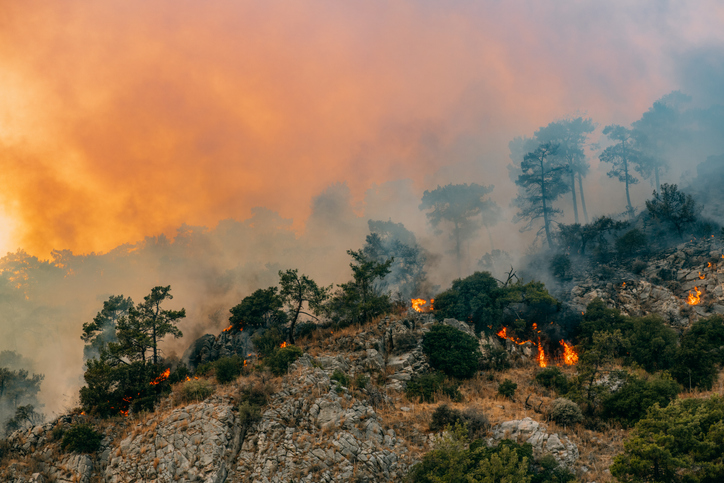
Wildfire season can impact job sites far beyond the fire perimeter. Smoke can travel long distances, conditions can change quickly, and outdoor crews may face added exposure risks—especially during extended shifts. The goal is to stay situationally aware, reduce exposure where possible, and use the right controls to protect worker health.
Below are practical steps safety leaders can use to plan for wildfire smoke and related hazards during outdoor work.
1) Start with local air quality (and keep checking it)
Before the shift—and throughout the day—check air quality for the specific work location (by ZIP code). A reliable tool for this is AirNow, which reports the Air Quality Index (AQI). AirNow uses a numeric and color-coded index designed to show whether air quality is healthy or unhealthy.
Because conditions can change hour to hour, plan to monitor air quality throughout the shift and be ready to adjust work plans if readings worsen.
2) Identify who may be at higher risk
Smoke exposure can be more serious for workers with underlying heart or lung conditions (including asthma or chronic obstructive pulmonary disease (COPD)). Also keep in mind that older adults, children, and expectant mothers are more likely to be affected by smoke.
Supervisors should consider individual risk factors when assigning tasks, breaks, and work locations.
3) Reduce exposure using practical controls
If you have crews rotating between outdoor and indoor spaces (trailers, vehicles, indoor staging areas), use those spaces to your advantage.
- Keep indoor air as clean as possible: Use air conditioning when available and keep doors and windows shut.
- Avoid adding indoor pollution: Avoid activities that increase indoor pollution such as burning candles, smoking indoors, and using fireplaces.
- Consider room air cleaners: Room air cleaners can help reduce particle levels indoors, provided they are the right size and type. The EPA states that we should not use an air cleaner that generates ozone because it puts more pollution in the air.
4) Outdoor work practices to limit take-home exposure
Smoke particulates can collect on clothing and gear. Simple habits can reduce “take-home” exposure. Change clothing after working outside and put clothing directly in the wash. Particulates can infiltrate clothing and then be inhaled by the worker or their family once indoors.
5) Respiratory protection: use the right type and follow the rules
The Environmental Protection Agency (EPA) says dust masks aren’t enough to avoid both large and small particles in smoke. The EPA suggests an N95 filtering facepiece masks, if available, to help protect lungs.
It’s important to note that occupational use, including voluntary use by employees, of filtering facepiece masks as defined by OSHA must comply with the relevant portions of OSHA’s Respiratory Protection standard.
6) Keep situational awareness on national fire activity
Wildfire activity can be widespread and fast-moving. Daily updates can help safety leaders understand the broader operating environment and anticipate impacts on travel, staffing, and jobsite planning.
A recent national update (July 14, 2026) noted elevated activity across the U.S., including 46 uncontained large fires and National Preparedness Level 4, with roughly 17,000 personnel assigned to incidents nationwide. The same update emphasized staying aware of conditions, following evacuation orders, monitoring local emergency alerts, and checking for fire restrictions and closures before heading outdoors.
As the MMA Wildfire Resource Center highlights, wildfires are increasingly a year round risk across the U.S., driven by higher temperatures, drought, and growing development in Wildland Urban Interface areas. For organizations with outdoor workers, that shift matters because smoke, heat, evacuations, and access restrictions can disrupt operations quickly and create real employee safety and liability exposure if plans are unclear. The best time to act is before conditions deteriorate: monitor local alerts and AQI, confirm evacuation and communication protocols, and make sure your wildfire preparedness approach supports both worker protection and business continuity so you are not forced into last minute decisions when every minute counts.