• Client Access
Graham Company
  • Call: (888) 472-4262
  • Who we work with
    Construction Manufacturing & Distribution Health & Human Services Real Estate Financial & Professional Services Other Industries
  • What we do
    Property & Casualty Employee Benefits Surety Services Personal Lines Cyber Solutions Risk Financing Our Specialties
  • Who we are
    Our History Our People Our Community
  • Our Difference
    The Graham Way Innovation Technical Development Safety Services Claims Management
  • Careers
    Our Job Board
  • Knowledge Center

Risk Playbook: Episode 9 – General Michael Linnington

July 17, 2023

Risk Playbook: Episode 9 – General Michael Linnington

About Risk Playbook

Risk Playbook gives you an inside look at the evolving landscape of business risk, as told by the most reputable leaders from a cross-section of industries. No high-level executive has made it to where they are today without taking a few calculated risks. In today ’s competitive environment, the best leaders know how to evaluate strategic risks and opportunities to propel their organizations forward while protecting their bottom lines.

Join host Mike Mitchell as he sits down with key business leaders to discuss the lessons they’ve learned throughout their careers and the entrepreneurial mindset that will help you come out on top.

On episode 9, Mike is joined by LTG (ret) Michael Linnington, CEO of Wounded Warrior Project (WWP) –an organization that strives to honor and empower wounded veterans. In 2003, WWP was founded as a small organization and since then it has grown into a national success story with almost 1,000 employees and nearly 200,000 veterans enrolled. Before becoming CEO of WWP in 2016, General Linnington had a remarkable 35-year career in the U.S. military, which included three tours in combat operations. He is a highly decorated veteran who earned several awards and achievements for his military service.

In this 30-minute episode, General Linnington talks about how WWP is helping address the challenges currently facing veterans, lessons learned in managing risk in military training and combat, and his experiences as a leader.

Your browser does not support the video tag.

Subscribe on: Spotify, Amazon, Google Podcasts, Apple

Hello, everyone, and welcome to our ninth episode of Risk Playbook. I’m Mike Mitchell, Vice Chairman of Graham Company, and today, I’m joined by General Mike Linnington, CEO of Wounded Warrior Project.

General Linnington had a remarkable 35-year career in the United States military, which included three tours in combat operations. He’s a decorated veteran, earning several awards and achievements for his military service, including a Bronze Star, Legion of Merit and Distinguished Service Medal. It was also recently announced that General Linnington will serve as Grand Marshal for this year’s New York Veteran ’s Day Parade, which is produced by the United War Veterans Council and is considered the nation’s largest Veteran ’s Day event.

In 2016, General Linnington was named CEO of Wounded Warrior Project. He is responsible for the day-to-day operations, and he works to implement the organization’s strategic vision.

Under his leadership, Wounded Warrior Project has grown substantially while continuing to serve the needs of veterans who have fought for our great nation. His career is a true success story. His leadership and commitment to our country and to our veterans should be commended.

Mike, thank you so much for being my guest on Risk Playbook today.

Mike, thanks for having me on, and what a treat for me to be on the Risk Playbook podcast.

This opportunity for me to talk to a General in the United States Army is an extreme honor. And I will say also, on behalf of Graham Company and our audience, I’d like to thank you for your 35 years of service.

Thank you, Mike. I was very fortunate to be a member of the United States Army. I spent 35 years, it’s something I will cherish for the rest of my life.

Well, it’s a great story, and I’d like to start at the beginning. I know you’re a graduate of Army West Point. I also know that you went to high school at Valley Forge Military Academy, which I’m somewhat familiar with, because it’s right up the street from my alma mater, Villanova University, and it’s in the suburbs of Philadelphia, which is 25 miles from where my company is headquartered. So, it sounds like you had an interest in the military from a very young age?

Yeah, Mike, that’s very true. I came from South Jersey, actually, a family of six boys reading Jack Linnington Catholic family, all boys. One of my brothers was born with a significant birth defect. And my parents said, “I think we need to give our kids a little discipline.” So they sent five of the six of us to Valley Forge Military Academy, and I graduated from Valley Forge in 1976 and then went to West Point.

And when you were there, was that when you realized that you wanted a career in the military?

My dad was a post-World War II Army soldier. We didn’t know a lot about what my dad did in World War Two, post-World War II Germany, he didn’t talk about it much like many of his generation. I fell in love with the military at Valley Forge, and Valley Forge gave one nomination a year to each of the service academies –Army, Navy, Air Force and Coast Guard Academy. My senior year I applied for one of those honors school nominations, it was called. I didn’t think I’d get the nomination. And then when I did, I said, “I really like this way of life,” and I went to West Point planning on spending a very short time at West Point, and maybe in the army afterward.

With graduation from West Point comes a five-year commitment. I planned on a five-year commitment and joining my family’s real estate insurance business in New Jersey, a very successful real estate and insurance business. And that never came to fruition. I graduated from West Point and 35 years later, I took the uniform off.

There you go. Another interesting point is it’s a real family affair for you. Right? Tell us about that.

It is. While I was at West Point, I met my future wife, Brenda. She graduated a year behind me at the Academy in 1981. We got married the day after she graduated, May 28. And really the story goes from there. I mean, we’ve been married 42 years. Our son is a graduate of the class of 2005 at West Point. He’s one of three members of his class that had both West Point parents, father and mother, my wife and I. So, he is one of three firsts. First generation of graduates to have both parents having graduated from West Point. Women were new to the military academy starting in 1980. And our son is today in Bulgaria.

Well, it’s a really cool family legacy, and thanks to Brenda and your son for their service as well.

Let’s talk about who is Wounded Warrior Project and what do you do? I know it was founded post-9/11 in 2003. I understand you have close to 1000 employees. Your goal in 2023 is to raise $400 million. You have 230,000 veterans enrolled in your program with an additional 71 each day. And I think myself and our audience have a clear visual of what you do as it relates to our warriors with physical injuries and disabilities. But Wounded Warrior Project is way more than physical injuries and disabilities, right? Tell our audience the scope of what you do.

Yeah, Mike, it’s a great question. I’m glad you asked it because there’s a lot of lack of awareness of what we do and the opportunities we provide to wounded veterans. Since our nation was attacked on 9/11, more than 3 million, almost 4 million now, young people have served in the military. Those coming back from war zones, Iraq and Afghanistan primarily, over the years came back with physical injuries. And that’s how Wounded Warrior Project got our start. A group of volunteer citizens were delivering backpacks filled with comfort items bedside at Walter Reed for the young soldiers, Marines, Navy Corpsman, Navy SEALs coming back physically wounded. Think about it. When you get wounded on the battlefield, the first thing the medics do is cut your clothes off. So when you get back to the military hospitals, you literally have nothing except the loose-fitting hospital gown that you’re wearing. So these backpacks had socks, t-shirts, comfort items, toiletries, playing cards, Walkman radios, things for injured veterans to help them feel normal again. And with that backpack came a promise that Wounded Warrior Project would be there with them throughout their rehabilitation and recovery. And that mission is maintained.

Today, we have teams that launched at Regional Medical Center and at Walter Reed. And over the past 20 years, as you said, Mike, we’ve grown to a very robust organization of almost 1000 people in 25 locations across the country. Our headquarters is right here in Jacksonville. And we provide a host of different no-cost programs and services to help wounded, injured and ill and their family in their transition. Those are physical health and wellness programs to help those physically injured heal.

We have a very large investment in mental health programs, we do financial wellness and job placement programs, we do benefits counseling, and we have a program that serves those with more serious injuries to continue to get care at home versus being institutionalized.

As you said, we have a very austere goal for 2023. It’s hard to believe we’re halfway through 2023 already, but we’re heading into 2024, and as you mentioned, an organization of 230,000 registered wounded warriors, wounds being identified as either physical or invisible, and we’re growing by 71 registrants a day.

Today, as we’re on this call, 71 more young veterans will call and ask for help in the programs and services we provide. So, we have a lot on our plate, clearly, and a lot of work to do. And I hope our nation never forgets the 1% that raised their hand and say, take me, protect our freedoms and way of life, and then when they do come home wounded, ill, or injured, continue to support them in their recovery.

And Mike, people don’t realize, I don’t think, the extent of the emotional trauma. I mean, everybody hears about PTSD, but it’s rampant in terms of emotional distress, mental health and even financial issues, right? I mean, you’re there to provide programs and counseling. So, it’s a lifeline for them.

It’s true. In the last couple of years, certainly not just for wounded veterans, all veterans, all citizens, it’s been a couple of tough years. COVID set us back, like it set everybody else back. We deliver programs in all 50 states in person. Those programs may be an adaptive sporting event. It could be a connection event, it might be a peer support group. It might be a Project Odyssey, which is an outward bound-like event where veterans go through challenging physical events during the day like ropes or skiing or hiking or adaptive snowboarding or whatever, and then at night, with a counselor around the firepit, talking about their experiences.

Recently, the bigger challenges we’re facing are in the areas of mental health and financial wellness, inflation, the cost of living, the stress on jobs and the underemployment of many veterans, which is really challenging them. And if you haven’t been to the grocery store or the gas station recently, the dollar doesn’t go as far. So, we’ve answered, already, this year, more than 1800 calls for help –food, rent, utilities –to keep wounded veterans from losing their home or not being able to put food on the table. And that’s about a 50% increase over last year’s requests. So that’s significant. It’s something I’ve been talking to a lot of folks about how do we continue to improve the quality of life of those we serve, help them heal mind, body and spirit, and then in the same vein, help them find employment that can then help them provide for their family without asking for a financial system that’s just to put food on the table?

Well, as a business, it’s an amazing success story because 20 years ago, you started really just a grassroots effort, something relatively small and basic with some of the toiletries and everything that you gave the people when they came back with nothing. It’s also heartbreaking. So God bless what you do. And it adds a new meaning for people to say to veterans or people still in the military, thank you for your service, because there might be invisible wounds that you really can’t see. So great job.

Thank you, Mike. And that’s one thing I really want your listeners to understand today. First of all, I’m blessed to be on the podcast. But if anybody listening to the podcast today has a relative, a friend, a neighbor, a loved one, a brother or sister or themselves, if they’re in need of anything to help them in their transition from military life to civilian life, or if they need help in the areas I described, connect with us, Wounded Warrior Project, go to the website, sign on as an, alumni and get the help you’ve earned.

Well, Mike, it’s obvious that you’re retired from the military, officially, but you’re still servicing. So, thank you.

This is Risk Playbook. And when I think of someone like you, I think of the military. You deal with managing the ultimate risk: life and death. When it comes to the business world. I don’t know we were ever trained for managing risks. It was on-the-job training. But that doesn’t work in the military, I’m sure. You were a brigade commander in Iraq and Afghanistan, high-risk situations.

How does the military, whether it’s Army, West Point, or the military, how do they train the future officers to manage risk? I’m assuming there’s countless hours of analysis, preparation, strategic planning, etc. Tell us a little bit about how you learned to manage risk.

That’s a wonderful question. And I appreciate the opportunity to talk on Risk Playbook about risk. And certainly, as you said, time deployed in combat is the ultimate risk. Lives are on the line, and you have to make sure your organization is prepared to manage those risks. And we do have a formal process for managing risk in the military, which I’ll get to in just a second. But as you might imagine, the ultimate risk mitigation comes in really incredible training before you go into combat, giving leaders the opportunity to experience tough leadership environments in training before they’re in combat. And then lastly, having the best equipment in the world. The Pentagon’s budget this year is over $800 billion dollars. Half of that budget goes to equipping our forces with the best equipment in the world, no matter what service you’re in.

As a leader, you also have to understand the capabilities of the unit you’re leading. Special Operations Command tier one units, Army Rangers, Delta, Navy SEALs, they’re asked to do things differently than traditional units like I was a part of, even though I was in a pretty spirited organization in the 101st airborne division as you talked about.

And then there are different ways of managing risk and training from what you do in combat. The process is the same, but in combat, you have an added dimension called the enemy. The enemy always gets a vote and we plan for the enemy in a very unpredictable environment. And that’s why we usually fight at night where we can take advantage of our incredible night fighting capabilities, night vision, infrared lazing, identification of friend and foe, all things that give us a direct advantage. And then we rehearse. Mike, we rehearse operations, religiously and judiciously. Hours of rehearsals for a short one-hour operation usually take place. And for every operation I’ve been involved in, whether it was in training or in combat, those that went extremely well or those that didn’t go as well usually go back to how well you managed your risks and how well you’ve rehearsed. And then we conduct very extensive after-action reviews after every combat operation where you look at what happened, who did what, why did it go right? Why did it go wrong? And what can you do differently next time? The formal process is pretty straightforward, and I think it’s pretty similar to what goes on in the civilian world.

We have a composite risk management process where leaders identify the hazards. They assess those hazards, identify the risk associated with those hazards, they develop controls, and then they make decisions and they supervise. If you’re doing a night combat jump in training, you have hazards on the ground, you have hazards in the aircraft, you have hazards in the environment, the wind and things like that. You manage those risks by putting safety officers on the ground, in the aircraft, going through pre-combat checks, we do the same thing in combat. And really, at the end of the day, it comes down to leader involvement at every level, and then two levels above that leader making the risk management decision as to whether the unit has adequately mitigated the risks that are going to take place in that operation, and then approve the operation going forward.

Funny story, Mike, if you have an extra minute, one thing that we really have to separate, not separate, but understand that in training, you have the process, but the process, sometimes, if you’re not careful, can impede what you do in combat. When we crossed the berm into Iraq in March of 2003, I was leading a 1500-vehicle convoy in combat right behind Third Infantry Division. And it was a pretty scary time, as you might imagine, and a lot of casualties around us. In the middle of the night, our convoy stopped, and I called the lead vehicle and I said, “Why are we stopped?” and he said, “Sir, the troops are tired, and I don’t have enough licensed drivers.” And we were in Iraq at the time. And I said, “I get that we don’t have licensed drivers. But I guarantee we have enough soldiers on the back of these trucks that can drive them.” And it’s Iraq, by the way, nobody’s checking driver’s licenses. So, you have to be careful that leaders are in the right mindset, understand the environment, understand the situation and then leaders make the call. Again, it all comes down to tough, realistic training in advance and leaders making sound judgment calls in the operation to manage those risks in a really tough environment.

We’re very fortunate for strong-willed people that have the stomach for that. It’s got to make managing risks, you said, in the civilian world, it’s similar. It feels like it’s not even close to similar, right? Managing risks today in the environment you’re in is not anywhere close to what you had to deal with before, right? But yet, I’m sure there are lessons learned that help you for whatever those risks are.

Absolutely, I think it really comes to not shirking responsibilities for, first of all, making sure that the risk management process is done correctly, no shortcuts. And then second, taking personal accountability and responsibility for the decisions you make. As you said, companies make risk decisions every day. They make these decisions with their eyes wide open. I think there’s a bit of art and science to making risky decisions. The art, as I mentioned, is the best equipment, the best training, the best leaders, I mean, that’s the science. But then the art really comes down to the experience of the individual that’s got to make the call as to whether you do X, Y or Z or pursue the enemy or pull back or whatever the case might be. Leaders make those decisions in corporations around the world and certainly in the line of work you’re in as well.

Let me switch gears for a second. I want to come back to risk. But you mentioned leaders and leadership. And I was thinking, as you were talking, getting through some of the things and some of the stories you told, it’s not only about risk management, but it’s about being a good leader.

This might be a good time for me to give a little bit of a shout-out to one of your Wounded Warrior board members, Bill Selman, who also is a colleague of mine at Graham. We actually have several graduates of Army West Point as Bill is. And I find the leadership skills of people that graduate from West Point is off the charts. I’m assuming that West Point does something to get that out of their cadets. And then, of course, being in the military, there has to be a lot of leadership training.

So, tell us some of the things that you learned or how you learned, what does the military do? What does West Point do to get the best out of people when it comes to leadership?

I am blessed, truly blessed to have Bill Selman as one of my board members, board of directors. And not surprisingly, two of his classmates are on my board and my boss is as well. And I think just that alone, if you think about it, goes to what West Point and other service academies and time in the military do for leaders. I am as close to my West Point classmates as Bill is to his classmates as I am with my own biological family. I think it comes from four years of shared experience at West Point. Some of those experiences are very positive, and some of them are pretty tough as you might imagine. But at the end of the day, what West Point teaches you is how to be an effective leader, how to share adversity, how to overcome adversity, how to be resilient, willing to lead as a member of a team.

No individual can win by themselves. They do so on the strength and the backs of those they lead and the team they build. And at the end of the day, I think my experience at West Point taught me, more than anything, how to overcome adversity and how to be an effective member of a team. I carry that with me in all my assignments from Second Lieutenant at Fort Ord, California, all the way through my time here at the Wounded Warrior Project.

I know Bill and his classmates, three of my 12 bosses, I’m very grateful for their leadership. It’s an amazing thing what they do for Wounded Warrior Project as volunteers, giving back their time and talent to guide the future direction of an organization of our size and scale. And it’s really, really important as we go forward to focus on what’s most important.

I’m always fascinated by these discussions with people like you. The leadership capabilities and how people can be inspiring. To listen to you talk, it really is inspiring, and it’s no wonder you were a General.

Let me go back to risks, Mike, for a second. I had the pleasure of interviewing Mike Buddie who is the athletic director at Army West Point. We talked a little bit about risk. And of course, he talked about the risk associated with having a bunch of cadets at the Army-Navy game. But he also talked about reputational risk as one of their biggest risk factors and something that he paid really, really close attention to. Just curious, is reputational risk something that Wounded Warriors has to worry about? And if so, explain that to me.

We do focus on it as well, Mike. And by the way, I listened to that podcast with Mike Buddie. It was a fascinating podcast, a great discussion.

I think at the end of the day, when you lead an organization or you are part of an organization that lives in a fishbowl, you have to think about reputational risk. And certainly, we do that at Wounded Warrior Project. We have a very strong culture among the nearly 1000 employees we spoke about earlier. And our culture is based on three things. Every individual teammate, and we call them teammates, that’s how they see themselves, has three things. First, they have to be mission-driven, second, guided by core values, and third, a pleasure to work with. Mission-driven, focus on the warriors and their families. Second, guided by core values. The Army has a set of core values, every organization has a set of core values and we do as well. And then third, be a pleasure to work with.

Core values, from my perspective, and certainly our leadership team’s perspective, include a strong accountability for one’s actions. Loyalty is one of our core values, not to each other, necessarily, but to the mission and to those we serve. And that is about managing reputational risk, it’s about holding each other accountable for their actions, calling out things that you might not agree with, discussing things you have to do in the future, and then knowing that at the end of the day, sometimes bad things happen to good people and good units, and having the transparency to address those challenges openly, and then fix it. And that’s true in the military as well. Unit accountability, transparency and having leaders committed to fixing problems. It all goes to the reputation of any unit. I know Mike Buddie focuses on that, like every leader of any organization that’s higher profile, as we do collectively.

So, do you feel like you live in a fishbowl?

I do a little bit and I’m not worried about that. I say, I live in a fishbowl. I think our organization lives in a much bigger fishbowl. Our country is a bit divided today. I think that’s probably an understatement, but I’ll just say a bit divided. Mike, we want to make sure that, reputationally, we don’t get caught up in any of the divide that’s going on across our country today, especially the political divide.

We’re solely focused on those we serve and those that support them. And at the end of the day, that’s our mission and we’re going to stick to it. We get asked all the time to opine on things that are not central to our mission. And if you choose to opine on those things, you bring your reputation, both personally and organizationally into that discussion. So, before you opine on those issues, if you feel strongly enough that you think your voice is important, you have to do it with your eyes wide open. So that’s what we do. We have those discussions nearly every week. And we want to stay true to ourselves and those we serve.

That’s probably wise advice for any organization, right? What my personal beliefs are, my political positions are, etc., they’re mine. They’re not my company’s. It’s not going to help my company to speak on those so I understand exactly what you’re saying.

I have a great board of directors, Bill Selman being one of them, Mike. They put us through the wringer on these things all the time. And they are very clear in their guidance to our management team about things that we should opine on and things we don’t. But clearly, it’s really about staying focused on our mission and those we serve.

How about the risk of future fundraising? When I think of your organization, I think, well, you know what? We’re not at war today. We’re not in conflict. For many, it’s probably out of sight, out of mind.

On the other hand, I also understand that the military is really struggling with recruitment. And as a result, your message to touch people’s hearts might be forced to paint a picture that doesn’t help recruitment. And so how do you, number one, the fact that we’re not in conflict, does that hurt fundraising? Or does it matter? And secondly, how do you manage the middle ground of what you’re doing versus, arguably, the military, which is somewhat connected to you, the message they’re trying to deliver?

Mike, you either have my office bugged, or you’ve been following me on my calendar, because I’ve been very involved in these discussions over the last several months, as you might imagine, as our Defense Department’s, frankly, struggling right now to inspire young people to serve. While at the same time, we’re not at war. We’re more than a year out of Afghanistan. Recently celebrated, not celebrated, but commemorated the one-year anniversary of our withdrawal from Afghanistan. You don’t see on TV evening news every night wounded, ill and injured coming back. Those pictures, that outpouring of support for veterans coming home that you see on TV every night, helped us grow to the organization we are today. And we have seen a slight decline in our fundraising to meet the needs of those we serve, much like we did after the end of other conflicts, Vietnam, Korea, etc.

We are right now working closely with DOD and other nonprofit organizations to ensure that we tell the story of the benefits that come with military service, the opportunities that come with having the training, the mentorship, the leadership development, and frankly, the support that comes not just from the Department of Veterans Affairs, but organizations like ours that help the 1% that get wounded, injured or ill that come home that need help get the help they need, and then continue to lead and grow and be successful in civilian life.

So, we’re working very closely with organizations to make sure that we don’t do anything that dissuades young people from joining the military. And in fact, we spend a lot of time in communities with our veterans, very present to show them that if you do serve and you do get injured, there’s life after injury, and it’s usually a pretty optimistic one if you receive the right support and if you take advantage of that support that’s offered.

Well, it sounds like you’re doing good work, and I wish you the best of luck for continued success. Maybe, to wrap up our conversation here, Mike, can you share a story about one wounded warrior who reflects your mission and the impact you can have?

The best story is a warrior I just saw named Dan Nevins. Dan Nevins, what an inspiration he is. Critically wounded in Iraq, bilateral amputee, both legs missing. Dan went through a very difficult nearly two-year recovery period at Walter Reed. And then when Dan came out of the hospital, he pledged to those that were involved in the incident that took his legs, and it was a vicious improvised explosive device explosion that took his vehicle and the vehicles around it, he pledged that he’d continue to live and continue to give back.

Dan is an absolutely inspirational leader, role model and gifted speaker. He’s a yoga master, a scratch golfer, a family man and a grandfather. Dan’s path to recovery, healing and giving back as a peer mentor and a mentor for other critically injured service members is really inspiring.

Sadly, about two years ago, Dan came down with cancer after he had completely healed and lived life to its fullest, traveling, speaking and doing yoga to audiences of tens of thousands of people all over the world. Dan got very seriously ill with colon cancer, and the colon cancer surgery went south. Dan got sepsis and was in critical condition. We thought we were going to lose him right here at Mayo Clinic, here in Jacksonville. But Dan’s spirit, his inspiration, his will to live, his desire to be there for his children and his wife just pushed him through and Dan came looking as fit as ever after a year’s worth of recovery, and spoke to half of our workforce about how important it is what we do every day, and how we need to bring our best selves to work every day as he does and live life to its fullest.

As Dan tells his story, he always relates it back to those that didn’t come home with him as a result of that incident. And now he’s living life every day on their behalf, recognizing their sacrifice. And I think that’s an important thing to remember, as our nation should always remember those that made the ultimate sacrifice for our country.

Wow, that’s an unbelievable story. Obviously, Dan’s a hero. It’s a miracle that he’s able to survive and just accomplish everything he’s accomplished with those kinds of disabilities and challenges. So good for him. I can’t stop there. I have to say after hearing that story, how can our listeners help Wounded Warriors?

The best way is to go to our website at WoundedWarriorProject.org. There are lots of ways to get involved locally in your community as a volunteer. Clearly, donations to help our warriors heal their mind, body and spirit are always appreciated.

We have some upcoming events that we’re really excited about, some community fundraisers that are going on, golf tournaments, 5k events and things like that. We could always appreciate the support.

As you said, Mike, people think that because the war in Afghanistan is over, the need has gone away. The need is as great today as it’s ever been with 71 a day signing up for what we’re providing and the opportunities we provide to warriors to help heal mind, body and spirit, get access to the benefits they’ve earned and then get the financial counseling and connection with companies to find employment really, really helps them for years to come and their families.

So, I just ask folks, go to our website, get involved and support our mission, however you might choose to do so.

Mike, this was such an inspiring and compelling discussion. I can’t thank you enough for taking the time to meet with me and sharing your story with our audience. It’s tremendous.

And as always, I want to thank our listeners for tuning in. As Mike said, if you want to learn more and contribute to the cause, please visit WoundedWarriorProject.org.

Until next time, I’m Mike Mitchell, and this is Risk Playbook.

Share: TAGS: Insurance Risk Management Mike Mitchell

RECENT POSTS
Mental Health Awareness Month: What the Data Tells Us—and What Employers Can Do

May 19, 2026

Can “Non-Combustible” Construction Be Your Source of Long-Term Savings?

May 05, 2026

Strengthening Healthcare Cyber Resilience with HHS’s Updated RISC Toolkit

Apr 07, 2026

Stay Cyber Safe this Season: Avoid These Common Holiday Shopping Scams

Dec 01, 2025

RELATED POSTS
The WA Cares Act and the Future of Long-Term Care Insurance

Nov 14, 2025

Trend Report: The Collaboration, Innovation & Risk Management Behind Penn Medicine’s $1.5 Billion Hospital Pavilion

Aug 02, 2018

Trend Report: Disaster Recovery: Success Through Collaboration

Apr 18, 2019

Client Feature: Allan Myers

Aug 14, 2019

Risk Playbook: Episode 8 – Evan Greenberg

January 24, 2023

Risk Playbook: Episode 8 – Evan Greenberg

About Risk Playbook

Risk Playbook gives you an inside look at the evolving landscape of business risk, as told by the most reputable leaders from a cross-section of industries. No high-level executive has made it to where they are today without taking a few calculated risks. In today’s competitive environment, the best leaders know how to evaluate strategic risks and opportunities to propel their organizations forward while protecting their bottom lines.

Join host Mike Mitchell as he sits down with key business leaders to discuss the lessons they’ve learned throughout their careers and the entrepreneurial mindset that will help you come out on top.

Graham Company is an insurance broker and risk management consultant. Information and recommendations shared in this podcast discussion should be evaluated by your organization’s attorneys and internal team before inclusion in any company policy or risk management plan.

Episode 8 – Evan Greenberg

On episode 8, Mike is joined by Evan Greenberg, Chairman and CEO of Chubb – the world’s largest publicly traded property and casualty insurance company and the leading commercial lines insurer in the U.S. Greenberg has spent more than 45 years in the insurance industry, spearheading the strategic decisions and global acquisitions that have grown Chubb into an $81 billion company, with 34,000 employees in 55 countries and territories.

In this 30-minute episode, Greenberg discusses what it’s like being in the business of risk taking, how he conceptualizes risk and what the future holds for the insurance industry. In addition, he shares his leadership style and the culture he ’s proud to be a part of at Chubb. 

Subscribe on: Spotify
, Amazon
, Google Podcasts
, Apple

Hello everyone, and welcome to our eighth episode of Risk Playbook. I’m Mike Mitchell, Vice Chairman of Graham Company, and today I’m joined by Evan Greenberg, Chairman and CEO of Chubb.

Evan has spent more than 45 years in the insurance industry, spearheading the strategic decisions and global acquisitions that have grown Chubb into an $81 billion company, with 34,000 employees in 54 countries and territories. Today, Chubb is the world’s largest publicly traded property and casualty insurance company, and the leading commercial lines insurer in the United States.

With a keen understanding of the global economy, Evan is an outspoken advocate for a productive business relationship with China, and our country’s role in leading a rules-based vision for global trade. He even serves by presidential appointment, advising the United States on trade policy and negotiations.

Evan ’s business successes and advisory roles say a lot about who he is as a leader –dedicated to understanding the forces that shaped the world and unafraid to take well-timed risks.

Evan, I can’t wait to jump into our discussion. It’s an honor to have you here. Thank you for your time.

Thank you for having me. I look forward to the discussion.

Good. So, we’ll get into some things in terms of your insights on taking risks, the insurance industry, the global economy, and so on and so forth. But I’d really like to start off by asking you –you grew up in a family that was deep rooted in the insurance industry. Your father, Hank, led AIG and now Starr. Your brother at one time led Marsh McLennan &Companies. I’m curious what it was like to grow up in a family within the insurance industry. How did that influence you?

Well, first of all, my granddad was in the insurance industry, so goes back even further.

That’s even better.

He was with Prudential, in Florida, he was a regional manager. We grew up in a reasonably normal household, and insurance was hardly on my mind. Sure, I gained a certain amount of knowledge and perspective simply through osmosis, of hearing it from my dad, and those I was surrounded with. I grew up with different aspirations of what I was going to do. I entered the business when I was 20 years old. I didn’t go to college –that’s a whole different story we won’t get into today. My brother Jeff entered the business after me, because he went to law school after college, and then he joined AIG later.

So, my formative years about insurance fundamentally didn’t come from family. I grew up in the normal family life and then I entered AIG to start rating automobile insurance policies. I think I’ve done every job you could possibly do in an insurance company. So, even if I’m not the brightest guy in the world, I learned the business from the ground up.

Evan, I love hearing stories about how people get started. You started from the ground up –and look where you are now. For my audience ’s benefit, you might be the smartest guy in the room. I’ve been in the business for 35 years and I have not come across a leader like you.

Let’s move to the insurance industry. You’re in the risk business. When I got into the business in 1985, I was always told insurance companies don’t make money selling insurance, they make money on the float. Interest rates were 12 or 13 percent, and they could have money and expenses and claim payments that exceeded premiums but it was the investment income that allowed for a bottom line.

Today, it’s a whole different ball game for sure. You have global warming –and Hurricane Andrew comes to mind. What we’re faced with today, with destruction of property because of weather patterns. We have medical inflation, we have runaway and unpredictable jury verdicts, we have cyber exposures that didn’t exist back in 1985. How do you maneuver through all these varying influences and changes in a way that allows you to take risk and still turn a profit?

So, when you entered the business in 1985, you had a notion of how an insurance company works, a successful insurance company, that is diametrically opposed to how I see it. An insurance company that tries to operate by making money on the float, the graveyard is full of companies that tried to do that. Because fundamentally, it belies and it’s going to answer your question …

What is the real business of insurance? A company that doesn’t focus on whether it’s insurance or any other industry, on the real purpose they exist and be the best at that, and deliver a service to society, of benefit to society, while they’re making a decent return on capital and reward to their shareholder, will not exist long.

Chubb is an underwriting company. We are in the business of risk taking. That is, our whole culture is built around that. All of what we do in our norms of behavior is what culture is about, it reinforces the basic principle of who we are, which is a risk-taking business. Underwriting is about your ability to conceptualize risk, whatever kind of risk it is around the world …conceptualize the risk in the environment it’s in. If you can conceptualize it, then you have a decent chance at being able to structure it, price it and assume it. That’s exactly what we do for a living in 55 countries across hundreds of different kinds of risk exposure in different environments. That’s what juices us. That’s what our passion is about. That’s what our reward system is all built around.

And by the way, the so-called float, or investment income, is the second way we make money. But if we can’t make money in our basic business of underwriting, we have failed. Chubb is a company that in terms of underwriting margin, the amount of money we earn on underwriting, outperforms the industry every year, over any period of time, by a large margin.

I never thought of it that way back in 1985, you learn something every day and you’re right. That’s probably why many of the companies that I knew back in 1985 don’t exist today.

How do you deal with some of these changing situations? Cyber, for instance, comes to mind Evan because it didn’t exist 10 years ago. Today, it’s rampant, it keeps coming. Insurance is about predicting the future, right? How do you get your hands around something like that?

No one can predict the future with any certainty, obviously. If you think you can, I don’t think you’ve conceptualized risk properly. You can create frameworks for how you think about risk in an organized fashion that maybe helps to ensure you think about it in a reasonably thorough way. That’s what modeling is about. It doesn’t speak truth, it speaks about an organized way of thinking. You have to know that there’s always basis risk around any of that.

Cyber, look for the insurance industry to remain relevant, Chubb included, the way we think about risk, it’s dynamic. Risk is changing, because of all the things about society, internal and external, are constantly changing. The legal environment is constantly evolving. Social norms are evolving. Society’s affluence is evolving, legal theory around responsibility, constantly evolving. Science is producing so many new and wonderful ways to live and at the same time risk. It’s constantly evolving. Climate change in the environment.

Cyber is a consequence. It’s a risk that is a consequence of science, which has produced the internet in a digital world and the whole world is converting from analog to digital and how we do everything in our life. That is creating new exposures. As risk gets created, the insurance industry has to find ways and evolve along with it, to be able to transfer some of that risk to ourselves. Cyber presents both a frequency of loss scenario of risk that is lots of attacks on individuals, and then it creates systemic risk, that is the interconnectedness of everything and how one event can affect so many all at once. Our job is to try to model and imagine that, so that because, we have finite balance sheets, we can only take risk to the extent of the wherewithal of our balance sheet. To be able to imagine what portions of that risk can we insure, and structure it –then through thoughtful modeling, which evolves over time, you get better and better at it, and you assume that risk at a proper price. It’s evolving. So as it evolves, your knowledge evolves. The more your knowledge evolves, the more risk you’re able to take. So in managing it, you think about all of that at once. That’s how we do it –we’re one of the largest writers of cyber in the world, but we’re doing it in a conservative and thoughtful way. Because we try to have a sense of knowing what we don’t know.

Your ability and your company’s ability to spread that knowledge and standardize it across 54 countries and 34,000 employees is impressive. In this business, it doesn’t take too many bad mistakes to really get hurt.

Let me switch gears for a second. I’ve heard you talk so many times about China and our relationships with China as it relates to our economy, their economy. Some people will say it’s unpatriotic to do business with China, yet they’re the second largest economy in the world. I kind of believe that we need them and they need us from an economy standpoint. Tell me about how you look at the world as it relates to China, and how can we coexist?

We’re on a collision course with China right now that if we keep going the way we’re going –Chinese policy and actions, US policy and actions, we’re headed towards conflict. I think the first priority is conflict avoidance. We don’t want to have a war with China –that won’t be good for America, it won’t be good for the rest of the world, it won’t be good for China.

China is a Leninist authoritarian, party directed system of government, they are doubling down on command and control economically, and socially. They have geopolitical aspirations. Frankly, my own judgment, China’s ideological bent, and the way they’re implementing in command and control in the economy is going to play against their own interests over time. We already see it with slowing economic growth.

On the other hand, I believe the US ought to practice a sense of greater strategic patience. We ought to have more confidence in ourselves, while at the same time we should rigorously defend our interests against predatory economic practices, and in the security realm as China projects more military power, we absolutely should defend our interests. But we should also recognize that if we run our race better, economically, there is no model that has created more wealth for more people, and done greater good, than market-oriented rules-based economics underpinned by the rule of law. We should double down on that. We should double down on our vision of trade, which is good for America, and good for our allies, and good for spreading our soft power. We shouldn’t react to every move by the Chinese who I believe are moving in the wrong direction. That practicing of strategic patience should at the same time, we should create space in the diplomatic channel, to have more frank dialogue with the Chinese on how we can draw a line under the direction we’re headed in and have more stability that way, so we don’t spin out of control. At the same time, we should find areas of mutual cooperation. It’s not easy, but that’s what the art of diplomacy is about.

On the economic front, we have a trading relationship, over $650 billion between the US and China. The notion that we’re going to simply decouple is a chimera. At the same time, Europe has a trading relationship that’s double and triple that. The Chinese are not going to become self-sufficient, and we are not going to do without China completely. It’s not in our interest, or in their interest. I think American companies doing business in China, in areas that are not sensitive economically or in areas that are about technology that impacts security, I think that’s important, because I kind of think interdependence creates a certain kind of stability between us that helps us to find a way towards coexistence, that is in our interest.

Let’s hope China understands that they can’t be self-sufficient, and let’s just hope we can figure out a way to play nice in the sandbox.

So, Evan in 2001, when you joined ACE, it was 7,000 employees. Subsequent to that, there was the transaction between ACE and Chubb, and now you’re a 34,000-employee business. What are some of the risks-rewards of taking on a transaction like that? How do you put two companies together and integrate them in a way that makes sense for your shareholders?

Well, the transaction was done seven years ago now, so 2015. For me, it’s completely in the rearview mirror. We had done 15 transactions, M &A transactions before Chubb. ACE is a company of builders. Chubb is a company where our culture is about building. Up until the Chubb transaction, we had grown two thirds organically, and only one third through acquisition. I say that because that is our fundamental ethos and what we’re about is building. We have always done M &A only when it furthers what we’re trying to do strategically in an organic way, when we ’re already pursuing a strategy, and the transaction helped to further that, and at a price that generated a good return to shareholders, because we’re stewards of shareholder capital.

Over the years, we developed a pretty good playbook. We documented it, of how to integrate an acquisition to bring the two companies together operationally, as well as culturally. That’s so important to pay attention to in all facets. We run it like a giant operations management exercise.

So, when Chubb and ACE came together, we already had a playbook of how to do this. You don’t start planning and executing when the deal closes. We begin the day that we announce it. By the time we closed, we knew virtually and had pre-announced, all the management was going to be across the organization. What our expectations we’re on day one of close, to day 360 of close, and all dates on the calendar in between, what should happen operationally, culturally, from IT and finance, to underwriting marketing and sales. We knew who had to do what and have accomplished what, in the first year, and then the first two years. It was a big project management exercise that we managed in a very granular way.

The thing that two companies had going for themselves to begin with is, they both prided themselves on being great underwriting companies. And again, I already went through that. That’s the wellhead of the culture of our company, of both companies. That gave so much ballast culturally and socially within the organization. It gave so much commonality of purpose and dialogue and language that we would each use. Quickly, it was discovered, among my colleagues what we knew when we had imagined and conceived the transaction, it was so complementary. The skills of each, the businesses each were in, the overlap was not that great. The one plus one would equal three was so damn obvious. It was just about great execution, and about people behaving normally with each other, and not in abnormal ways that people tend to do.

I ’m very proud of what my colleagues have accomplished. When I look at it now, seven years on, Chubb is just Chubb. There is none of that Chubb versus ACE. My God that’s in the history books. It’s one Chubb, through and through, wherever I go in the world, and it’s so gratifying to see. I’m so gratified by what my colleagues, what human beings could do if you just gave them some direction and leadership, and then you get out of the way and let them do it.

Tell me about that leadership style, Evan. You talked about management being really important. You need lieutenants, you need to put people on the right seat in the bus. Tell me about your leadership style. What is it?

Well, first of all, I think micromanagement is underrated. I ’ve listened to people talk about micromanaging –how that’s so yesterday, I couldn’t disagree more. I think micromanagement, hands-on management, is exactly part of what you want in a culture. People emulate their leaders. That means the pace, the style, the behaviors you exhibit or what your direct leadership team is going to pick up on and execute. Those below them are going to do the same thing. Because people in an organization look for cues of what it means to be successful. So, emulating behaviors is about success. That’s a burden and a responsibility that all leaders should always keep in mind, in my mind.

I think the higher you go in our organization, the higher you’re expected to work. It’s a privilege to me to have my job. I am deeply privileged. It’s an honor, and the burden that goes with that of workload, that’s just part of the job. But wherever I travel around the world, I’m in touch with my businesses. That means you’re talking the detail of the businesses, not at a macro level. If I’m able to engage it in the detail, then obviously, there’s no manager in any of my businesses who I’m going to expect that they should be capable and in touch with all the detail, and then their people are.

Strategy is nine, is 10% of the action, and execution is 90%. We trade on execution excellence in the company. We trade on a leadership style of being very frank with each other, not passive aggressive in any way. We don’t tolerate that. Frank but decent, and loyal to each other. But yet, accountability and transparency, energy level and passion and optimism. At the same time, you don’t kid yourself, you face reality, no matter how difficult the problem is, you face it, it’s not going to go away on its own and you deal with it. You realize that at the same time, you may be impatient, you have to give people time to do their jobs and space to do it. So maybe impatience in, in execution, but patience in strategy is so very important.

The last thing I would say is communication. Your ability to be communicative and authentic, as a leader, not speak, people are smart. They know if you’re authentic, if you’re real or not. That’s what you want to breed within your organization, in your culture, you got to be a little brave. Frankly, I’m lucky, I don’t have any choice but to just be myself. I’ve never been good at being anything else other than that. And by the way, is I think Oscar Wilde said you might as well be yourself because everybody else is taken.

Well, congratulations. It’s an impressive organization, and it starts at the top. You obviously are a great leader.

Let me just ask you about technology. Any business today needs to embrace technology. I kind of believe that the insurance industry is finally starting to catch up. How do you see technology in our industry? And do you think we’re a little bit behind compared to others trying to catch up?

I think it varies by industry, where others are in technology versus the insurance industry. I think within insurance, there are a number of incumbent companies in leadership positions that have embraced and are becoming more effective, and have a vision for what technology can do for insurance.

What do we do? We trade on information. Information is everything for us. As we said, the world is digitizing. The fact is, it’s so exciting. What technology holds is a promise for our industry to become that much more vital and important and relevant as we go forward. It’s about data and management of data and turning it into insightful information. What technology allows us to do that way in terms of analytic and external data with internal data, and the ability to measure everything we do, and how we do it, in a transparent way so that we can be more insightful and efficient at every process, from underwriting to customer experience to claims, is just so exciting. The notion of what we can do with technology to allow us to efficiently manage and process on speed and the customer experience –and yet, do it in a less people intensive way with straight through processing across product line areas. Our ability to enable distribution to be more effective brokers and agents.

At the same time, technology to allow people to buy the way they want to buy, whether it’s with advice of a broker or agent, or on a direct basis, is evolving so rapidly, it gives us so much more capability to imagine and to create with. I think about what we do is a big canvas. You have so many mediums of expression to express ourselves in the risk taking and marketing areas of our business on that canvas. Technology is, just enables our ability to do that, it ’s very, very uplifting. Its ability to allow underwriters to do the higher-level work of pure underwriting and portfolio management, because we have all these tools, including bots that can do and mimic what humans do, particularly in some of the less thoughtful, deeply thoughtful areas of our business, is very exciting.

Ultimately, years from now, what AI will be able to do in a deep way. That’s just on the horizon. It’s axiomatic. Insurance is completely digitizing as the rest of the world is in everything. If you remain analog, well, you’re like the buggy wagon when the automobile was invented. I don’t know another way of thinking about your business, whoever you are, whatever you are.

You’re 100%, right. You better get on board, otherwise, you’re going to be a dinosaur –and it’s moving fast and changing fast. All good opportunities for those that get it.

Let me close, Evan –our audience is made up of business leaders. Business leaders, business owners, they’d like to hear from other people as to how they see the future of our economy. A lot of headwinds, I don’t have to go down the list of all of them, whether it’s Ukraine, or inflation, social unrest, all sorts of things. We talked about China. What’s your view and outlook on the economy over the next couple of years?

I have a lot of confidence. I’m very optimistic about our country. Because unlike China, we don’t have a single point of failure. Their leader, particularly now in the consolidation of powers become the single point of failure and that is so brittle. Our public sector, thank God, is vastly smaller than our private sector. When I think about our private sector and our ability to innovate and create, whether it’s in the sciences or in other areas, I’m very optimistic about America’s ability to constantly renew itself.

We need our government to get out of the way. The polarization within our political system, and our inability to make smart rational, even if it’s compromised, more centric related decisions is stunning to me. It belies common sense. Politics is the art of compromise –and yet, we think it’s a strength not to compromise. That’s just getting in our way. I look at how government can support the private sector right now. We need smart immigration in this country. And at the same time, we need more people coming into our country who want to be here and work hard. I also think the notion within society today of what’s in it for me, versus what can I do to contribute? I worry about an entitled society, as we become more affluent. Those are the things that are in our way to me, those three things. Beyond that, we can deal with that, the sky’s the limit as to what this country is capable of doing.

Then I think the notion, finally, to be more confident in ourselves and more open, in that we have allies who want to do business, they want to accept more of an American vision, but what’s in it for them? And what’s in it for them? They want a more open opportunity to trade with the United States. My God, we should embrace that and not shy away from it. I think that’s just misguided –and I’ll stop on that note, Mike.

Evan, we need more leaders like you. That’s a good way to end our conversation. Thank you so much, again, for joining me.

As always, thank you to our listeners for tuning in. And to our listeners who want to learn more about Chubb, please visit Chubb.com.

Until next time, I’m Mike Mitchell, and this is Risk Playbook.

Share:

RECENT POSTS
Mental Health Awareness Month: What the Data Tells Us—and What Employers Can Do

May 19, 2026

Can “Non-Combustible” Construction Be Your Source of Long-Term Savings?

May 05, 2026

Strengthening Healthcare Cyber Resilience with HHS’s Updated RISC Toolkit

Apr 07, 2026

Stay Cyber Safe this Season: Avoid These Common Holiday Shopping Scams

Dec 01, 2025

RELATED POSTS
The WA Cares Act and the Future of Long-Term Care Insurance

Nov 14, 2025

Trend Report: The Collaboration, Innovation & Risk Management Behind Penn Medicine’s $1.5 Billion Hospital Pavilion

Aug 02, 2018

Trend Report: Disaster Recovery: Success Through Collaboration

Apr 18, 2019

Client Feature: Allan Myers

Aug 14, 2019

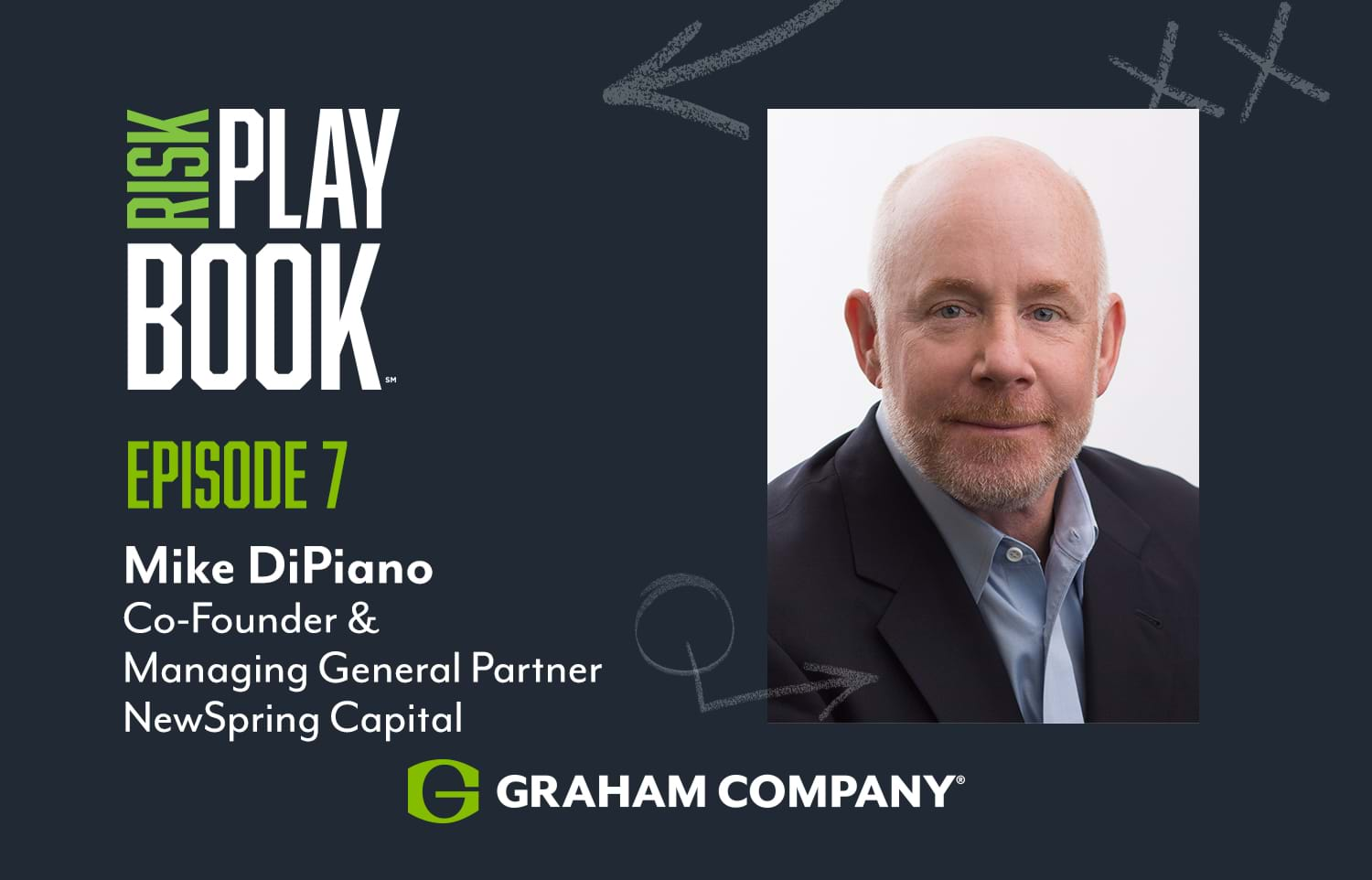
Risk Playbook: Episode 7 – Mike DiPiano

October 26, 2022

Risk Playbook: Episode 7 – Mike DiPiano

About Risk Playbook

Risk Playbook gives you an inside look at the evolving landscape of business risk, as told by the most reputable leaders from a cross-section of industries. No high-level executive has made it to where they are today without taking a few calculated risks. In today’s competitive environment, the best leaders know how to evaluate strategic risks and opportunities to propel their organizations forward while protecting their bottom lines.

Join host Mike Mitchell as he sits down with key business leaders to discuss the lessons they’ve learned throughout their careers and the entrepreneurial mindset that will help you come out on top.

Graham Company is an insurance broker and risk management consultant. Information and recommendations shared in this podcast discussion should be evaluated by your organization’s attorneys and internal team before inclusion in any company policy or risk management plan.

Episode 7 –Mike DiPiano

On episode 7, Mike is joined by Mike DiPiano, Co-Founder and Managing General Partner of NewSpring Capital – a leading private equity and venture capital firm focused on the mid-market with over $2.5 billion in assets under management. DiPiano is a serial entrepreneur and investor who has put Philadelphia on the map by catalyzing innovation and infusing the local startup ecosystem with much needed counsel and capital – now regularly competing with Silicon Valley and New York City firms for investments.

In this 30-minute episode, DiPiano shares how he analyzes risk vs. reward when investing, his approach to creating winning companies and the important role relationship building plays in how he does business. In addition, DiPiano discusses what inspired him to pursue a career in investing and the risks he took along the way to make NewSpring into what it is today.

Subscribe on: Spotify
, Amazon
, Google Podcasts
, Apple


Hello, everyone, and welcome to episode number seven of Risk Playbook
. I’m Mike Mitchell, Vice Chairman of Graham Company, and today I’m joined by Mike DiPiano, Co-Founder and Managing General Partner of NewSpring Capital.

Headquartered in Pennsylvania, NewSpring is a leading private equity and venture capital firm focused on the mid-market with over two and a half billion dollars in assets under management. As NewSpring has grown, it has transformed the course of many companies, partnering with nearly 200 businesses since its inception in 1999.

Mike is a serial entrepreneur and investor who has put Philadelphia on the map by driving innovation and infusing the local startup ecosystem with much needed counsel and capital, now regularly competing with Silicon Valley and New York City firms for investments.

Companies that NewSpring has invested in, and those that Mike was closely involved with, went on to be acquired by Citigroup, IBM, Capgemini and ADT –and that’s just a small sample of his past portfolio successes.

Mike is also the Chair of the University City Science Center, an organization focused on commercializing technology, deploying capital to healthcare startups and acting as a convening body in the West Philadelphia region.

I first met Mike when we were just beginning our careers 30 years ago, and I’ve witnessed his success along the way. Mike isn’t just incredibly smart, he’s also a good guy who is humble, common sense oriented and down to earth.

I’m eager to speak with him today about analyzing risk when investing, creating winning companies and being a truly effective leader. I also know our listeners will walk away from this discussion with new insights that might help them make their own businesses better.

Mike, it’s a pleasure to have you as my guest on Risk Playbook.

Thank you, Michael, nice to see you again.

Absolutely. 30 years, man, I’ll tell you what. It’s hard to believe. Time flies when you’re having fun. And as I say, the older I get, the faster time goes. I don’t know what to think.

Oh, boy, I totally agree. It’s hard to believe, Mike, but I do remember. You don’t look much different.

No, no.

I know I do.

I don’t know about that. Let me start off and dumb it down a little bit –let me oversimplify what I think your business is for the audience benefit. Private equity, venture capital, my oversimplification is you want to invest in companies that you think you can scale and make better and more profitable, so that you can later exit and you can return capital to your investors? Am I right? Am I wrong?

Mike, you’re spot on. And I would just say that could include lending money to one of those companies. It’s certainly more often equity investing in those companies. And every now and then it also includes a publicly traded company that may be thinly traded, but does need capital to grow to build their business and strategic help along the way.

Okay, so let me go back to the beginning. It’s interesting to me you started your career in corporate America. I know you worked for Baxter Healthcare Corporation in several Vice President roles. Today, it’s an $11 billion dollar business. You went on to be a division CEO and Director of Chemical Leaman, which was the largest tank truck carrier in the country, transporting chemicals and whatnot. You had a successful career, and then you leave corporate America and you go into venture capital, private equity. How did that happen? What intrigued you about that?

The roots of that are really simple. My father owned a local service station. I loved being with my father, so I was always there. I sort of handled the outside of the house, the customers. He would always sort of deal with fixing the cars and so forth. And there were a number of customers that came in and I, in talking with them, would learn what they did.

There was a particular customer that had a number of cars come in regularly. The cars were just really nice, Mike. I just finally asked, I said, ‘What do you do to effectively afford all this?’And he said, ‘I make money when I sleep.’I thought, well, that’s a pretty good idea, right? And I said, ‘how do you do that?’and he said, ‘Look, I have a business, generates a fair amount of cash flow, and I take that cash flow, and I invest. And there’s this wonderful thing called compounding. As the companies grow, they compound their value. You’re not paying taxes unless you sell your interest. Investing is a wonderful way to get to know people, to build wealth. It’s also quite interesting, because you’ll learn a lot along the way.’

I think I was maybe 16 when I had that conversation, and honestly, I never forgot it. I always thought if I ever had the luck to learn enough and get educated enough, if I could ever get into investing, I would want to do that. So, I always wanted to do it. The steps along the way were not intuitive.

When I asked that gentleman what he would do if he were me, he said, ‘I would learn how to sell something, because without revenue, you don’t have much of a business.’So, at Baxter, I was a full commission sales representative and thoroughly enjoyed it.

I finally got an MBA at NYU at the Stern School and just kept working my way into trying to figure out how to run businesses, operate them and ultimately invest in them. Then in 1996, I decided to try to do that full time. Thankfully, I had a loving wife who was very supportive, because it was quite a risk.

Well, first off, I love to hear stories from humble beginnings and how somebody goes from where they were to where they are. And hopefully, you’re driving a nice car today.

So, talk about the risks, the personal risk of doing what you did. This is Risk Playbook. Once we get into NewSpring, I’ll ask you about some risk profiles as well. But, just a personal risk at a young age, going from corporate America, good job and now all of a sudden, I ’m going to do something different, where I’m going to be held accountable if I make some bad decisions, right? How did you do that?

First talk about the risks, there are three of them. One is your own investment, and you could lose whatever you’re investing, in fact, it often happens. Two, if you’re raising money from others, you run the risk of reputationally losing them their money. Nothing’s more personal to somebody than either their family or the capital that they have, and they support you with it. But if you lose money, once or too often, it can be quite painful. Then third is just the personal feeling that you failed. So, if the investment doesn’t work out, to do an investment usually takes quite a bit of passion and to support an entrepreneur failing is a miserable outcome.

But the question you asked was, how do we do it. My wife and I often encourage young teammates to think about this. We always live below our means. We didn’t buy a new car every year. I mean, look, we had no mortgage, we had no car loans, we had saved some money and we invested that money, and it worked out pretty well. So, we had the wherewithal to try this for a couple of years, and God forbid, if it didn’t work, we still had something to fall back on and we could start over.

So, being prudent and planful. We were planning to do this for almost a decade, and we didn’t know if we could make it work. But we were thinking of it, and that meant living below our means. It was getting ready for it, Mike, and then we took the plunge.

As a startup company, I’m just talking about NewSpring, for instance, getting started, you have to raise funds, capital from friends, family, whoever. That must have been a real challenge. Today, I’m sure it’s a lot easier. You have a 25, 30-year track record. Back in the day, what was the sales pitch there?

Well, I wish it were easy now. It still isn’t. But I will tell you, you’re right. I mean, we raised more money in a quarter now than we have raised in its entirety through 2006. That was almost seven years after we started doing this.

It’s going out and meeting with people and putting it on the line, here’s what we’re passionate about, here’s what we think can work if we do our job well. It’s always “if ”, what are the variables? We always want everybody to understand the risk that we’re taking, and what could happen, but what might not happen. So, to be authentic, to say, ‘look, it might fail. But if it works, here’s what we think the result can be for everybody. And look, you’re going to have more noes than you have yeses.’We still do, actually. But there are people that say, ‘okay, I’m going to bet on you.’Just like we bet on entrepreneurs, people bet on us. And we were able to get enough of those people to say yes, that we had something to start with.

Then the question was, ‘can we make it work?’Now all along the way we’re putting up our own money, we put our own capital in side-by-side with our limited partners and take the same risks they’re taking with our own capital. So fortunately, people were willing to bet on us. And it was small initially, and it’s still small, relatively speaking. But thankfully, after 22 years, it’s worked out pretty well.

Mike, when you look at companies, or they come to you looking for capital, as I understand it, you want to bring something besides money, you want to bring business acumen, ideas, innovation, so that you can scale the business, figure out a way to get more profit or EBITDA out of it, so that it’s worth more a number of years down the road than it is today. Are there certain industries? Are there certain businesses? What’s the profile where you really think you can make something better than it is?

Well, the general pattern that we see Mike, whether it’s in the healthcare world, or the non-healthcare world, software, ecommerce, the types of companies we see generally have a pretty consistent pattern. The pattern that we typically see is that the company has an initial core competence and initial barrier to entry that’s pretty interesting. It has one, maybe two, sometimes even three, really core senior executives. But it is typically undercapitalized, it typically needs to build out its C-suite, it typically needs to build itself geographically. So, we spend an awful lot of time on HR and an awful lot of time on the strategic plan and how to develop that.

It’s honestly simpler than you might imagine. It simply gets down to execution. How do we execute or help our teams execute building their team, from an HR perspective, putting in good processes and procedures and training for those HR resources? How do we organize their financial statements so that the reporting illuminates positives and negatives so that we can make adjustments along the way? And then what’s the strategic plan in order to execute milestones? Ultimately, can those milestones be executed in enough of a discrete period of time with a certain amount of capital such that the end result is a real good outcome both for the team as well as for the investors?

By way of example, if we invest in a company, and it doubles in revenue, but it takes an enormous amount of capital to do it, it may be a successful company, but the return may not be so good, and vice versa. So, all of this bundle of things that need to be executed sort of have to be synchronized together. But it’s not that hard.

I mean, we see great companies with great ideas off to a really good start. And the pattern recognition that we bring to it can really help them scale and fulfill their dreams. But they’re the leaders, they’re the ones taking the biggest risks, they do it seven by 24. We help, we nurture, we play devil’s advocate, we cheerlead, we do all those things, through the period of time that we’re investors, and knock on wood, so far, the results have been pretty good.

You make it sound easy. And no business is that easy, but you’re being humble.

So, part of the due diligence is to see if some of those things check the boxes and can project that it’s going to get better. Once you make the investment, you go through the strategic plan, you help them with HR, you figure out the reporting systems, all those kinds of things, you don’t run the company, but don’t you have to keep your finger on the pulse to make sure they’re moving in the right direction? And the ongoing counsel, that’s really important, is it not?

It’s 100% of the game, Mike, you’re spot on. You have to be able to develop a relationship with the leader, the primary leader, and in some cases, a couple of other leaders on the team, where you can have a frank exchange, positive and negative. The result of that is you get to either confirming the plan and what’s being executed or potentially altering it to get a better outcome. But it starts and ends with having a good relationship. That doesn’t mean you’re best friends, you may not do things socially, you may do things socially, I’ve had both. But you have to be able to have a relationship with that leader or leaders to really, really be frank with what’s happening, and what you need to do to either continue what’s happening because it’s really good, or to make certain changes.

We talked about risk earlier. Let’s talk about risk here. What are some of the typical risks you see that sometimes you can work through, sometimes the reward is worth it, sometimes, you know what, man we missed it, is it people? Is it outside influences? Is it the economy? Is it the product fails? Is it all the above? What are some of those risks?

Well, product market fit is a big one, right? If there isn’t a good product market fit, and that’s just code for ‘will it sell?’Will the product or service gain revenue traction? Does it fit the needs of the market? That’s a big one. Is the market big enough? You can build a business but if the market is tiny, the reward can only be so large. Another key one is the barrier of entry that builds to the product market fit, is it sustainable? Or is it easily sort of reproducible, or can it be destroyed by something else? Then you get to the bundle of unit economics, that is once you start generating revenue, is the gross margin you generate from it worth the cost of gaining that sale? So, sales efficiency metrics, like lifetime value, customer acquisition cost and those ratios really become rather important. Retention rates are rather important.

Then on the people side, probably the biggest thing I say that is a red flag is the three-letter word that can sometimes be so important, but can be so deadly –and that’s ego. Leaders need a strong ego to take the helm, often in spite of a lot of evidence that would suggest they shouldn’t be doing it. But when the ego becomes too much, they become too stubborn, they don’t take the signals and adjust the playbook to get a better outcome. That can be really, really detrimental. You can really judge that when you see how leaders have built their teams, how they retain key people, how many years people have worked with them, etc. When you see a lot of turnover and a lot of disruption, that’s usually not a good sign. It’s a tricky one to judge.

Well, I think that goes to, in my intro, I said you ’re common sense oriented and that’s a common sense thing that sometimes you don’t hear, but you’re right on. Somebody’s got too big of an ego and is too full of themselves, that’s not a good thing.

So, I was reading one of your investments that I think you’re going to exit at the end of this year, Avantus Federal?

Yeah.

Okay, so just for the audience benefit, a software firm, cyber solutions for the Department of Defense, Homeland Security, 2018 investment. Since then, four years, eight acquisitions, went from 12 employees to 1200 employees, according to what I’m reading here, and I guess this isn’t confidential information, but you’re going to exit for $590 million. That tells our audience a little bit about what you do. You make acquisitions, you find a market …

Well, that’s an unusual one, it’s a 17 multiple. We’re going to make 17 times our money. I wish we did that every time, Mike, we really don’t. But it gets back to everything we just talked about.

The gentleman that leads that company, we spoke to for a good 18 months. He owned his own company, he was 100% owned, it was maybe $4 million in revenue four years ago. But he was and is a spectacular leader, really bright. This gentleman was the first ever CFO/COO of Homeland Security. When Homeland Security was created, he in fact, under Tom Ridge, whom he reported to, created it. He merged 33 entities, TSA, etc., in order to create what we now know as Homeland Security, a Herculean task. There should be a case study written about it. You talk about fiefdoms and egos, he managed to pull it all together. And he served his tenure as CFO/COO of Homeland Security, and then went into private practice.

He built a company, sold it and got it to a billion in revenue. Then he decided to do one for himself. The other one he did with IBM, and we were eager to back him, we ultimately did, it was as easy of a decision as you can make, because Andy is just a terrific, terrific person and terrific leader. Yeah, he would find an acquisition more often than not, we could structure it, sometimes it didn’t work. But we did eight of them, if I remember correctly, and the company at the end of our hold is going to generate close to $45 million a year of cash flow, and hence the $590. It’s actually $600 million, there’s a $10 million piece going to employees for retention. So, it’s about a $600 million exit. It really worked out well.

Impressive, impressive. So now all you ’ve got to do is get them to create another business that you can invest in, right?

That’s what we’re after. We’re starting to talk. He’s got to stay there a little while, I’m sure, but good guy.

Like you said, 17 times multiple, that’s awesome.

Listen, every business, every team has a loss or a failure. Tell me about one that didn’t work out so good. What happened and why?

Yeah, so I’ll tell you about a couple that we liked and didn’t do, and ultimately should have, in retrospect, and then there is one that we did, that hasn’t worked out so well. And I’m the one that did it.

On the ones that we’d liked, there was a company birthed out of Israel, called Datorama. We really liked the company, it actually incubated one of our other companies, also an Israelian-based company. We actually were going to make the investment, ultimately backed out of the deal for two reasons. The price of the valuation got a little bit expensive. At that time today, it would not be deemed expensive as a multiple of revenue. And secondly, the founder’s family wanted to move home to Israel –that was well before COVID and nobody was running a company remotely at that time, and he would be one of the first people I would have worked with running a company remotely. I had a bit of an allergic reaction to it. Ultimately, we passed and the company was sold for about $600 million four years later, which would have been about a 7x return for us. So, we should have definitely done it. The individual ’s now on the board of one of my other companies, so we’ve maintained a relationship. We really think the world of him. He still is in Israel.

Another one was Gopuff, a local company here in Philadelphia. We looked at it, thought it was interesting, thought it was awfully low margin. We just didn’t have the vision to see what it might become. It’s become a colossal business. No doubt we had an opportunity to invest in it early in its day, when it was about $70 million in revenue. And today, I think its most recent value was $15 billion. So clearly, that was one we missed.

There was another company in New York that we did invest in, and it was all the rage, had a great CEO. Really interesting, but the macro trends that we were learning about were quite potentially problematic in a particular sector. I won’t get into the industry, but there were some industry headwinds that were being forecasted by people that were experts. We did all of our diligence. We knew that. We candidly disregarded recommendations, made the investment and it turned out those experts were correct. We had to pivot the company. It did pivot, it has been successful. But the early capital that we put in is what we call washed away. We really won’t get much return on that. The secondary pieces that we put in we’ll get a very nice return on and we’ll probably sell the company this year. The ultimate return will be 2, 2.5x what we in total invested, which is okay, but it’s not what our investors pay us to get. They expect us to do far better than that. So that was one that is a subpar outcome. We’ve had a couple of those, not a lot of zeros, but a couple subpar.

The insurance industry, that’s my business. I don’t know whether you’ve done anything in benefits or property, but I do know you had a success story, I believe, with iPipeline, which was more the life insurance sector, correct?

Yes, it was, it was a big success and a lot of fun.

And that just makes it easy for people to apply for life insurance. It’s all technology driven. Correct?

It is. That company, which was at that time, led by Larry Berran and a gentleman named Tim Wallace, two fabulous leaders, great people to work with, both of whom are now enjoying the fruits of what happened there. That company 12 years ago was $5 million in revenue. Larry and Tim had a vision of how to provide a suite of services that would pull together broker general agents with the carriers themselves. So, putting the application online, binding the policy, being able to access data when there was a claim made, etc. I’m simplifying it, but it also included annuities.

That company today is about $90 million of free cash flow, might be a little more than that. I know that’s what it was doing last year. It’s all recurring revenue, 100%, and it was sold for about $1.6 billion 10 years after we invested in it. It was just a fun time the whole way.

Most of the growth was organic, it grew organically about 37% every year. But we did do a number of acquisitions, including one in England, including one down in Florida to build out the suite of services, which had the byproduct of enlarging the total addressable market for the suite. And those guys just executed pristinely. Every quarter, they were basically on the objectives that they thought they would hit.

It was really easy to be a board member, Mike. I cheered them on, thanked them and that was about it. Tried not to get in their way.

You talked about the importance of a CEO, and you’re Managing General Partner of your firm, obviously a great leader, it’s a success story, NewSpring. Congratulations, by the way. It’s awesome.

Tell me about your style, Mike, and also, the culture of the company –you have, I think 100 employees or more? Is there a training program to make sure that you’re all thinking the same way, that you look at things the right way, how do you make it all happen?

I think it really starts with this selection process. Because we do have a very specific culture, Mike, I’m sure you have the same at your business. We’re very much a transparent results-oriented place that wants to get the answers right, because once we make a decision to invest money, 80% of the risk you’re going to take has been taken, probably, at that point. So, we’re really about diligence, seeing market segments, etc. and business models.

Culturally, we’re a place where we’re fairly friendly, collegial, but really results-oriented. I mean, this is a full contact sport game that we’re in, and we want to get things right. So, when we’re interviewing younger people to join us or people that may want to join us from an operating world where they’re a senior executive, there are a lot of questions that we want to get answered. How passionate are they to be an investor? Is this just a sideline gig for them that they’re interested in spending a couple of years or do they want to make this their life’s work? We’re fairly serious. We bias ourselves towards people that want to make it their life’s work, really want to learn, want to hone their skill, want to get better at it. As a result, the selection process has worked out well.

Training, honestly, I’m not so sure we do a great job of it. I think we’re better than we were at doing it. We now have training programs. Honestly, we didn’t have them for about 10 or 15 years. We started putting them together as we grew.

But one of the things I’m proud of, we’ve had very little defection, very few people have ever left the firm, no partner has ever left the firm voluntarily. So, it’s been a group that’s been together now for a long time, a lot of people have been here close to 20 years.

So, you advocate, maybe even expect, require, perhaps, your people to be investors?

They’re all investors.

Wow.

It’s required. That ’s part of the culture. Look, we’re putting our money right with our limited partners, side-by-side. Skin in the game.

I love it. I love it. That gets people’s attention, and that tells your investor something, right?

Yes. It’s not for everybody. When we’re talking to people that have been in operating worlds and they’re used to stock options, and they say, ‘oh yeah, you get a check but you ’ve got to write a check.’

You’re going to test people’s mental for sure.

The economy, the future, what’s that? Do I hear interest rates rising? That affects valuations. You hear inflation, all sorts of things. Slow down, what do you see and how’s that going to affect you?

It’s definitely going to depress exit valuations, so, Mike, it already has. If a company was worth, pick a number, eight times before, it’s worth something less as a multiple now. Most buyers are using some form of debt to acquire companies so that’s more expensive, all that flows downhill and negatively impacts multiples. We haven’t seen much revenue degradation in most of our companies. We have seen a little bit in our ad tech portfolio, where brands spend a little less to go secure customers than they might have done previously, but it has not been dramatic. On the revenue generation side, we haven’t seen as much of that. We saw in COVID, when COVID happened, revenues dropped 30-40% almost overnight in some of our companies, and then they rebounded quite quickly a few months later. We have not seen that sort of dramatic change –in some cases, no change whatsoever.

Now, on the flip side, making investments, it’s a better time, because again, valuations are lower than they were in the past. That said, multiples and valuation changes for entrepreneurs, their memory is most impacted by what they saw a year ago, and what the IPOs were then, and less so what they’re seeing in the market now. It takes a few months for it to sort of continue to impact everybody. But I do think you’ll see that the third quarter investment reports will be a bit less velocity than they were earlier in the year, that is less investments. I think that’s going to mean smaller evaluations in the fourth quarter and first quarter next year. So pretty good opportunities to buy into companies in a really nice timeframe. 

Well, let’s hope whatever slowdown we get, it’s a small hiccup and not something that’s protracted.

Yeah, we agree with that completely. It feels like it will be. The average tenure of a recession in our country has been 10 months. There have been a couple longer, ‘08 was longer, Great Depression was longer, but the vast majority have been well under a year. So, let’s hope for that kind of a rebound.

Okay, I ’m feeling better already.

Let me close out with something that I think is maybe near and dear to your heart, and that’s University City Science Center. You’re the Chairman there, and I know the advancements that the Philadelphia region is making in biotech is significant. Can you tell us a little bit about what you got going on there?

Sure can. You’re quite right, the life science healthcare industry, throughout the city, and in particular, in University City, with all the breakthroughs, whether it’s from Penn, College of Sciences, Drexel, etc., are profound. They’re going to change healthcare for years and years to come, if not decades to come.

Look, the Science Center is a 60-year-old entity. It’s a not-for-profit entity that was really birthed to provide a 30-acre parcel for this entity to develop, to do a couple of things, to provide a space for new companies to domicile at, to provide programming for STEM education, that ’s science and engineering, math, etc. Today, we have a couple million square feet of campus. We’re in the middle of building a new building now on 38th and Lancaster, so that will add to the footprint. There have been numerous companies birthed into or headquartered at the Science Center. The vast majority are healthcare and life science in nature. So, it has turned out to be everything the founding fathers of it wanted it to be. I’ve been a pleasure to be involved with it now for over 15 years, and Chairman of it for the last two or three, it’s just been a really great time to be involved with it. It’s a place where entrepreneurs can come to fulfill their dreams, meet other entrepreneurs and network, be mentored and mentor others, domicile their companies and grow and flourish. And it’s just done all of that.

For me, there’s nothing better than a successful leader that, number one, comes from humble beginnings, we kicked off with that, and the second thing that I love is when people give back. You’re using your energy and your talents to help others in this particular space, and also creating a better environment for all of us, certainly here in this region. So, I thank you for your service in that regard. It’s great.

My pleasure. The one thing we all have to do out of Philadelphia is trumpet our successes, we tend to be very hesitant to do that. And this city, when you look at it, is one of the greatest places to live and to build companies anywhere in the world. And you’ll look at some of the resources, some of the opportunities that we have, and a great place to live. We throw snowballs at Santa Claus, and we don’t do nearly enough, in football games, we don’t do nearly enough celebrating our wins here. But we have the greatest media company, Comcast. We have great retailers, great software companies and unbelievable healthcare capacity and really continue to drive it.

Tell the audience, Mike, and I don’t disagree with you, because I’m from here, but a lot of our audience is not necessarily. Why do you say Philadelphia is the best place in the country to build a company?

Well, first of all, it’s pretty inexpensive. A, it’s inexpensive to live compared to other regions. If you compare us to San Francisco, Boston and New York City, our housing costs, etc. are just significantly less. You have access to technologies that are unparalleled, whether it’s engineering or healthcare. Penn, for example, is the largest recipient of NIH grants in the country. So, they are generating technology after technology, whether it’s in healthcare, robotic software, etc. Drexel is doing the same thing. And they’re just two colleges, two universities locally that are doing it.

Then you have access to other corridors. You have access to New York, Boston, you have access to DC, and by the way, it’s an easy flight over to Europe. So, if you want to access that marketplace, you can get there.

Then you look at the HR talent. There have been so many massive corporations that have made this area their home, that have spawned executive talent, that are now thinking about becoming entrepreneurs, right? They’ve done a great job for 15 or 20 years in big companies, they want to go grab the brass ring because they have an itch. So, we have a plethora of talent that is out there.

It’s just a unique place. Now, it could have a more entrepreneurial bent to the region, right? There are a number of us that are focused in that world. But to many people, it’s a bit Greek. It’s just a little unusual for them. So, we need to do more fostering and more networking in that regard, but it’s got a great bundle of resources, Mike.

There you go. And now all we need is another World Series and another Super Bowl and we ’ll be fine, right?

Well, which do you think’s coming first? I feel like they’re both going to vie. It looks like they both get in the playoffs, we’ll see, health willing.

Well, listen, Mike, it’s a great place to end. Thank you so much for joining me. I really, really enjoyed it. It’s great to catch up for sure.

And, as always, thank you to our listeners for tuning in. To our listeners who want to learn more about NewSpring, please visit NewSpringCapital.com.

Until next time, I’m Mike Mitchell, and this is Risk Playbook.
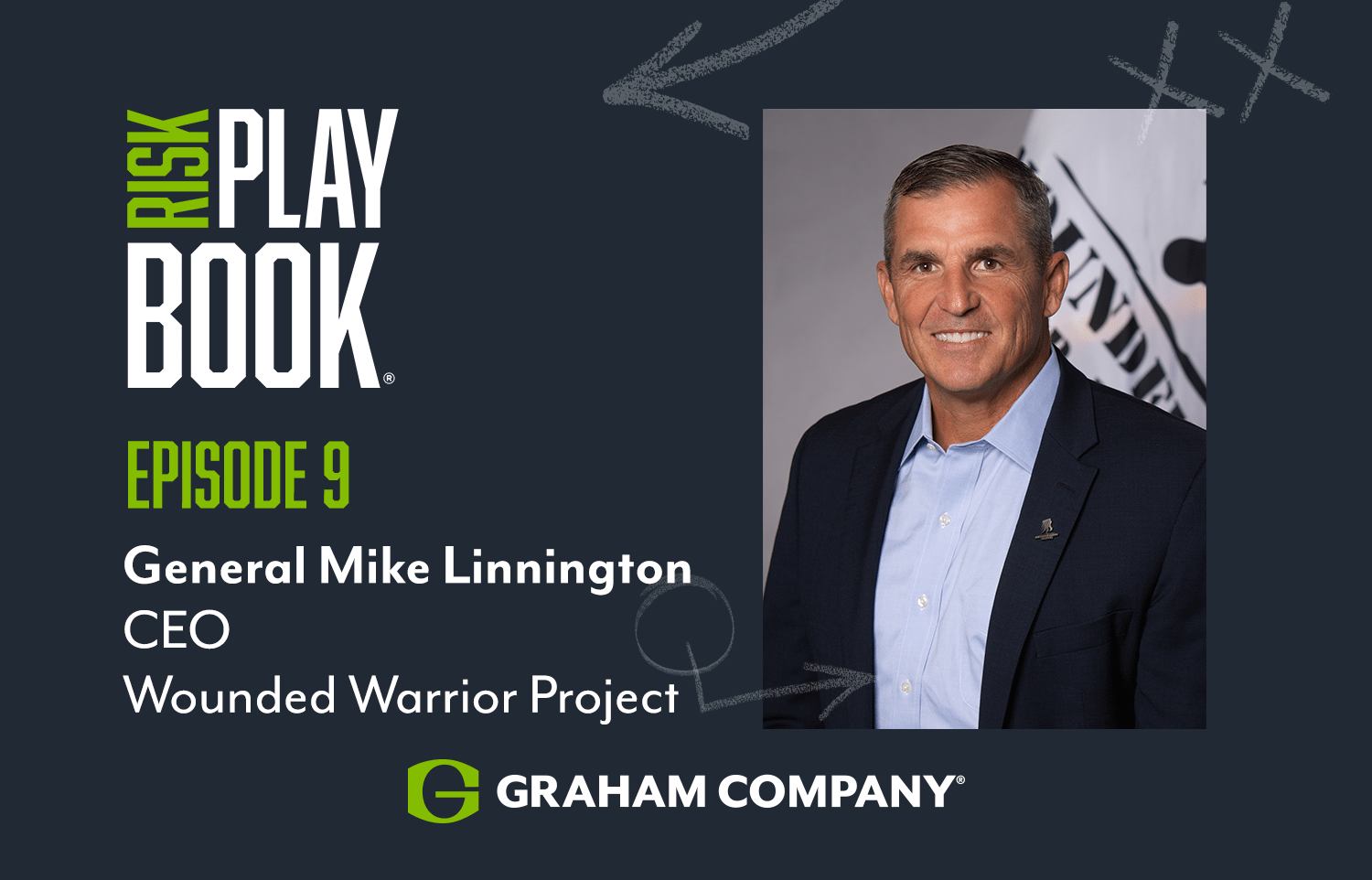
Share:

RECENT POSTS
Mental Health Awareness Month: What the Data Tells Us—and What Employers Can Do

May 19, 2026

Can “Non-Combustible” Construction Be Your Source of Long-Term Savings?

May 05, 2026

Strengthening Healthcare Cyber Resilience with HHS’s Updated RISC Toolkit

Apr 07, 2026

Stay Cyber Safe this Season: Avoid These Common Holiday Shopping Scams

Dec 01, 2025

RELATED POSTS
The WA Cares Act and the Future of Long-Term Care Insurance

Nov 14, 2025

Trend Report: The Collaboration, Innovation & Risk Management Behind Penn Medicine’s $1.5 Billion Hospital Pavilion

Aug 02, 2018

Trend Report: Disaster Recovery: Success Through Collaboration

Apr 18, 2019

Client Feature: Allan Myers

Aug 14, 2019

Risk Playbook: Episode 6 – Kevin Mahoney

July 26, 2022

Risk Playbook: Episode 6 – Kevin Mahoney

About Risk Playbook

Risk Playbook gives you an inside look at the evolving landscape of business risk, as told by the most reputable leaders from a cross-section of industries. No high-level executive has made it to where they are today without taking a few calculated risks. In today ’s competitive environment, the best leaders know how to evaluate strategic risks and opportunities to propel their organizations forward while protecting their bottom lines.

Join host Mike Mitchell as he sits down with key business leaders to discuss the lessons they’ve learned throughout their careers and the entrepreneurial mindset that will help you come out on top.

Graham Company is an insurance broker and risk management consultant. Information and recommendations shared in this podcast discussion should be evaluated by your organization’s attorneys and internal team before inclusion in any company policy or risk management plan.

Episode 6 –Kevin Mahoney

On episode 6, Mike is joined by Kevin B. Mahoney, CEO of the University of Pennsylvania Health System –a world-renowned academic medical center, with hospitals ranked among the top in the nation and #1 in Pennsylvania. Having been with the health system for over 25 years and now as CEO, Mahoney has positioned Penn Medicine as the leading institution for quality care in the region and beyond.

In this 30-minute episode, Mahoney shares insight into the business decisions he ’s made as CEO and how he has guided Penn Medicine through the COVID-19 pandemic as well as several transformative projects, including the new Pavilion which is considered the hospital of the future and represents the largest capital project in Penn ’s history. In addition, Mahoney highlights the defining moments in his life that led him to a career in healthcare and how his leadership style –described as “realistic optimism ”–has helped him navigate even the toughest days. 

Subscribe on: Spotify
, Amazon
, Google Podcasts
, Apple

Hello everyone and welcome to our sixth episode of Risk Playbook. I’m Mike Mitchell, Vice Chairman of Graham Company, and today I’m joined by Kevin Mahoney, CEO of Penn Medicine, a world renowned academic medical center, with hospitals ranked among the top in the nation, and number one in Pennsylvania.

Kevin has been with the health system for over 25 years, and was named CEO in 2019. Less than a year into his role, the COVID-19 pandemic hit. During that time, Kevin continued to position Penn Medicine as a leader in the Philadelphia region by standing up the largest testing program in the area. Penn Medicine also received worldwide acclaim during that time as they had developed mRNA technology which serves as the foundation for the Pfizer and Moderna vaccines.

Kevin has also led several transformative projects for the health system, including the opening of the Pavilion in 2021. It’s the hospital of the future and the largest capital project in Penn’s history.

Kevin is an incredible leader who has positioned Penn Medicine as the institution for quality care in the region and beyond. He also has a special ability to connect with people, making everyone who meets him feel like a good friend. I’m really looking forward to speaking with him, and I know our audience will take away valuable lessons from this discussion.

Kevin, it is my honor to have you as our guest on Risk Playbook.

Mike, thanks so much for that introduction. I’m blushing. You used a lot of Kevin did this and Kevin did that. The 40,000 plus employees at Penn Medicine are what make all this possible. And they are a dedicated crew that shows up every day, and I’m grateful for all their work. I like getting the accolades, but they deserve it.

Well, I’m not surprised by that comment, Kevin. As I’ve gotten to know you, you’re an extremely humble leader. Your skills as a leader are tremendous. Hats off to you for recognizing those 40,000 plus employees that deserve a lot of the credit.

With that, I always like to start these discussions off with the career journey. I know, as a young man, you were involved in a major tractor accident. I understand that it was really a game changer for you. Can you tell us about that experience and perhaps how that led to your career in healthcare?

Sure. Michael, I’m going to take a step just prior to that, and also let you know, people often ask me about my career. I come from a family of 10 of us –like a lot of large families, not enough bedrooms and one bathroom. I think I was negotiating in utero, for my next place in line. So, I have learned at an early age to make sure that we were functioning as a unit and try to be part of the team, which in that case was my family.

I grew up in Berwyn, just about 25 miles west. Things were so easy. I went to college. I made the Dean’s list and often tell people that it was the Dean saying, “1.98 is not a sustainable grade point average and you have to go home.”I knocked on the door and told my dad I was back and he said, “You ’ve got to go get a job.”So, I went to work for a local landscape group.

It was the summer of ’78 and three things happened that put me on this path to where I am today. The first is that I met Bill Rouse. Bill was a visionary. He was telling me how he was going to convert this cornfield, that my brothers and I had been pheasant hunting in that Fall, into an office park. I laughed. I told him that wouldn’t happen, that people work in Center City and they sleep in the suburbs. He said that’s not a rule, that’s just a guideline and guidelines are made to be broken. I credit Mr. Rouse, in a very short period of time, teaching me that painting a vision –what he saw in that cornfield was an office park, I saw corn stalks. I’ve tried to use that ability as I move forward in my career to paint a vision of where we could be.

In rapid succession, he then said, “Could you cut down the cornfield? I’m going to have a party to celebrate the opening of the office park.”While I was cutting it down, I fell off the tractor, under the tractor and the tractor ran over me. I ended up in Paoli Hospital for many, many months. I tell everybody, that’s where my love of hospitals came from. It’s kind of weird that a patient experience would lead to a career, but the angels that took care of me from the doctors, to the nurses, to the person who brought my food. I wanted cheesesteaks and they were trying to talk me into salads, and they were just so concerned about my care. It made a great impression.

We already know I ’m not a very good student. So, going back and becoming a nurse or a doctor was out of the realm so I picked something easy like hospital administration and becoming a CEO.

Then the last thing that happened that I give a lot of credit to is, I met my wife on November 10, 1978. We’ve been together ever since. She is the yin to my yang. I am Irish and hot, and she is calm and cool. She keeps me balanced.

It was a formidable accident, but it put me on a great career path.

It’s an inspiring story to hear you talk about your family, one of 10. Then of course, your wife and the influence she has. Matter of fact, she actually talked you into going back to school, correct?

She did. You got a great memory, Mike. We went to Millersville. I said, “They’re not going to let me back in,” and she said, “It’s not Harvard, Kevin, I think you go in and say you’d like to come back, they ’ll let you.”I was nervous as a cat on a hot tin roof. I walked in, and they said, “Sure, you can come back.”It was also an important lesson that sometimes you imagine things are worse than they are.

Look now, things worked out. You’re the CEO of a nationally recognized health system. It sounds to me like you’re the perfect example of the A students are working for the C student, right?

Or the D minus students.

I’m sure it wasn’t that bad.

Let’s talk about your industry a little bit as we shift gears here, some of the hot topics related to the healthcare industry. Clearly, you’ve remained in the forefront of the industry.

Of course, top of mind for me, I can’t help but think of the rising cost of healthcare, and what that means for an organization like yours, because you have to have margin in order to accomplish and carry out your mission. At the same time, the users of your services, sometimes maybe are frustrated, or maybe even concerned about the future affordability of healthcare. How do you navigate that as a CEO? What are some of your biggest challenges when you think of the rising cost of healthcare?

Great question, Mike, and it has two parts to it. The one you pointed out, which is most important, is the burden of the cost of the American healthcare system on small businesses and businesses in general and the drag on the economy. As we head into what many people predict will be a pretty rocky recession, we have to keep in mind that, just as you said, our revenue is an expense to the federal government. It’s an expense to employers, and it’s an expense to our patients.

At Penn, we’re dedicated to trying to drive that cost down. An example of that is soon we will announce a partnership with Independence Blue Cross, where we’re going to take more of the risk off of the employer and they’ll pay a set fee and we ’ll be responsible for the totality of the care as we move forward.

I think the solution is to use a lot of tools that other industries do. If I want to buy something on Amazon, I get on, and a couple clicks, and it’s at my doorstep. Healthcare is still so paper intense and antiquated regulations. We’re going to try to work with Harrisburg to reduce the amount of regulation. We’re going to take pages out of other industries’ playbooks to get our costs down. I can’t take it away from bedside. When you’re sick, you need all hands on deck. But do I need as many people doing billing, as many people doing logistics, as many people doing regulatory review? That’s where I’d like to take some of the cost out.

The partnership with Independence Blue Cross, you’re talking about having skin in the game now. Explain the risk reward there, Kevin, how does that help you?

We have a little bit of skin in the game now, but we’re going to take it and amp it up significantly. American medicine is traditionally based on fee for service –the more the doctor does, the more they get paid, the more the hospital does, the more the hospital gets paid.

Under this model, we are incentivizing the physician in the hospitals to be more efficient. But right now if they’re more efficient, they just don’t get paid. Because it’s a fee for service. So, if you reduce service, you don’t you don’t get the revenue. This new model will shift more money to outcome and efficiency as opposed to fee for service.

It’s a great credit to, we started this conversation with Dan Hilferty and we’ve expanded it with Greg Deavens, the new president of IBC, he ’s become a fast and ready partner, and we’re making great progress on it.

Do you see this being one of the waves of the future?

For sure, definitely. We’re also doing this in chronic kidney disease.

Right now, just a very quick example, if the physician puts a patient on dialysis, the federal government pays for that dialysis. There’s no incentive for the doctor to keep the patient off of a dialysis machine. So, if we’re able to reconvert some of that money that’s currently going in dialysis to early transplantation, and people won’t be on the dialysis chair for their lives, the physician will be rewarded for that.

It’s complicated, but you start out that this is a risk podcast and we’re shifting the risk to the provider and if they do well, they’ll get paid if they don’t do as well, they’re still gonna get paid just not as much.

That makes me think of consolidation in your industry like there is in almost every industry today. Oftentimes, consolidation is for market share.

I know in one case you acquired a Philadelphia area, smaller hospital, I’ll call it a safety net hospital or a neighborhood hospital. Mercy Hospital was the name of it. I think of perhaps hospitals like that, not having the ability or the quality care to do what you’re talking about and having skin in the game. So the strong survive, and in this case, what’s the risk vs. reward of you acquiring an organization like that? How do you balance the risk and reward with that?

Sure. When we do our consolidation, gaining market share is certainly important. But more importantly, it fits our strategic plan of meeting the patient where they are, which is increasingly in an ambulatory clinic, or even on the iPhone, not in a hospital, and we need to have more geographic spread. So we go from Eastern York County now to the Atlantic Ocean, and everywhere in between, and patients that want to access Penn Medicine can do it easily.

What we thought about in Mercy, the hospital was slated to close. We could have let it close, it’s 20 blocks from there to the hospital, University of Pennsylvania, and we could have absorbed those patients at HUP. But it wasn’t the right thing to do. Because it’s two and a half miles. It’s 30 plus lights. It looks closer than it actually is. So we wanted to keep it open. But we want to keep it open not as a hospital, but as a healthy village. One stop shopping for the community to get care access they need.

So, we’ve reopened primary, working closely with Children’s Hospital, Blue Cross again and Public Health Management Corporation. We have a dental program, we have primary care offices we’ve opened, we have Crisis Response Center that we’re reopening, kept the emergency room open. Again, provide access.

If you need surgery, you still come to the main hospital, but for day-to-day healthcare activities, not just medical activities, but healthcare in general, nutrition counseling, etc. You get it right there in our healthy village concept.

Kevin, you are outspoken about health equity, meaning providing access and equity within healthcare. Is the Mercy acquisition part of that passion?

I think it’s a prime example. So far in two years, it’s cost us about $67 million to keep that open. But I think it’s the right investment. Because without it, it’s too hard for a single mom, it’s too hard for an elderly patient to get access over at the main hospital.

Health equity, I think, starts with improved access to care. We’ve expanded that.

An example is we started about six companies together with Wharton that are focused on reducing social determinants of health. So, food insecurity, tardiness at school, we have a virtual rehab program. We’re trying to use all the tools in the toolset.

Then internally, health equity also starts off with economic security. So, we’ve increased our internal promotion rate by 10% minority employees that are getting promoted within Penn.

The word I use is intentionality. We’re trying to go about everything, looking through a health equity lens, but with intentionality to accelerate the improvements.

$67 million, that’s a lot of money. There has to be a return on investment there that may not be dollars, I’m assuming, right?

Remember, we are large, for sure. $8 billion a year revenue. But we’re not for profit. So everything doesn’t have to have a financial return. But it has to have a societal return. I think Mercy represents that.

We dedicated ourselves. A stain on American medicine is Black females still die in childbirth, and maternal morbidity and mortality is almost virtually eliminated in white patients, but not in BIPOC patients. So we put into the executive management pay the elimination of maternal morbidity and mortality in BIPOC patients.

We put into the executive pay increase in colorectal screening in black males after the Black Panther
actor who died so young, we know we have to do a better job of getting colorectal cancer screening rates up. And if we do the payback is that people aren’t going to die. And that’s why we’re here.

And that helps your culture, it helps your brand, it makes you an industry leader, it makes you change the world for better, all those things. So that would be my ROI for sure.

The other thing that’s so important, Mike, and we both love our city, we gotta get our mojo back. Gun violence has just been awful. If we can give people hope back into their lives. If we can create jobs, if we can provide easy access, equal access, to healthcare, it’ll be a step in the right direction to getting the city back.

As a leader, Kevin, you’re not just talking to talk, but you’re walking the walk.

Let me switch gears here for a second. Innovation and technology is everywhere. If you don’t have that you’re not going to survive. Perhaps some of that is the result of Amazon and all the things they ’re doing, you mentioned that. But I want to ask you about the Penn Medicine Co-Investment Program. You’ve invested, as I understand it, $50 million in promising biotech and life science companies. To me, that’s fascinating. Can you tell us about creating this program?

Sure. So, we sat with the leaders in Philadelphia –Craig Carnaroli, David Cohen when he was at Comcast, John Fry, representatives from PIDC (Philadelphia Industrial Development Corporation) –and we talked about an innovation district, and how we would create that.

We referenced Kendall Square a lot up in Boston, and we all concluded you don’t want to be the second Kendall Square, you want to be something unique. What’s unique in Philadelphia –what Penn and Children’s Hospital are able to develop in cell and gene therapy, and Jefferson has now started a college degree in cell manufacturing.

So, we coined the phrase “Cellicon Valley,”and we put up $50 million and that $50 million has attracted over a billion dollars of venture capital into Philadelphia. We continue to get FDA approvals, we got another one on a type of lymphoma that is now going to be cell therapy or be approved to treat that.

Our idea is to cure cancer, eliminate disease, create jobs, but do it here, don’t do it in San Francisco, don’t do it in Boston, but do it right here on Market Street. And if you’ve driven down Market Street lately, the number of cranes are pretty remarkable.

Spark Therapeutics is another example, not of our co-investment, it’s based on Penn IP, but Children’s Hospital funded that. So institutions trying to step outside of our normal bounds, maybe, of education and research and clinical care, and be more of an economic driver is what we’re trying to achieve.

Wow, it’s exciting for what’s going on. It’s also encouraging to know what it is you’re working on, and trying to cure cancer and everything else. It’s great for our audience to hear some of that, to have some optimism to know that things will continue to get better. So, thank you to you and your 40,000 plus employees for trying to change the world and make it a better place in terms of being healthy.

I want to move to, I mentioned this in the opening, the historic Pavilion, which just opened a year or so ago, a $1.6 billion project. According to my notes here, one of the largest hospital construction projects in the United States, certainly the largest capital project in Penn’s history, and it ’s massive. 1.5 million square feet, 17 stories, 504 private patient rooms, 47 operating rooms. Talk about the project, and what are you most proud of?

Sure. I often reference for everybody just in terms of size, the new Comcast tower has roughly the same amount of square feet as the new Pavilion. One is tall and slender, and the other one is short and stout. But it is a massive facility, as you mentioned.

What I am most proud of is, we use a different method of construction. It’s called Integrated Project Delivery. It was putting everyone that was involved in the project, including the owner, at risk. So we gave a set of conditions, we wanted to be LEED certified, we’re proud of our position on climate change, and we’re pushing hard to become carbon neutral. So we wanted the building to get LEED certified. It achieved that LEED goal. It had to have at least 500 rooms, all the things that you talked about.

We wrote down these conditions of success, and we turned it over to the architect and the contractor and said, “Give us a target price.”They did, it was $1.5 billion. The extra $100 million you reference is a COVID related charge, but they kept everything below $1.5 billion. They helped pay for everything over $1.5 billion and incentives work. So you never saw more cooperation between an architect and construction company than you did when there was money on the line. That led to enormous innovations. So about 30% of the building was built off site in West Philadelphia and had been brought in at night. It helped with our traffic, it helped with our workplace safety. Because people you know, they weren’t all banging around in the same spot.

We built a 30,000 square foot mockup life size, we brought in actors to be patients, installed GoPro cameras all throughout the day, and we did a code and we delivered food. We actually re-enacted what a day in the life of the patient would be and then based upon all that video, then we sat down and designed the building.

Michael, you’re a great example of innovation. Graham Company helped us out with an Owner Controlled Insurance Program, and it saved us not quite $10 million, but it saved us millions. Safety became a watchword on the project. It was the right thing to do. Employee safety, workplace safety is just critical. But if everybody pulled together and we saved money, the money went back to the owner, went back to the contractor, went back to the architect, it didn ’t go to the insurance company. So these are just bold moves. But I think they paid off, I think it ’s a great building.

We’re proud of our trying to bring art and medicine together. We commissioned a lot of artwork, including Maya Lin, who’s famous for doing the Vietnam Memorial down in DC. She created a beautiful two-story sculpture that she calls “Decoding the Tree of Life.”It gives families and our colleagues a moment of respite in a pretty emotionally intense building and we’re very proud of that.

Very, very progressive. Congratulations. It’s a great project. Thank you for the opportunity for Graham to be involved.
 

And by the way, it’s been a pleasure working with you and your team on the risk management side, especially Ben Evans, Associate Vice President of Risk Management and Insurance. You have an incredible team there.

I am familiar with that Integrated Project Delivery method. It really is true partnership where there’s shared risks on all sides. And it’s not there to try to squeeze somebody, it’s there to create opportunity if you do a good job.

Mike, one of my favorite Pavilion stories is related to COVID. So, back in March of 2020, April, we weren’t sure what was going to happen. We were watching tents being built in Central Park in New York City and patients being treated in tents. We talked about putting one on Franklin Field, etc.

I went to Stephen Greulich in the construction team and I said, “How many beds can you get me ready in three weeks?”And they said 150. They delivered. By April 11, they had 150 beds ready to go. Fortunately, we never had to use them. But every seam fit, every electrician, everybody was working 24/7 to get those open. It was a great example of a city coming together to take on a common problem, which at the time, again, unknown, but it was remarkable how many people pulled together.

Well, I don’t think you know this, but my son and his wife are both nurses in that building, and they have not stopped talking about it. They’re thrilled and appreciate the opportunity to be part of the 40,000.

You mentioned COVID, mRNA vaccine technology. That’s a tribute to Penn Medicine. Obviously, it’s part of the Pfizer, Moderna vaccines. Can you talk a little bit about that? Is there anything special that you do as an organization to foster that culture of innovation?

I refer to Penn as the greatest show on earth. I think Drew Weissman and Katalin Karik ó, who are the inventors of the messenger RNA vaccine, they’ve won so many awards over the last year. But they made it possible for us to hug our grandkids again and to get back into the world.

It was about 20 years ago, they met at Penn over a copy machine, didn’t know each other. “What are you working on? I’m working on mRNA …I’m working on that as well.”They began to collaborate, and this is what the result is.

I think our secret sauce to innovation is to attract talent, to put them in buildings where you can have these casual interactions. It’s not like assembling a football team where you need one of this and one of that, you need the very best talent you can get. Then when they start collaborating, that’s when magic occurs.

We’re so proud of Drew and Katie, and what they’ve accomplished. That story is repeated many times over at Penn.

Well, when you talk about attracting talent, in today’s world with the Great Resignation, wage inflation, all those kinds of things, we’re all struggling to retain what we have and attract new talent. Is there anything in your special sauce that helps you get there?

I think people are attracted to Penn that have a mission orientation. Pay is foundational, and we continue to lead or be very close to the top at the pay rate for any position. We’re going to continue to do that.

People don’t just work for pay, they also work for a sense of mission, the intrinsic reward they get from their job. So, in addition to the pay, we’ve been providing free SEPTA no charge SEPTA rides to our employees –and we’ll do that for another six months trying to help with the cost of gasoline.

We sent 20,000 people to the Phillies games over the last couple months just trying to bring your kids, get a diversion. We try to build a culture that is family oriented and mission oriented. Again, I can’t say enough about the stress every employee has been under.

Workplace violence is increasing, so we’re putting weapon detecting systems in Pennsylvania Hospital and other places so that people coming into the facility, we’re checking to make sure that they’re not going to bring violence against our employees.

I’ll wrap it up, Michael, in the following way. I just went through a mission orientation, went through some of the things we’re doing to make our workplace safer. One of the things that ’s unique about Penn, though, is 60% of the health systems bottom line funds research. Very few systems in the country are owned by a University, and we are.

That means your son and daughter-in-law are researchers, not just nurses. Because if they can treat a patient faster and more efficiently, and we make more margin, it doesn’t go into my pocket, it goes into the research bucket. So, when Carl June and Drew Weissman and Katie Karik ówin the Nobel Prize, all 40,000 of us will have played a part in that occurring. I think that is our secret sauce and I hope the employees feel that because the jobs are increasingly difficult.

At my company, we have 225 employees, and you try to build and create a culture and I can’t imagine trying to figure that out with 40,000.

Your leadership style is amazing. Tell me about that. What is your leadership approach?

My leadership style is, first I recognize that I am blessed. I am not better than the 39,999 other co-workers. I am blessed and I ’m fortunate.

My style, though, is I try to paint a vision of optimism, but realistic optimism. I think we’ve achieved that. In the late 90s, we were losing money faster than we could print it. We looked out the window and said someday we’re going to build a new hospital, a new medical center here –we were able to do that.

With proton therapy, we built the world’s largest Proton Therapy Center. We said, we’re also going to invent it small enough that we can do it in the suburbs. And this fall, we’re going to open one in Lancaster County.

Realistic optimism is what I would put down as my leadership style. I recognize you may have bad days, you may have a bad week. But if we stick together the good days are going to outnumber the bad days and the good weeks are going to outnumber the bad weeks. Before you know it, we’re getting another FDA approval for a new drug that’ll change people’s lives.

Well, I’m so impressed with your down-to-earth personality. You started off by giving credit to your people, and perhaps that stems from the roots of 10 kids in a house with one bathroom.

Let me close by asking you this. Kevin, just curious, you look into the future 5-10 years, as it relates to your industry and healthcare in general, can you paint that picture?

Sure. You mentioned it, it’s going to be all about technology, and it’s gonna be delivered more at home, it’s gonna be delivered more virtually, more outpatient.

Right now, as much as we talk about the Pavilion, 60% of our money comes from outpatient centers across the Delaware Valley. That’s only increasing and increasing rapidly.

We do most of our chemotherapy and infusions at home now. That’s just going to continue to grow and accelerate, and technology makes surgery more minimally invasive. It’ll be an outpatient surgery center.

So I think, did you give me 2030? What was the date again, Mike?

Five to 10 years, whatever that is. I wasn’t good at math, either.

We’ll go 10 years out. I think you’ll see half the hospital beds that we currently have in Pennsylvania because people will be getting access to their care more efficiently and closer to home.

We’ll still need the Pavilion because we’ll still be doing advanced medicine. But more and more things will be done in an outpatient and home setting.

In most businesses, when you say you’re gonna have half of what you have now, that’s a bad thing. But in the case of healthcare, that’s real progress.

There’s a great video, if anybody has a chance to look for it. It’s about a young family, unfortunately, who had cancer, and they received all their cancer care at home. Who wouldn’t rather be sitting in your favorite chair with your puppy beside you watching your show, than having to drive the expressway and get into the main hospital?

Penn Medicine is always going to be there. But as I said, increasingly meeting the patient where they’re at, which is home and virtual.

Kevin, that’s a great way to wrap up our conversation. Thank you so much for joining me today.

And as always, thank you to our listeners for tuning in. To our listeners who want to learn more about Penn Medicine, please visit

www.PennMedicine

.org.

Until next time, I’m Mike Mitchell, and this is Risk Playbook.

Share:

RECENT POSTS
Mental Health Awareness Month: What the Data Tells Us—and What Employers Can Do

May 19, 2026

Can “Non-Combustible” Construction Be Your Source of Long-Term Savings?

May 05, 2026

Strengthening Healthcare Cyber Resilience with HHS’s Updated RISC Toolkit

Apr 07, 2026

Stay Cyber Safe this Season: Avoid These Common Holiday Shopping Scams

Dec 01, 2025

RELATED POSTS
The WA Cares Act and the Future of Long-Term Care Insurance

Nov 14, 2025

Trend Report: The Collaboration, Innovation & Risk Management Behind Penn Medicine’s $1.5 Billion Hospital Pavilion

Aug 02, 2018

Trend Report: Disaster Recovery: Success Through Collaboration

Apr 18, 2019

Client Feature: Allan Myers

Aug 14, 2019

Risk Playbook: Episode 5 – Susan Hatten

May 26, 2022

Risk Playbook: Episode 5 - Susan Hatten

About Risk Playbook

Risk Playbook gives you an inside look at the evolving landscape of business risk, as told by the most reputable leaders from a cross-section of industries. No high-level executive has made it to where they are today without taking a few calculated risks. In today’s competitive environment, the best leaders know how to evaluate strategic risks and opportunities to propel their organizations forward while protecting their bottom lines.

Join host Mike Mitchell as he sits down with key business leaders to discuss the lessons they’ve learned throughout their careers and the entrepreneurial mindset that will help you come out on top.

Graham Company is an insurance broker and risk management consultant. Information and recommendations shared in this podcast discussion should be evaluated by your organization’s attorneys and internal team before inclusion in any company policy or risk management plan.

Episode 5 – Susan Hatten

On episode 5, Mike is joined by Susan Hatten, Chief Marketing Officer of Holmes Murphy and Chief Operating Officer of BrokerTech Ventures (BTV). A thought leader in the InsurTech space, Hatten helped launch BTV, which is considered the first broker-led convening platform and accelerator program focused on driving innovation within the insurance brokerage industry.

In this 30-minute episode, Hatten discusses all things insurance, technology and business. In particular, Hatten shares insights on the formation of BTV, the process for selecting promising startups and where the insurtech industry is headed.

This episode is part of Graham’s Innovation Month special.

Subscribe on: Spotify, Amazon, Google Podcasts, Apple

Hello, everyone, and welcome to our fifth episode of Risk Playbook. I’m Mike Mitchell, Vice Chairman of Graham Company, and today I’m joined by Susan Hatten, Chief Marketing Officer of Holmes Murphy, headquartered in Des Moines, Iowa, and one of the largest privately owned insurance agencies in the United States. Susan is also the Chief Operating Officer of BrokerTech Ventures, the first broker led accelerator program focused on fueling innovation in the insurance brokerage industry.

Susan is a thought leader in the insurtech space, having helped launch BrokerTech Ventures in 2019. She has held several leadership roles over the years within the insurance industry and has also worked in business development, corporate community engagement and strategic partnership roles. She started her career in advertising and has nearly two decades of communications experience.

Susan, it’s a pleasure to have you as my guest on Risk Playbook.

Well, Mike, the pleasure is mine. I’m excited to be with you today.

I’m looking forward to it as well, Susan. I’ll start by apologizing here – I think I have a little froggy voice. I’m fighting some allergies, but I’m sure we’ll get through it.

We’ll get through it together, Mike.

All right. Sounds like a plan. Let’s start off, Susan, talking a little bit about the insurance industry. Certainly innovation and technology is at the forefront of every industry today. Perhaps in large part, we can thank Amazon for that. But when I think of insurtech, and I compare it to fintech, I feel like the insurance industry is a decade behind the financial sector. I’m curious, number one, do you agree with that? And secondly, can you give me a high-level overview of the evolution of innovation and technology within the insurance industry?

Well, it’s interesting you ask. So, you mentioned Holmes Murphy being headquartered in Des Moines, Iowa, which also happens to be the headquarters of the first insurance and insurtech accelerator, coined as the Global Insurance Accelerator. That was founded eight years ago, where your mention of fintech and some of the largest financial and technology accelerators started five to six years ahead of that.

So, you’re right, insurtech is several years behind the fintech space – but what I’ve seen during that time period is that insurtech has now surpassed fintech in terms of venture capital backing, in terms of speed to market. So, I think that’s exciting for us to think about as Graham Company and Holmes Murphy and BTV because I think the future looks bright for insurtech.

Now, there’s a fact I didn’t know – that’s encouraging for the insurance industry, and certainly for BrokerTech Ventures. For the audience’s benefit, we often refer to BrokerTech Ventures by their acronym of BTV. Susan, talk a little bit about the ownership of BTV. We have a group of likeminded insurance brokers – Graham Company, Holmes Murphy and a handful of others, some of which compete with one another. How did that come about? And why did you believe that was the best way to innovate and perhaps change the game?

As you mentioned, BTV, Broker Tech Ventures was created three years ago. It started with an original idea that was around insurtech funding. We had taken from that initial concept, which it was really around, another broker friend of ours in M3 Insurance, and we had taken that idea and decided we wanted to make that concept of BrokerTech Ventures even larger. What we had the benefit of was that Holmes Murphy, through the thought leadership of Dan Keough, and their creation of Innovative Captive Strategies, had worked over time in the Captive Insurance space to bring together likeminded brokers to reduce the cost of risk.

So, we applied that similar concept to BrokerTech Ventures in bringing together likeminded and like-value quality organizations like Graham Company and Holmes Murphy and others to really bridge the, what you’re identifying is the gap, between our work and the world of brokerage and the world out there that is insurtech. We do that together in what we call the pre-competitive space – and, we’re just fortunate to be now at 15 brokers as a part of BrokerTech Ventures that we’ve developed over time.

Certainly my company, we couldn’t do it alone – and because most of our owners are privately owned, they probably feel the same way, right? When I think of insurtech, a lot of that money, historically, has been given and invested with insurance companies and not necessarily the brokerage community, which is there to service the commercial accounts that are our clients. It’s interesting that’s how it came about. So, when I think of an accelerator, BTV is a lot more than just a mentorship program for startup companies. Explain how much more we really are?

For those that the concept of BTV might be somewhat new, we’ve received some great press over the years around BTV’s accelerator, and we’re really very proud of that. But as I mentioned, when we developed the framework for the business plan of BTV, we knew we wanted to start with an accelerator, but really build it out to be a multi-dimensional tower opportunity.

Mike, you know this well from sitting in on our meetings and operations calls, but we have what we call five towers of business operation at BrokerTech Ventures. The first tower is our accelerator – and we’re fortunate we have three fantastic cohorts that have gone through our accelerator. BTV’s invested in 36 companies over the three years – our great executive director John Jackovin, runs our accelerator for us.

The additional towers really can stand alone, but are meant to support our accelerator and all of our work. I’ll be brief here, and then Mike, if we want to dive into any of them further then we can. The second tower is early-stage investments. We knew when we built BTV, that the graduates of our accelerator as well as other insurtech companies may need additional funding. After they see success, they have some distribution opportunities, so we run that through our early-stage tower. The third tower is innovation. Innovation is where we view working closely with our carrier partners, and bridging that additional relationship with them over time and how they view innovation. That’s also where we have our labs community that lives in the innovation tower. The fourth tower is capital. We believe through capital raised as a part of BrokerTech Ventures that we can propel technologies further and also see great returns. Then the fifth and final tower is media and communications. That’s where I get to have a lot of fun and work with folks like Phil on your team, Mike, and really amplify BrokerTech Ventures in each of our brokerage firms through that work. So, that’s a lot there, it’s a lot to unpack. But the point being, we built BrokerTech Ventures with the intention that it would be a multi-dimensional, multifaceted business model.

When you say you’ve invested in 36 companies, and we’re three years into it, it’s roughly about a dozen companies each year that go through the accelerator program. Some obviously are more promising than others, some you feel are worthy of investment, others may not be. Ultimately those investments gets them to the next stage of their development and hopefully someday become major game changers for the industry. Right?

Correct. Yes, absolutely. And again, we like to say, at BrokerTech Ventures, we cast a wide net. I work very closely with Dan Keough, our chairman and CEO at Holmes Murphy and also co-CEO of BrokerTech Ventures. We say that because really, BrokerTech Ventures is allowing us access into the unknowns. We are allowing Graham Company, Holmes Murphy, M3, other brokerage firms access into the unknowns, into what are the challenges, perhaps ahead of us that we haven’t even thought of? And how can we use these technologies and these entrepreneurs to bring us closer to the development of those solutions and thinking ahead?

Susan, when I think of my business, I would say innovation and technology needs to accomplish really two things to be successful: One, to make us as a business more efficient, but arguably, and maybe more important, to create a better client experience. How do other businesses, perhaps that might even be in our audience today, how can they anticipate innovation and technology creating a better experience for them and their teams?

That’s a great question, Mike. What I would tell you is, as we are evaluating technologies to come into the BrokerTech Ventures ecosystem, we always have a lens of how does this opportunity, this product, service or idea, how does this help our clients identify their risks sooner or drive down their costs faster? If we can answer that question, there’s a great chance that we would have interest in engaging with that company.

So again, it’s a framework of identifying risk and driving down cost that we bring to the table. Effectively, at the end of the day, Mike, we’re in the business of delighting our clients. So, we believe we can create that client delight through the technologies we’re securing and exploring through BTV.

When I think of these 36 companies, and the ones coming down the pike, for the most part, correct me if I’m wrong, but they’re technology companies, right?

For the most part, but here’s what I would say, the technology is only as good as the team, as the founding team that’s behind it. So, when we’re looking at solutions, we do look at the technology, we also put a lot of stock in the entrepreneurs and the founders of these companies. Because at the end of the day, that’s really what will help propel these solutions forward. I would also say, some come to us in the early stages with a technology idea, and what we find out is it’s more of a solution, or a product, that they’re in need of our helping form. And in some cases, looking for distribution opportunities.

I can tell you that in three years from where we sit, you are really a trailblazer here, and the progress you’ve made through BTV is incredible. The acceleration seems to just continue to steamroll. Will insurance brokerage firms become technology companies? Or will technology companies become insurance brokers? Perhaps it’s a little bit of both, right?

Right. I think that is the question being received by the day. What I would say, Mike, is that I believe it is a “yes and” – and, I do believe there’s an age of the tech-enabled broker. Because I think what we’ve learned more than ever, in the last two years, is the value of relationships, and yet the speed of which we can be efficient through technology. How do we create that experience for the tech-enabled broker to have a place in insurance for years to come, and also become an attractive marketplace for talent for years to come? So, bringing in the new ideas, the new innovations, the new graduates, that want to look at an industry that is fun, entrepreneurial and innovative. I believe we can do that if we’re embracing a tech-enabled broker mentality.

This is Risk Playbook, so we talk a lot about risk. For our businesses, if we don’t do this, and we don’t make it more convenient for our clients to work with us, we’re going to be a dinosaur. I can deal with my bank and send money back and forth through my phone, I can order stuff and it shows up at my doorstep within 24 hours, I can look at my medical records online. We need to make sure we catch up with those kinds of things.

Let me just switch gears here for a second. I’m a fan of Simon Sinek, and I’ve read The Infinite Game. I know The Infinite Game philosophy is deeply rooted in BTV. I know his thought process, it’s not about winning in the short term – it’s about constantly evolving, it’s playing to survive to thrive to keep playing the game. How do you overlay that into what you’re doing at BTV and the philosophy?

You’re spot on Mike. We talk a lot about The Infinite Game as a mentality in the building of BrokerTech Ventures. I mentioned the pre-competitive space where the 15 brokers who are a part of BrokerTech Ventures effectively do compete and there is a competitive edge there. But we also believe, the majority of our work as a broker is in the pre-competitive space. It is what we would say, are really the salt and pepper shakers, it’s what we have to do as a broker to keep our lights on and to keep serving our clients. It’s that 10% that might be proprietary, it is the secret sauce behind what we do at our brokerage that makes us unique and differentiated.

We believe if we can surround ourselves with likeminded brokers, likeminded companies of value, quality and entrepreneurial spirit, that we can go further faster in this innovation world. And through the work that we’re doing with The Infinite Game philosophy, we can create a greater experience for our clients, we can propel solutions forward more swiftly and efficiently through our work together, and we can also potentially see a return on some of these investments that we’ve made. It’s really beneficial in all three of those regards.

Susan, do you feel that COVID in any way accelerated this in terms of not only just BrokerTech Ventures, but also the need and the desire for technology?

Oh, there’s no doubt, there is no doubt in my mind. I know if we were to have Dan or Ellen Willadsen, who serves as our executive sponsor, if we were to have either of them joining us, they would say the same, Mike.

I would say the COVID experience, while certainly catastrophic, in many ways, was actually the fuel that ignited the speed of which we were able to go to market with BrokerTech Ventures. We use technology every day, to create conversations and to be efficient with those conversations, we were able to move things that we had originally planned to be in-person, they moved to an online platform, and we’re able to double the number of meetings and how we were conducting them.

Then I would also be remiss if I didn’t mention the work that we’ve solidified internationally. We have BrokerTech Ventures accelerator, the Israeli insurtech accelerator headquartered in Tel Aviv. We just recently announced our accelerator fueled by BTV in Latin America, and we’re working with several companies in Europe around the same kind of model. So, I can’t imagine if you would have asked us three years ago, if we would have thought we’d be actually traveling to Tel Aviv to meet with our business partners, in a few weeks. We probably would have said we’re out of our minds, but it’s been a benefit to us. And truly you do see the impact of technology propelling businesses forward.

It’s just another silver lining to COVID, right? There’s many, but it’s also challenging times.

I will add, Mike, one thing you’ll be hopefully seeing and hearing – when we were in the business planning for early stages of BrokerTech Ventures, we had planned on this fabulous party at the rooftop of the Refinery Hotel in midtown Manhattan. This is one of my favorite places in New York. Of course, due to COVID, we had to shut the whole event down and we weren’t able to do it. So, I keep saying, this is the beauty, we just have that much more time to plan a really fabulous party. More to come, Mike, and we’ll make sure you’re at the top of the invite list.

I’m going to hold you to that.

Susan, any of your cohorts come to mind, that you point to and say, this company or these companies are really game changers? Any really stand out to you?

We are so fortunate, Mike, that the 36 companies we’ve had go through BTV are still fully operational, they are growing, many of them are coming back to us to raise additional rounds of capital. That’s fairly unheard of in an accelerator model. In many cases, you might see some of them drop off. But we’ve not seen that. So that’s a great point to make.

Then, if I were to call out a couple, I would certainly mention Broker Buddha, which has seen great traction, not only in the work with our brokers, but also working with the insurance companies and effectively going back to that client delight. The idea is to create a frictionless transactional experience for our clients and they really exceeded our expectations in terms of their growth. I would mention a company like a Goldfinch Health that is doing great work in world of clinical innovations. We try to say we have diversity of application, and in the startups that we work with Broker Buddha, probably more on the property and casualty side, a company like a Goldfinch Health is more on the clinical and health and employee benefits side of the equation. Then some that have received great press and continued great growth would be at a company like TrustLayer.

I could go on and on – but really, we’re thrilled with the trajectories we’ve seen with the first two cohorts, we’ve had the most greatest experience in working with, and then this next round we see great potential in as well.

Well, congratulations and best of luck for continued success with it.

Susan, like any business, there’s risks. What do you see as the risks for BTV? And how do you deal with them?

Like any good business planning and operations team, we’re thinking about what is out there in terms of risks. You could say, certainly, competition – if there were to be another broker-led innovation company of some kind, what could that be? That would be a competition.

I think we’d be remiss if we didn’t mention the consolidation in the industry and how that impacts the makeup of BrokerTech Ventures. That is a part of why we created this, this ecosystem that we have, is so our privately held, independent brokers can join forces again in the name of innovation, but consolidation is out there.

I would also say, if there were to be a major pivot and change in terms of funding for the insurtech movement, that would change some of what we’re doing through BrokerTech Ventures. But I do think the future looks bright. I think we’re mitigating many of those risks in the business decisions that we’re making, but we certainly are smart to keep them in mind.

You talk about competition, but you’re out in front of it. And you have a saying, I’ve heard you say this, “never underestimate the value of planting a seed.” So, if you’re first out of the gate, and you continue to work hard, perhaps the next person out the gate can’t catch you, right?

That’s the goal. That is some of the benefit of the first mover advantage, right, is to be out there first. I do fall on that saying, in business and in life. I believe that if we’re out there planting the seeds of connectivity, if we’re out there planting the seeds of innovation and uplifting our industry for the benefit of all, I believe that we will benefit from that. That’s really the foundational tenets of BrokerTech Ventures.

Susan, our listeners always like to hear about how somebody ended up where they ended up. How did their career get started, and so on and so forth. I’m going to tease you here a little bit – I see you started in the creative world of advertising, and now you’re in the stiff buttoned-down world of insurance? I mean, how did that happen?

You’re absolutely right, Mike. I started my career in advertising, in the advertising agency space. I had the great opportunity of working with a lot of brands, brands in financial services, retail, insurance, on down the line. It was at the start of really, what I would coin as the experiential marketing movement. So, I had the benefit of learning from those who were ahead of me in the marketing space and how to create an experience for a client, for a business, and a lot of learnings along the way.

Insurance, Mike, also runs in my family. My father was a Risk Management and Litigation Director for a very large construction company, and he worked closely with a company called Holmes Murphy. Over time, I had the good fortune of spending more and more time with those in the insurance space.

I also believe it’s healthy to make yourself uncomfortable sometimes. For me that was learning a new industry, learning a new vernacular, and I asked myself could I bring a little bit of a different paint color to this industry that we live in insurance and maybe spice it up a little bit? So, credit to Holmes Murphy for believing in me and for allowing me to sprinkle in some creativity along the way, but I haven’t looked back since.

You mentioned Dan Keough a couple of times, the CEO of Holmes Murphy and also the co-CEO of BrokerTech Ventures. He’s a real industry leader. He’s a dynamo, he has great visions. So, he obviously saw something in you and knew that your background would bring something different and a new perspective, which, has and seems to be working.

Let me just ask you in closing here, Susan, I came across a McKinsey study that noted only 29% of C-suite roles in insurance are filled by women. Obviously, we have a lot of work to do. But can you share your experience as a woman in leadership? Also I know you’re really all about giving back and can you explain the role you play in mentoring other women in the business world?

Well, I would not be where I am today, in my career and personally, without great mentors. I’ve been lifted up by mentors all throughout my career, men and women alike. I also have been somewhat fearless in asking for mentorship, coaching and guidance. I’ve benefited greatly from one of my strongest mentors, Ellen Willadsen, who also happens to be at Holmes Murphy. I’ve benefited from their time and really their guidance and coaching, and what happens when you lift others up, in this case, other women in our industry, is you then are setting the stage for the next generation of leadership. So, had it not been for Ellen lifting me up at Holmes Murphy, in Women Optimizing Women or as a female shareholder, there would not be that next generation.

I believe that we owe it to the next leaders beyond us to lift them up and to help propel them forward and to share what we’ve learned in our career. Hopefully they can exceed, in terms of growth trajectory, even then what we’ve achieved thus far.

Well, Susan, you’re a great leader and also a good person. That’s a good way for us to wrap up. Again, congratulations on what you’ve accomplished so far. The future looks bright for you. I wish you a lot of luck with BTV ventures. Thank you so much for joining me today. It was a great conversation.

Mike, it’s been my pleasure – and, thanks to the partnership of Graham Company because you’ve been a team leader as an owner of BTV all along the way, and we couldn’t do it without you.

Well, thank you – and, to our listeners, I want to thank you for tuning in. If you want to learn more about BrokerTech Ventures, please visit brokertechventures.com.

Until next time, I’m Mike Mitchell, and this is Risk Playbook.
Share:


TAGS:
Insurance

RECENT POSTS


Stay Cyber Safe this Season: Avoid These Common Holiday Shopping Scams

Stay Cyber Safe this Season: Avoid These Common Holiday Shopping Scams

Dec 01, 2025


The WA Cares Act and the Future of Long-Term Care Insurance

The WA Cares Act and the Future of Long-Term Care Insurance

Nov 14, 2025


No Matter Your Age, Consider Long-Term Care Coverage

No Matter Your Age, Consider Long-Term Care Coverage

Nov 04, 2025


AI is Everywhere: Understand the Risks

AI is Everywhere: Understand the Risks

Oct 14, 2025

RELATED POSTS


Risk Playbook: Episode 9 – General Michael Linnington

Risk Playbook: Episode 9 – General Michael Linnington

Jul 17, 2023


State of the 2023 Insurance Market

State of the 2023 Insurance Market

Feb 23, 2023


Diversity, Equity and Inclusion’s Vital Role in Risk Management and Success

Diversity, Equity and Inclusion’s Vital Role in Risk Management and Success

Jul 25, 2022


Frequently Asked Questions re: Impact of Dobbs on Employer-Sponsored Health Plans

Frequently Asked Questions re: Impact of Dobbs on Employer-Sponsored Health Plans

Jul 08, 2022

Risk Playbook: Episode 4 – Carl Dranoff

April 19, 2022

Risk Playbook: Episode 4 - Carl Dranoff

About Risk Playbook

Risk Playbook gives you an inside look at the evolving landscape of business risk, as told by the most reputable leaders from a cross-section of industries. No high-level executive has made it to where they are today without taking a few calculated risks. In today’s competitive environment, the best leaders know how to evaluate strategic risks and opportunities to propel their organizations forward while protecting their bottom lines.

Join host Mike Mitchell as he sits down with key business leaders to discuss the lessons they’ve learned throughout their careers and the entrepreneurial mindset that will help you come out on top.

Graham Company is an insurance broker and risk management consultant. Information and recommendations shared in this podcast discussion should be evaluated by your organization’s attorneys and internal team before inclusion in any company policy or risk management plan.

Episode 4 – Carl Dranoff

On episode 4, Mike is joined by Carl Dranoff, President and CEO of Dranoff Properties. An innovator and trailblazer in the real estate development industry, Carl is nationally known and widely respected for his work over the last 50 years, which has been dedicated to reimagining American cities and taking bold risks along the way.

In this 30-minute episode, Dranoff discusses how his contrarian approach and workhorse mentality have contributed to his business success and enabled him to transform entire urban zip codes across the country. In addition, Dranoff sheds light on the short-term disruptions and long-term trends in the housing market, and where the industry is headed.

Subscribe on: Spotify, Amazon, Google Podcasts, Apple

Hello everyone, and welcome to our fourth episode of Risk Playbook. I’m Mike Mitchell, Vice Chairman of Graham Company, and today I’m joined by Carl Dranoff, President and CEO of Dranoff Properties.

An innovator and a trailblazer in the real estate development industry, Carl is nationally known and widely respected for his work over the last fifty years, which has been dedicated to building back and reimagining American cities. Throughout his career, he has contributed to the transformation of urban zip codes across the country, including Chicago, Milwaukee, Baltimore, Pittsburgh, St. Paul and Newark.

In particular, Carl’s efforts in his hometown of Philadelphia have helped Center City grow eight times what it was when he first started, becoming the second largest downtown after Midtown Manhattan. Carl founded Dranoff Properties in 1997, after serving as the president of Historic Landmarks for Living. Carl, it’s an honor to have you as my guest on Risk Playbook.

Pleasure to be here.

You’ve had a great run—it’s not over—and I always like to start these conversations with how you got started. You certainly have a passion for the real estate development industry and my sources tell me it all started at a young age, even maybe at a time when you had an Erector Set. And some people may not know what an Erector Set is, but I certainly do. I wasn’t very good at it. So, tell me about the passion and how you got started at such a young age?

I think Erector Sets were a forerunner of Legos. When I was growing up, we had LINCOLN LOGS and Erector Sets and other building toys. And then my father got me an HO (scale) train set when I was about nine or ten years old, and I just loved putting together the wiring, the tracks, creating my own little city with the trains and house models. It was fascinating to be able to do that kind of urban planning when you were a ten-year-old. I think I got that passion, and it never went away. I always wanted to build my own buildings and my own cities, as a grown up from what I learned as a child.

You started out in residential real estate, and you stayed there. I believe it started out back in the day, when, I’ll say pre-1986 tax law changes, where there was a lot of tax benefits associated with some of that residential real estate development, right?

Yes. I really got my urban chops from the very early 80s when I got involved in a firm that was just a fledgling company of two or three people that was reconstructing tiny, little historic buildings. I was lucky because in 1981, the Economic Recovery Tax Act passed under the Reagan administration. This was a period when all kinds of new incentives were being added to our economy, and the government enacted this program that gave a tax credit to historic buildings that were rebuilt. We were starting at that point, and we got this extra incentive.

So, we expanded our operations, began doing larger buildings, and before we knew it, after three years, we had done over fifty buildings in Philadelphia and started going out into other cities throughout the East Coast and Midwest. We ended up by 1988, becoming the largest rehabbers of historic buildings in the United States. It was really a great ride.

Unfortunately, what the government giveth, the government can taketh away. In 1986, they did not repeal but reduced the benefits of historic construction from a 25% tax credit to 20%. They also changed the tax laws that restricted the amount of people who could invest in these types of limited partnerships. So, our development playbook went from 100 miles an hour to about 10 miles an hour over a two-year timespan. Our work stopped by 1990.

It always fascinates me that people like you and other entrepreneurs, you know—life throws you curveballs, your business all of a sudden is not what it once was, and somehow, someway, you reimagine and rethink and continue on in many cases in bigger, better ways.

So, you go out on your own. You’re a visionary, you’re an entrepreneur, you’re a risk taker. When you started, I’m assuming you didn’t have the balance sheet perhaps that your company has today, and you’re competing against the big boys. Your philosophy, I believe, correct me if I’m wrong, is you like to be independent. You want to have the flexibility of making your own decisions. How did you get started in the business in that environment?

Mike, my entire real estate career rests on being a contrarian. I would always go where others fear to tread, starting new projects in either undiscovered, undesirable or distressed neighborhoods and cities. Now, if I had a pension fund partner, or an institutional partner, like an insurance company, they would probably say “no.”

But because I was a contrarian, and I didn’t have a big balance sheet—my father was a dry cleaner, I grew up in a row home in Northeast Philadelphia—it was a blue-collar neighborhood. Fortunately, my parents gave me a great education, and I took that and ran with it.

But because I was a contrarian, I was always able to go into these new neighborhoods and pick up land at low prices and figure out a way to get land and buildings and assemblages to enable me to operate at a low cost. And because I’m an engineer myself, and I have a business degree, I was able to put that together with a small staff really. As most entrepreneurs do, they start small, and if they have something good, it grows.

In addition to being a contrarian, I’m resilient—and boundless energy. And yes, life throws you curveballs and you just have to push back and keep going forward.

Just for our audience’s sake, Carl, you have your engineering degree from Drexel University in Philadelphia and your MBA from Harvard Business School. You put the two of those together, along with an entrepreneurial mindset to get started and there’s certainly risk involved in starting out. It’s great that you have that background of, started with nothing and means you don’t have a lot to lose when you when you start, I guess.

That’s true.

But in addition to being a contrarian, I’ve also heard you say that if you follow the pack, you’ll always be behind the curve. So there again, it goes to constantly changing and adapting, right?

That’s right. Real estate is particularly a cyclical industry. Real estate cycles tend to be very long, and they tend to have major corrections. For example, back in the 1980s—we had hyperinflation at the beginning of the 80s, under Jimmy Carter and the beginning of the Reagan administration. If you were in real estate, your borrowing costs ballooned up. That created big problems for real estate operators. Then, in the late 80s, we had a major recession in the United States. Many government agencies were created to deal with distressed real estate, particularly with the S&Ls being taken over by the Federal Deposit Insurance Corporation (FDIC) in the late 80s and early 90s. So that was another major liquidity crisis for real estate.

Then we had the dot-com crisis of the late 90s, early 2000s. Then we had 9/11, where liquidity dried up, and we didn’t know which end was up for at least six to twelve months. Then we had the great recession of 2008 through 2011. Then we had COVID-19.

So, it seems like every six to ten years, there’s a correction, and real estate always is at the front end of that and normally has the steepest decline—and also the quickest recovery. So, if you are resilient, and you can steer your ship, and get through those crisis periods, you’re typically poised for a great growth spurt on the way up.

This is Risk Playbook, and we’re talking a lot about risk here. And as you progress through your business career here, you have taken on much bigger projects in terms of size and scope. And with those bigger projects, I’m sure there’s that much more risk. How do you go about managing the risk associated with these larger, complicated projects?

Well, I’m a very hands-on guy, and I like to stay in control of my projects. Real estate projects, the bigger they are, the harder they can fall if things go off track. You can suffer from cost overruns, you can suffer from refinancing risks and higher interest rates. And so, one thing I learned the hard way was “stay liquid.” Hold on to whatever cash you have. Because if you don’t, you’re not going to be ready for the next crisis.

Second thing, be small. Yes, grow your company, but stay nimble. Always make sure that the right hand knows what the left hand is doing, because coordination is very critical, and being able to turn on a dime.

I can give you many examples of that, but one stands out: In 2008, when the big real estate recession hit, the condo market was very shaky for a while. We had several projects that were coming out of the ground or nearly finished, that were condo projects. We quickly were able to turn them both into rental projects. In one of the projects, three of the units had already been sold and conveyed, and I had to actually buy them back from the owners in order to continue to convert that building into a rental.

So having liquidity in tough periods is very, very important. Being nimble, being able to turn on a dime, very, very important. Coordinating what you’re doing. Staying in control of your construction. Walking around.

I follow the Sam Walton theory of management, if you’ve ever read his book, which is “management by walking around,” and there’s no substitute for that, you can’t dial it in. Even during COVID 19, when everybody else was virtual, we had no choice. With my largest project coming out of the ground 47 stories, we had no choice but to be on site every day.

In my business, we insure a lot of construction companies. I’m sure making sure you’re partnered with the right kind of contractor that can do the work on time, on schedule, on budget. That goes a long way too, I would think?

Mike that goes part and parcel with being nimble. When you have great partners, and they’re loyal and they perform well throughout the years for you, you stick with them, and they become part of your company.

A good example of that is your firm, Graham Company. You’ve been insuring my buildings for, I don’t know, 25 plus years, and we know we can count on you. We know we can get the best pricing, we don’t have to shop around and worry. We can concentrate on our day-to-day business.

Our contractor, INTECH Construction, they do a great job for us. They’ve built about 80% of my projects. I know that they’re honest, hardworking, and they always come through for me. So, we tend to use them over and over again. That’s fewer construction executives that I have to carry on my staff supervising other construction companies.

It goes on and on. With your legal staff, with your designers, with your marketing and advertising executives, firms that you do business with, if you have a quasi-staff that is outsourced, and you have great companies and partners that you’re working with, it allows you to concentrate on what you’re really good at, and stay nimble.

Carl, first of all, thank you for the compliments as it relates to our company. The pleasure is ours—we’re proud to have you as a long-term customer.

But you know, some of what you just said makes me think of what I know of you in terms of your leadership skills and your leadership style. I’m going to rattle off a few comments here and you tell me if I’m right. And if I’m right, where did this come from, and how has it translated into success for your business?

I hear—and I know—you’re demanding. You chase perfection. You’re fair. You appreciate hard work and a good job. You’re loyal—you mentioned that. You’re the hardest worker in the building. You’re not asking somebody to do something that you don’t do yourself. Is that an accurate depiction of who you are?

I think so. I think that I would characterize myself as a workhorse, not a show horse. When I’m on site, I’m picking up lint, I am doing everything that I see that I would want anyone else to do, and I try to lead by example.

So, part of that is treating people the right way. I mean, that’s the way I would want to be treated. I had other bosses in my career before I started Dranoff Properties, and it’s amazing how cavalier some of these so-called leaders were in the way they did business and the way they treated people.

Yes, I am demanding. In fact, the logo for our company for a long time was Dranoff Properties: pride, perfection, persistence. And you can’t get that way, and you can’t build great buildings without high quality control. It just goes with what we do. It’s in our DNA. We have to be demanding of ourselves to produce great buildings and to manage them well, and to produce a product that people expect and to have a brand name.

So yes, “demanding” is part of that, but treating people the right way, leadership by example, management by walking around, great coordination, having fun, building great buildings and celebrating our great buildings with our staff. These are all things that provide great pride among our staff, and I don’t have to motivate them. They’re self-motivated.

Well, what you’re describing—when you’re talking about being demanding, appreciative and having respect—you’re talking about the best coaches in sports history. You’re talking about the best mentors in a business environment. You have that and that’s the reason that you have such a strong following and have been so successful.

Let me get back to risk for a second—I believe in the early stages, you were primarily rental properties. And then at one point, you converted—you mentioned this a little bit—but you converted to condominiums. Condominiums are a much higher risk profile. Am I right? And if so, why do that conversion? Was the reward, perhaps, greater? Or was it the challenge associated with it? What drove that?

What drove that was simple a business strategy: We’re really good at providing high-end, quality housing. When we focused on apartments in the earlier part of my career, I learned over the years and the decades that many of my customers eventually bought homes and bought condos, and I was losing those customers. I wanted to figure out a way to sort of be double breasted and be able to not only rent apartments, but also sell homes so that I could keep that customer. That was really my motivation to doing both.

We still do both. Our first condo actually was not until 2008. We actually started designing that building, which was Symphony House, in 2003. It took five years to get through purchasing the ground, designing the building, building the building, moving people in, and then completing it—that’s a five-year span. And at the end of that five years, started converting what was going to be condos into rentals because of market conditions.

Being able to go both ways gave me a tremendous latitude, but my playbook stayed the same, which is to produce high quality housing. And we were able to do that in both the sales environment and the rental environment. Even today, as we build our tallest condominium on South Broad Street—Arthaus, 47 stories—we’re still planning rental properties, because we want to go both ways and be able to have our customers stay with Dranoff Properties.

That’s a good segue for me, because I am shocked to see apartments and condos going up in every major city. We’re two years into COVID when everybody left, and I thought, you know, nobody wants to go up in an elevator anymore with people they don’t know, restaurants are closed, there’s nothing to do in the city, theaters are closed.

As a result, who’s going to be moving into the city? The people that work there aren’t even going into their offices. And yet there continued to be development. It’s just been a quandary for me, and I’m probably missing something! But how did that happen?

If you think about urbanization, and you think about long term trends, versus short term disruptions, people have been moving back into cities for six centuries. And it’s been predicted that 80% of the people worldwide will live in cities within the next fifty years—and right now, that’s about 50%.

The reason is that cities provide opportunities for people. Cities are gathering spots. People can collaborate and be innovative, and that is showing itself today in the great research centers that we have in the cities. Just take Philadelphia, for example: The hospitals, the universities, the life sciences, the pharmaceutical companies, biotechnology companies—they are the growth engine of our city right now. These are just fledgling industries, and they require people to collaborate. So, you can’t just dial in a lab. It takes a lot of people to run a lab and they have to be together. Cities are in our futures.

Also, look at the attractions that cities have. It’s where our museums are. It’s where our stadiums are. It’s where people go for entertainment, for restaurants, to enjoy a great performance at the opera. These things are not changing. I think that the evolution of cities is a case in point that will continue.

I would call that a trend—a trend that continues. And the fact is, we are as poised for growth now as we’ve ever been in the cities. The fact that we have spiking gas prices as we speak that are going to five and $6 a gallon only makes the case for walkability more enticing. So, I’m very comfortable being in the city, being in the close-in suburbs, being near technology, creativity and mainly walkability. This is something that is going to be more and more prevalent in the coming years.

That’s what makes you an entrepreneur—you have the vision, you have the belief, you have the stomach to believe that it’s coming back, despite all the COVID fallout and whatnot. Fortunately, there’s people like you that can invest in the future and I tell you what, it’s coming back that for sure to stadiums are now open, and everything’s good to go.

But Mike, even though we believe so heavily in the cities, that doesn’t mean that we have not modified our business, and we have not looked at things that may be changing over the long term. 

For example, COVID-19 has ushered in a brand new age of “office at home.” And even if 90% of our office space is eventually reoccupied, that means 10% isn’t. That 10% is people staying at home and having jobs that are more mobile, that allow them to work from home. So, all of our new housing has some either communal or individual, in the home, office area. 

We have seen the evolution during COVID-19 of houses becoming not just places to live, but an office space, a restaurant where you’re ordering in instead of going out, a place for staycations, a place for daycare. So, in our new housing products—even though they are urban for the most part—we still look at trends. 

And the one thing that has emanated from COVID-19 is housing demand is still just completely unfulfilled. There’s a bigger demand now than there’s ever been for housing. Housing will probably have to be more dense, not less, in order to maintain the pricing and maintain affordability, which is getting to be more and more of an issue in America. So, we have to be cognizant of that.

But at the end of the day, people want to live in their home with great finishes, great details, wonderful layouts, lots of light and energy efficiency—and that’s not going to change. But the way people use their homes will change.

Well, you hit on all those markets. I’ve seen your properties. And we’ll get to the one that’s underway right now in a minute. But in 2018, you decide you’re going to sell your entire apartment building portfolio to Aimco, a Denver-based real estate investment company. What prompted that, Carl?

A few things. Number one, we were getting bigger and bigger. Our management—property management staff was getting bigger and bigger. I felt like we were getting, actually, too big. I felt like we were focused more on managing our buildings and developing new buildings, and I really wanted to get back to my entrepreneurial beginnings, where I was exclusively a developer—I didn’t have to worry about the day to day management, and running a staff and really trying to be excellent in an area means that you have to make major investments. And I wanted to make my investments more in the development end, and building new products, than I did in managing them.

So, the sale to Aimco fit perfectly in those crosshairs, because it gave me a capital base to start new projects, and it relieved me of the necessity of managing existing ones. This enabled me to really do even larger projects, and actually recharge my batteries for a new generation of new buildings.

When somebody goes through a transaction like that the thought is, “Alright, he’s cashing his chips in.” And then what does he do? He puts all the chips back on the table—and you have a project right now by the name of Arthaus on Broad Street in Philadelphia, 47 stories, you mentioned it. It’s already getting architectural acclaim and rave reviews in the architectural community. You hired a world-renowned architect. Wow. I mean, what made you say, “I’m putting my chips back out there?”

Some people would say that I doubled down, and maybe I did. But really what I was trying to create is a game changing project for the Avenue of the Arts. When I start in neighborhoods, I like to start with a single building and then stay close, stay nimble, be able to walk to the new projects. Between 2008 and 2014, we had completed three projects within a few blocks of Arthaus. They were all stunning projects, and I wanted to build a building that would be a game changer—that would be an icon to the Avenue of the Arts. That had to be a very tall building. It had to have a trophy architect with just tremendous design features and amenities and features that could be found no place else, maybe in North America. 

So, maybe this is kind of a legacy project for Dranoff Properties. But it took me three years to assemble the site, another two years to design the building, and now three years to build it. We’re just finishing Arthaus, and it is expected to be completed in June of this year, 2022. I think it will be a never to be replicated, iconic, game changing project that will bring not only the Avenue of the Arts greater acclaim, but the whole city of Philadelphia.

Well, Carl, I had the opportunity to walk through that building with a personal tour by you, and it is an incredible building. For my audience, if you have the opportunity to see it, you should. It’s a trophy building, and Carl, congratulations—I’m sure it will be a major part of your already great legacy. Good luck with the remainder of that project.

Thank you, Mike.

Let me just close with a final question here, as we wrap up. You’ve talked about the real estate disruption over the years: the Tax Reform Act of ‘86, the great recession, 9/11, Dot-com bubble, etc. And now, you touched on it, the changes in the way people work and live. So, when you look into the future, what do you see for the real estate industry?

At the top of the list, the one thing that has remained just in huge demand, and probably always will be, is a place to live. People still want and need a place to live, whether it be a rental property, whether it be a condo, whether it be high rise, low rise, mid rise, suburb, city.

We’re seeing just tremendous surges in pricing and costs, and it’s driving the price of housing up. We’re adapting to that. We’re probably going to see more dense development to be able to push costs down and to maintain affordability. We’re going to see perhaps better finishes, better layouts, better details in smaller spaces. We’re going to see home offices. We’re going to see more electrified car charging in your home.

So, we’re adapting to a changing environment, but we see a bright future for housing and for cities, close-in suburbs—and we think that their real estate business is still a wonderful place. One of the last places by the way, where entrepreneurs can still start with virtually nothing, operate out of their pickup truck, build something small, or renovate something small, and grow your company and really be a huge success if you stick to it and don’t get distracted.

Carl, I think that’s a great way to wrap up. Thank you so much for joining me today. And as always, thank you to our listeners for tuning in. To our listeners who want to get in touch with Carl or learn more about Dranoff Properties, please visit DranoffProperties.com.

Until next time, I’m Mike Mitchell, and this is Risk Playbook.
Share:


RECENT POSTS


AI is Everywhere: Understand the Risks

AI is Everywhere: Understand the Risks

Oct 14, 2025


National Safety Month: Why Roadway Safety Is Everyone’s Business

National Safety Month: Why Roadway Safety Is Everyone’s Business

Jun 02, 2025


Be Proactive: Enhance Your Hurricane Preparedness for Optimal Risk Mitigation

Be Proactive: Enhance Your Hurricane Preparedness for Optimal Risk Mitigation

May 30, 2025


Mental Health Awareness Month: Elevating Mental Health in the Workplace

Mental Health Awareness Month: Elevating Mental Health in the Workplace

May 16, 2025

RELATED POSTS

Risk Playbook: Episode 3 – Dr. Leroy Nunery II

January 11, 2022

Risk Playbook: Episode 3 - Dr. Leroy Nunery II

About Risk Playbook

Risk Playbook gives you an inside look at the evolving landscape of business risk, as told by the most reputable leaders from a cross-section of industries. No high-level executive has made it to where they are today without taking a few calculated risks. In today’s competitive environment, the best leaders know how to evaluate strategic risks and opportunities to propel their organizations forward while protecting their bottom lines.

Join host Mike Mitchell as he sits down with key business leaders to discuss the lessons they’ve learned throughout their careers and the entrepreneurial mindset that will help you come out on top.

Graham Company is an insurance broker and risk management consultant. Information and recommendations shared in this podcast discussion should be evaluated by your organization’s attorneys and internal team before inclusion in any company policy or risk management plan.

Episode 3 – Dr. Leroy Nunery II

On Episode 3, Mike is joined by Dr. Leroy Nunery II, Founder and Principal of Plūs Ultré LLC. Prior to launching his strategic advisory firm, Nunery spent time in corporate banking, education and with the NBA – all while earning his doctorate in education from the University of Pennsylvania. Today, he is actively engaged as a DEI executive and consultant within the insurance industry.

During this 30-minute episode, Nunery explains the positive impact DEI programs can have on an organization as well as the risks associated for businesses that do not prioritize these types of initiatives in the current corporate landscape. In addition, Nunery reflects on being a multi-generational entrepreneur and how that has shaped him into the leader he is today.

Subscribe on: Spotify, Amazon, Google Podcasts, Apple

Hello everyone, and welcome to our third episode of Risk Playbook. I’m Mike Mitchell, Vice Chairman of Graham Company, and today I’m joined by Dr. Lee Nunery, Founder and Principal of Plūs Ultré.

Prior to starting his strategic advisory firm, Dr. Nunery has spent time in corporate banking, higher education, and with the NBA. Today, Dr. Nunery is actively engaged as a Diversity,

Equity and Inclusion executive and consultant within the insurance industry, working with insurance carriers, agencies and trade associations, including our own team at Graham

Company. Personally, I’ve had the chance to get to know Lee over the years and really admire the work he does and the kind of business leader he is.

Lee, it’s a pleasure to have you as our guest on Risk Playbook.

Mike, it’s a pleasure to be with you, as always. Really quite an honor.

Well, I’m looking forward to our conversation, Lee.

But before we do that, I just want to take a moment to say that the work you do is incredibly important, the work that you’ve done for us—and listen, we’re just beginning our journey here—we’ve been at it for about a year and a half. But you’ve already made us a better company, and you’ve strengthened our culture.

For the audience, I know sometimes these can be difficult conversations. But what I admire about Lee is the style that he brings to it: unbelievably professional, very respectful, obviously knowledgeable. He has a commonsense approach to it, and it all starts with a conversation made easy. I know that DEI is on the forefront as a top priority for many organizations, and I don’t think there’s anybody better that can share some ideas and insights with you today than Lee.

So, Lee, thank you again for joining us.

Absolutely.

Lee, let’s get right into it. I always like to start with the career journey. You have your doctorate in education from the University of Pennsylvania, and you have over 40 years of experience in corporate banking, capital markets, higher education, professional sports, charter school management and public education. What I’ve found and gotten to know from you is I think it all started with two major influencers in your life: your mother was an educator and your father was an entrepreneur. You combined education and business acumen and that got you where you are today. Tell us a little bit about that journey and that influence and how that all happened?

Well, Mitch, already you’ve got me verklempt here because I consider myself to be a multi-generational entrepreneur. And it wasn’t until I had one of those early morning awakening moments where I’m like, “Wait a minute, what am I?,” that I decided to start out on my own. My parents, my father was the last of twelve kids, grew up in the South—the segregated part of the South, if you will—and moved north to pursue a profession as an electrician. My mother was a teacher, as you mentioned, and education was at the pinnacle of everything we did, but also hard work. We even have a family saying that “Nunery’s work.” That’s on our t-shirts. 

And I think when you have that sense of diligence, responsibility, care and concern for others, that it’s embedded in you, it’s genetically wired. My multi-glut of experiences in different industries isn’t because I’m a gadfly. It’s because I’m keenly interested in reinventing myself and figuring out what works for me. And I’ve been very fortunate to move through different experiences, culminating in now being with insurance companies, talking about and working on Diversity, Equity and Inclusion. These collective experiences really have helped, and it’s why I approach it the way I do. People, I believe, want something better, but you’ve got to meet people where they are. So that’s been my kind of asset-based approach to the entire body of work.

Obviously, all of our parents always have a major influence on us, and yours did for sure. 

So fast forward to 2007—15 years ago—after all the various experiences you had, you decided to go out on your own. You started your consulting firm, Plūs Ultré. I never took Latin, but I’m assuming that’s a Latin word, and you can tell us what that means. But, what led you to take the risk of saying, “You know what, I’m going out on my own, and I’m going to do something different?” And what lessons can our audience learn from the risk and reward of betting on yourself and doing something different?

Mitch, the thing that’s so fascinating is that yes, I took Latin. I was a Catholic school kid from first grade to 12th grade and Latin—I was an altar boy, we learned the mass in Latin, for example, way back when—so I’m that old. But because of the study of words, etymology, and because I had a mom who was a teacher, you know, for me, exploration of different worlds was natural.

I got remarried—my first wife passed away from lung cancer, and I was left with two kids one seven, one seventeen years old—our world was hurt, it was destroyed. But I was fortunate enough to meet Gina, who also had a daughter. We blended families. And on our honeymoon, we went to the Alhambra in Spain, it’s the Moorish Castle, this huge expanse. And on one of the mosaics was this slogan, “Ne Plus Ultra,” which means “there’s nothing higher, that’s the pinnacle.”

When I started my business, Mike, I realized that’s really what I wanted to be able to display—that there was, if you engage me, you’re going to get more than you paid for, you’re going to have excellent work, we are going to be diligent. And I guess that’s kind of the words of wisdom to anybody who’s listening, anybody who is tied in, that you have to be strategic, you have to be opportunistic—but dedicate yourself to your craft, be excellent at it, so that you are known for your expertise. I’m still learning, but I’m getting better every day while I do it. And the proof of it is fifteen years later, I’m still out here doing my thing.

Well, that ties into “Nunery’s Work Hard,” right?

Yes, sir.

I probably shouldn’t say this, because it would let you know that I’m not a very good negotiator. But so far, we’ve gotten more than we paid for from you.

It’s all good! It’s all good!

So, Graham Company, we’re in the insurance industry and it’s all about risk management. I think I probably understand how you gravitated to consulting on DEI within the insurance space, after spending time with education and commercial businesses, government nonprofits. It’s probably because—and I, listen, I can see it, and I’ve been in the business for 35 years—we are just not a very diverse industry. 

Mmm hmm.

Is that what you saw? Is that what led you to the insurance industry? And along the way, do you feel that our industry is making strides in the right direction as it relates to inclusion and diversity?

That’s a really packed question. I think—I basically relied on my lived experiences, what I went through in my own career. When I was asked by the National African American Insurance Association to write the study called The Journey of African-American Insurance Professionals—that was in 2017, it was published in 2018—and by the end of 2021, I will have presented well over one hundred times to trade associations, carriers, small groups, the National Association of Insurance Commissioners.

So, this issue of Diversity, Equity, Inclusion—and insurance—is inextricably now tied together because the industry has been so much described by or dominated by, you know, not so much even folks who are white and male and straight or whatever, but also because it’s an unknown set of opportunities. And yet, what I found in my research, Mike, was that in the 1930s, there were fifty-two African American-owned mutual insurance companies. There were more African Americans who held insurance in the 1920s, than you would expect—well over 80% of those who were working in the factories in Chicago. Now, they were all burial policies, but insurance is not foreign.

Yet somehow, this whole Diversity, Equity, Inclusion thing has become like unpacking a box of mysteries, and I’m trying to make sure people understand the history, connect to it, but also drive their businesses based on the good things that DEI can do—for their brands, for revenue generation, for market penetration. It all kind of fits to me—maybe because of my unique perspective. But I’m not the only one. There are several people out there who are trying to do the same thing. It’s just that it’s taking a while to evolve. And there’s a lot to consider, given the conditions that we’ve been under over the last couple of years.

Lee, what I’ve learned from you is, you don’t make it just about People of Color, right? You make it about people with disabilities, different sexual orientations, different ethnic backgrounds—you cover the gamut, right?

Yeah, because Mike, the high school I went to up in North Jersey—Bergen Catholic—was very much like Roman Catholic here in Philly: Christian Brothers of Ireland. But I got there in 1969, so if anybody has any sense of history, you know what a pivotal time in American history that was. There were four black kids out of a thousand. And, I had to defend myself from some really interesting and very insidious comments—not just from students—but from teachers.

But that gave me a deep, deep appreciation for those who may be underdogs, those who are underappreciated. While I also understood I had to live in not only the mainstream, but a lot of my friends were from every different stripe. And I’ve tried to teach my kids the same thing. That’s how I approached this, Mike: If we’re going to have inclusion, and we live in a world that is interdependent, then we’ve got to figure out what’s different about each other, appreciate that, but also try to find commonalities. And let’s go do good business. If we can do well, by doing good, then I think we’ve got the right remedy, the right formula.

Well, you know, good business. This discussion is about risk and opportunity. So, let’s take a broader business approach to DEI. What’s the risk of doing nothing?

I have a construction company client, who’s become a near, dear friend—very, very successful, known him for 30 plus years. One of their customers is a nationally known higher education institution, who has recently established DEI criteria that a construction company must meet to qualify for working on their campuses—something they never had to deal with before.

Now, all of a sudden, it’s front and center. And they’re not alone. It’s not just government agencies that have these kinds of criteria. There’s real business reasons—first off, it’s the right thing to do, right? But there’s business reasons for people to embrace this.

I’ve got two poignant Philadelphia examples, and they’re both personal. One was at University of Pennsylvania—that’s what brought me to Philly in 1999. I was Vice President of Business Services, running all of the campuses’ housing, dining, mail, marketing. I had twenty-one different enterprises under me and took on, under Dr. Judy Rodin, and John Fry, who’s now President of Drexel, West Philadelphia—our inclusion initiatives.

Part of that was economic inclusion—increasing the supply of local and West Philadelphia, 191 zip code businesses in Penn’s activities, in our spend. We were spending hundreds of millions of dollars a year. We measured how many laborers that were on our construction sites, we measured how much money we were spending with those different businesses, and not only reported it to the university audience, but also to trustees and to the public.

And so, the risk of not doing something is being left behind, number one. But more importantly, recognizing that these entities—and some of them you have to coach along, but others are ready to take on a bigger stage—can add to your pricing scheme, they can bring new ideas. 

The other example is at the School District of Philadelphia when I was acting superintendent. And there you’re spending public money and are more or less mandated to try to increase the amount of spend. What did we do? We engaged architects, lawyers. We tried to do as much as we possibly could to direct money to businesses who would employ locally and help students who ultimately may become some of those employees and business owners—to understand that there’s an ecosystem there.

So I look at this as, it’s not riskless, that is for sure. But it is as close to being riskless as possible because you can fish where you are, you can do it in so many different ways—through supplier diversity, through hiring, through sponsorship of different organizations. There’s no one size that will fit all. But to do nothing, I think, opens you to some exposure that is unmeasurable, because your brand will become known as one that is not favorable to a changing demographic and with, you know, more enlightened consumers.

Interesting. I read somewhere, according to McKinsey—a well-respected organization, obviously—they say companies that embrace diversity are outperforming their peers.

Right.

So, your thoughts? I mean, why does a more diverse, equitable and inclusive workforce lead to greater business success?

I’m familiar with a series of studies McKinsey has done—BCG and other consulting firms have done it on the side of looking at the perspective of innovation. And companies that are more diverse, depending on how you define diversity tend to be more innovative. They get more of their new revenue from innovative sources.

All of that says to me that when you bring in individuals not just in terms of hiring—but do business with communities, and with folks who have either different languages or different perspectives—you’re going to get ideas that are vastly different than the norm. And because insurance tends to be very pattern sequential and linear—risk averse, in many ways—there’s a propensity to not diversify. And yet where you’re seeing the energy right now, because I’m talking to trade associations and carriers, etc., is all around saying, “Look, we’ve got to change, because otherwise, we end up being stagnant and left behind.”

If you think about it, Mike, even technology enablement is a diversity strategy, because it opens the door. You’re agnostic as to who your client is, because as long as they can reach you, and you can reach them, you’ll do business with them. So, it is emerging right now. It’s nowhere near where it can be, but there’s a lot of good energy out there.

It’s probably an overused term, but I think you’re describing the old concept of “diversity of thought,” right?

That’s correct.

Yeah.

That’s right. That’s the way I’ve even tried to approach my own, not just my career, but my own personal pursuits. I remember falling in love with the term being a “Renaissance Man.” I always thought that was really cool. And so why don’t we use and take advantage of neuroplasticity—of being malleable, of being adaptable? Why must we think that success can only be defined in a couple of ways?

I think if we are really thinking forward and looking at some of the challenges we have from, you know, viral diseases, to climate change to social conditions, closing the gaps of inequity, we need as many voices and creative approaches as possible.

What I’m trying to do is encourage that, but also taking, my friend, an operator’s point of view. This is not just about philosophy or charity. This is about saying, “Look, let’s put something at stake, and let’s go at it, and let’s see if it can generate and sustain itself over time.” There’s good business practice behind this.

Hey, listen, since COVID, a lot of people are working from home. If you would have asked me two years ago, would we have a work from home policy? I would have said “absolutely not.”

Today we embrace it, because the thought is, it can’t be 100% remote, there’s got to be some middle ground, I believe. Because if you don’t—especially the next generation of people, they expect it, and if you don’t provide it and you don’t embrace it, you’re going to lose talent and you’re not going to be able to attract new talent.

That’s right.

What we’re finding out today, Lee, is that, guess what? New people that come in to interview for our company, the two main questions they ask: They ask about our ESOP, right? We’re an employee-owned business. The other question they ask? What are we doing about DEI?

Yeah.

If you don’t embrace it, that’s important to especially, the next generation of people. I mean, you and I are the old guys, but am I right about that? That’s a risk of a business if they don’t get it.

You are so spot on. If you remember in our early conversations—even into what we reported out after we got engaged with Graham: a phenomenal group of people, who even though it’s all been mostly virtual, just people I consider to be great colleagues—not just clients—that “Actions Matter.®” That’s your logo, and we put it first, right up front, because you are implementing as you go, and have been willing to say, “Look, there are things that we don’t know, but we’ll figure it out.”

So yeah, a few years ago, you say, “Working from home, it won’t work, there’s all kinds of security issues, I may lose track of you.” But now what we’re finding is again, the conditions have forced us to adapt, we have to evolve. And so, you start to figure out what kind of managerial skills do you need to keep motivating the people who are working from home? What kind of flexibility can you build in?

Beyond days off or that kind of thing. How far can you stretch people?

I’m finding more people digging into different skill sets that were dormant, because they are now in these environments, where they are still connected every day, they’re working hard, but they feel more energized, because they don’t have to always be in one mode.

Now, there’s all kinds of downstream costs, right? The cost of real estate going empty, etc. Everybody’s figuring this thing out. But I do think this is an important time for business leaders—those who are listening, and are your clients—to think about how they will retain and build talent. Because without that, the game’s over, no matter what kind of business you’re in.

And we’re finding that if you don’t have DEI as part of your culture, you’re not going to be able to attract people and you’re going to lose some people. Because, again, they expect that—just like they expect the opportunity to maybe work from home a couple days a week.

By the way, Lee, you really have kept it simple for us. It’s not about metrics. It’s not only about hiring. It’s many other things. So, for the benefit of our audience, if somebody wants to begin implementing DEI initiatives, what are some of the first steps they should take?

To be fully aware of what diversity means to them. I remember our first conversation, and we talked about not only the definition of diversity—and it wasn’t all about appearance, or race or ethnicity—but also what’s possible within the context and confines of the culture.

If you’ll remember—in addition to “Actions Matter.®”—we said that this was an opportunity for Graham to really take advantage of its employee ownership structure and infuse this energy.

I compliment Graham a lot—because you started maybe not from zero, but close to it. Maybe the five-yard line. Now, you’re down midfield and you’re moving the ball. I think the key is, it’s the commitment, Mike, of you and Ken and Peter and Karen and others—the leadership of the company deciding that this is going to be something that you’re going to do. That we’re going to do it from a practical standpoint, that we’re going to take a survey of how people think and feel about these issues. You recall we did surveys and then we also did deep interviews with each of your folks. Then when we brought back our findings, you listened. And I think that probably was the greatest signal of potential success.

I have other DEI clients, Mike—major global insurance companies—when you do the exact same process of gathering information, doing interviews, you report back and “Oh, well, we do this already, we do that already.” They almost find ways to say no. And that’s why I’ve said, quite frankly, “You won’t get it.” And, what’s interesting is they’ve started to lose talent.

So, the mere fact that not just Graham, but others are saying, “Wait a minute, okay, what’s in there for us? What can we do?” And it may not be zero to one hundred, but it doesn’t have to be that. It’s got to fit within the culture of the company if it’s going to take hold. It can’t be ornamental. It has to be instrumental if it’s going to work.

Well, I think I heard somewhere in there, a compliment. I would thank you for that, but we got a good coach. You made the football analogy—we’re on the 50 yard line, I hope we just don’t fumble from this point forward. You know what I mean?

Well, we also can’t go three downs and punt. We know we got to keep moving that ball. We will. We will indeed.

Maybe that’s a good way to end the conversation here and talk about some sports analogies.

So—fascinating. You worked with the NBA—

—Yes, sir—

—in the 90s. And I’ve heard you say that the NBA has grown in popularity, largely because of their diversity efforts.

That’s right.

Explain that to our audience. And what can we all learn from that?

I joined the NBA about six months after the Dream Team had won the gold in Barcelona. And if everybody knows—even that phrase, Dream Team, which is word marked—meant Michael, and Magic, and Larry, and Chris. I don’t even have to give you the last names. People immediately pull up the image. That’s how powerful that team was, and what it meant for USA Basketball, what it meant for the NBA, because it was one of the first times the NBA players were playing to represent their country. But it’s also at the point at which David Stern, God rest his soul, the Commissioner said, “We’re going to globalize this game.”

I came on as the league’s first Vice President of HR and IT—so I ran the human resources and the information technology sides of the shop—and started hiring people for the Latin American office, for Tokyo, for Paris, for London, for Toronto, because the goal was to put beachheads in these different places, make sure our licensing and access to licensed gear and sponsorship was there, and then started to move the game to those different sites.

You fast forward twenty-five years: Twenty-some odd percent of the league, every team in the NBA has at least two international players: Joel Embiid from the Cameroon, Matisse Thybulle, even Ben Simmons from Australia.

The point is, he did it intentionally, and Mike, here’s the business link: If you look at the value of an NBA team, even over the last five years, it’s gone up like two to three hundred percent. And that’s because there’s more sponsorship, advertising, marketing—not just because of the game, the game is beautiful—but because remember, now, in basketball, unlike football, you can see every facial expression, you can see every player, their color, their size. The camera angles are there to project on their names as they’re running down the court. All of that has built value.

The analogy I try to bring is if you’re smart and aware, and think that DEI can work for you, think about the NBA as a good example. It is a way to build brand value, stickiness with customers, but it also creates interest—so much so that there’s going to be an NBA Africa, there is NBA Europe about to come, NBA Mexico coming. All of that is really good stuff for a league that still competes with the NFL for television viewership, but in its own way has created enormous value.

It’s fascinating. I’ve known that the NBA, and basketball, has become a worldwide sport, and never quite connected the dots and tied it to all the international players that are in the NBA so people can identify, right?

That’s right.

It’s brilliant!

That’s where, you know, even my mom who didn’t follow basketball at all, knew who Michael Jordan was, knew who Spud Webb was, knew who Shaquille O’Neal was. She could now identify with a Joel Embiid, or Giannis Antetokounmpo, who is Nigerian and Greek. That shows you—and this is what the league wants to do under Commissioner Adam Silver, is to be known as a place with a sport where you have to cooperate in order to win. And you have to also figure out ways to counter your competition. And the best way to do that is through Diversity, Equity and Inclusion. They’re putting it into practice.

Well, Lee—tremendous discussion.

Thank you, sir.

I want to thank you so much for joining me today.

Absolutely. 

And as always, thank you to our listeners for tuning in. To our listeners who want to get in touch with Lee, please visit PlusUltreLLC.net. And let me spell that for you: P-L-U-S-U-L-T-R-E-L-L-C dot net. Until next time, I’m Mike Mitchell, and this is Risk Playbook.
Share:


RECENT POSTS


Stay Cyber Safe this Season: Avoid These Common Holiday Shopping Scams

Stay Cyber Safe this Season: Avoid These Common Holiday Shopping Scams

Dec 01, 2025


The WA Cares Act and the Future of Long-Term Care Insurance

The WA Cares Act and the Future of Long-Term Care Insurance

Nov 14, 2025


No Matter Your Age, Consider Long-Term Care Coverage

No Matter Your Age, Consider Long-Term Care Coverage

Nov 04, 2025


AI is Everywhere: Understand the Risks

AI is Everywhere: Understand the Risks

Oct 14, 2025

RELATED POSTS

Risk Playbook: Episode 2 – Mike Buddie

November 04, 2021

Risk Playbook: Episode 2 - Mike Buddie

About Risk Playbook

Risk Playbook gives you an inside look at the evolving landscape of business risk, as told by the most reputable leaders from a cross-section of industries. No high-level executive has made it to where they are today without taking a few calculated risks. In today’s competitive environment, the best leaders know how to evaluate strategic risks and opportunities to propel their organizations forward while protecting their bottom lines.

Join host Mike Mitchell as he sits down with key business leaders to discuss the lessons they’ve learned throughout their careers and the entrepreneurial mindset that will help you come out on top.

Graham Company is an insurance broker and risk management consultant. Information and recommendations shared in this podcast discussion should be evaluated by your organization’s attorneys and internal team before inclusion in any company policy or risk management plan.

Episode 2 – Mike Buddie

On Episode 2, Mike is joined by Mike Buddie, the Director of Athletics at the United States Military Academy. Not only has Buddie spent over 15 years in college administration, but he also had a decade long career in professional baseball, which included winning a World Series with the Yankees in 1998.

During this 30-minute episode, Buddie shares how he has navigated the significant reputational risk placed on college athletic departments, and the unique challenges Army West Point faces from a risk and safety perspective given its national prominence. He also describes the impact COVID-19 has had on college campuses and how Army addressed the pandemic this past year.

Subscribe on: Spotify, Amazon, Google Podcasts, Apple

Hello, everyone, and welcome to our second episode of Risk Playbook. I’m Mike Mitchell, Vice Chairman of Graham Company. Today I’m joined by Mike Buddie, the Director of Athletics at the United States Military Academy.

Not only has Mike spent over 15 years in the college administration space, but he also had a decade long career in professional baseball, which included pitching for the New York Yankees, where he was part of the 1998 World Series championship team, and the Milwaukee Brewers. He is the former Director of Athletics at Furman University and he spent significant time working at the athletic program for his alma mater, Wake Forest University.

Now, Mike is leading the Athletic Department of Army West Point, one of the most prestigious institutions in the nation. And he’s doing so in the midst of a pandemic. Mike, I’m thrilled to have you as our guest on Risk Playbook.

Thank you, Mike, it’s great to be here. You made me sound a lot more important in that introduction than I feel on a day-to-day basis. Well done.

Well, as far as I’m concerned, you’re a big deal and an impressive guest for me to have. So, thank you again.

Let’s get right into it. I’d like to start, Mike, with your career. I’m always fascinated with how people end up where they end up and the decisions they made along the way. When I think of professional athletes, most of the time, people ended up selling insurance or becoming a financial advisor, but you ended up in college athletics. How did that happen? And, why college athletics versus the front office of a major league baseball team?

All really good questions, Mike – and actually, in terms of framing our conversation, all very appropriate and good segues.

As I think about how in the world I got from Cleveland, Ohio, as a high school, three sport athlete…I played baseball, football and wrestled, but I had this passion for baseball. As I think about my career path, how did I get from St. Ignatius High School in Cleveland, Ohio, even to Wake Forest University as a baseball player? It was because I took a calculated risk. I could have picked any school in the country to pursue my wrestling career, but I didn’t want to have a career as a wrestler, I wanted to have a career as a baseball player. So, I had to bet on myself a little bit…and it paid off. That led me to Wake Forest University, where I had a pretty good career for three years, ended up meeting my eventual wife, and have lifelong friends that I met there.

After three years, I had the opportunity to get drafted by the New York Yankees, as you had mentioned, started a pursuit of that career. Frankly, I kind of thought they would have me on the roster for three or four years and realize that I wasn’t as good as they thought – but I could always tell my grandkids that I played professional baseball and create some memories. My original plan, if you’re giving me truth serum, was exactly that. I thought, I’ll play three to four years, I’ll spend my weekends shadowing some folks in the Yankees front office, and maybe parlay that into a career as a professional baseball executive.

Lo and behold, 12 years later, my career ended. It wasn’t a decision I made. I threw a pitch in Indianapolis, Indiana, in Triple A for the Milwaukee Brewers, snapped my elbow ligament, had Tommy John surgery, and woke up the next morning realizing I’m 33 years old, married, two children and a full semester of college to go until I get my undergraduate degree. So, I kind of had to, again, take stock of where I was and where I wanted to be.

I looked at all of my mentors, coaches and front office folks from my days with the Yankees and with the Brewers, and if I had to put a number on it, I would say 95% of them were divorced. With a four-year-old, a newborn and a wife that I loved, and still love, I just thought, that’s not the lifestyle, after 12 seasons of minor league and Major League Baseball.

That’s a really long-winded answer to just say I kind of I got lucky. I fell into it through process of elimination. I knew that being a family person, I wanted to work 9-5. That eliminated a career in professional baseball.

I went back to Wake Forest, right as the movie “Old School” was coming out with Will Ferrell, where he goes back and lives on a college campus. That’s when I went back to Wake Forest as a 33-year-old, father of two, to get my degree. Then, as luck would have it, I fell into an opportunity as a fundraiser and the rest is history.

When I think of people like you, Mike, you’re a professional athlete. You played at the highest level for a long period of time, you played for the New York Yankees, you won a World Series, you played in the spotlight of New York City.

I think, you know what, nothing intimidates you – you’d go into the lion’s den and fight the lion, right? But then I think, wow, going into West Point, with all these strong personalities, the generals with all the medals, the leadership – and you go in with no military experience. Was it intimidating? How did you deal with that?

Well, yes, sir. It was intimidating…and it really happened before I even got to West Point. The final round of interviews for this job was in the innermost ring of the Pentagon. That right away kind of slaps you in the face. In a lot of ways, Mike, you talk about the spotlight of New York City – I think that was a really nice piece of preparation for this job.

One of my teammates, David Cone, who is a veteran, had played for the 86 Mets. He had been under the spotlight at a very young age and made some, as he would describe, poor decisions. I remember when I was a rookie, I was 28, and he pulled me aside and said, “Hey, Mike, pretend that a documentary film crew is following you around the streets of New York, or Los Angeles, or wherever we are as a New York Yankee. If there’s something that you’re thinking about doing that you wouldn’t do if a documentary film crew was following you around, you probably shouldn’t do it.” I just never forgot that. As a son and a future father and husband, and a New York Yankee, it is a great responsibility that you’re representing something so much bigger than yourself.

10 years later, to find myself in the innermost ring of the Pentagon interviewing for the job at West Point, and having a sense already of…West Point was here long before I was a sparkle in my parents’ eye and it will be here long after. There are national implications of the brand and the reputation.

There’s a friend of mine, who’s an athletic director at another school, who said, “We as an athletic department take up 4% of the institution’s budget, but we represent 90% of the reputational risk.” And I thought, man, that really says it all. We may only take 4% of the money that it takes to operate an academy – or in his case, an institution – but 90% of the things that go wrong on college campuses, usually stem from an athletic event, or a high-profile coach or athlete.

So right away, once I left the Pentagon and stared down a couple of generals – who I now am friends with and who are two of the nicest gentlemen that I’ve met – but they are very, very intimidating. To go in there with that weight on your shoulders and to come to work every day realizing there are people out there, not unlike anywhere, who would love to have darts to throw at you if you have a lapse in judgment, personally, professionally, or somebody on your staff. So, we paid very close attention to minimizing that risk.

4% versus 90%, and I never thought of the reputational risk.

Let me talk about the business model. When I think of West Point, you have no tuition, you certainly have alumni donations, like others do. You have TV contract revenue, although you’re not in a conference, you’re independent, I don’t know whether that’s good or bad?

Depends on who you ask, Mike.

Then I think, do you have the luxury of the federal government as the fiscal backstop? Or, do you have to find your own way, even though it’s only 4% of your budget. Nonetheless, it’s probably a lot of money, right?

It is. It’s a little bit of all of that. You’re spot on. At Furman, at Wake Forest, one of our biggest stressors is making ends meet, finding scholarship dollars. Because without scholarships, you don’t have student athletes, and without student athletes, you’re dead in the water. That’s a huge issue that really doesn’t exist here.

While we do certainly have some federal funding to help us execute our mission and our commitment to the physical pillar – which is imperative here at West Point – we are absolutely responsible for generating our revenue, and we don’t have a backstop. We can’t go over the allotted amount and we can’t just pull more taxpayer dollars to help our baseball team or our softball team. It’s a fixed number through a government grant. Then everything above and beyond that, we have to raise.

From a business model, as you talked about, with COVID impacting our inability to host fans for football games – just like everybody last year – those were holes that we had to make up. We’ve had to tighten our belt, and we think that we’ve done it in a way that is all-hands-on-deck, without the cadets feeling like their experience has been negatively impacted.

It’s just a great place to be. Somebody that I used to work with asked about my first year at West Point. He said, “Hey, what’s the biggest difference between West Point and Furman?” And I remember, just having this top of mind. Our athletes at West Point, they do a lot physical training and a lot of physical exercise, separate from their soccer or baseball or tennis practice. We have water buffalos, which are these huge containers of water that are set up all over the corners of campus. And the example that I use to answer that question was, when I was at Furman, I used to deal with parents, and sometimes athletes, who are legitimately concerned that the Gatorade coolers had purple Gatorade in them, instead of red Gatorade, because they preferred red Gatorade…and how much ice was in it that watered it down. The difference is, that was the challenge at Furman with our drinks. Here at West Point, kids don’t get Gatorade, they don’t get ice. They fill their canteens from rusty water buffaloes – and I’ve never heard a complaint from anybody about it. It’s a mentality that these kids have that makes me proud to be associated with.

Wow, they’re a special group of young men and women.

You mentioned COVID. Not long after you arrive, the pandemic hits. I’m sure a lot of our audience knows what the pandemic meant to the restaurant industry and the airline industry, and so on and so forth. They probably don’t understand what it meant to higher ed.

In your case, I think, you didn’t have virtual learning, necessarily, if everybody was there in the bubble at West Point. You certainly have all the athletic issues, and you mentioned the fact that you couldn’t play games and you lost some ticket revenue. But by and large, what were some of the challenges of dealing with COVID there on campus?

Our challenge was in typical West Point fashion. They were trying to keep the enemy outside the wire. Civilian institutions say things like, “Hey, we’re mandating that our students cannot have gatherings of more than 20 people and they cannot leave campus unless it’s for an emergency.” Of course, what we all know, I have a 21-year-old son and a 17-year-old daughter. You can do all you want at Duke, Furman, Wake Forest and UCLA, but we know that there were gatherings of more than 20 people and we know that going to In-N-Out Burger on a Tuesday night when you’re hungry could constitute an emergency.

All these things that West Pointers can’t do, right? Because there are three points of access to post at West Point. They’re guarded with military police with automatic weapons. So, when we say things like, “Hey, no one can leave campus this weekend,” we know for a fact that no one is. It actually added stress to us as faculty and staff, because we were the only ones who were physically leaving post, to go back home to our children who might be in a public school. We had to have this heightened awareness. We were trying to keep COVID outside as much as possible. And we knew that once it got in, it was most likely due to a civilian coach or faculty member. That was a little added level of stress.

But we weathered the storm probably as well as anybody, if not better, Mike, mainly because the Army at large is an all-hands-on-deck type of organization. It was not uncommon for me, as I would return to post from a shopping trip or whatever it might be, that our hockey coach is at the gate checking temperatures. Or, our English professor volunteered to get trained on how to do a nasal swab, because he’s a colonel and that’s what colonels do. They step up and say, “Hey, I’ve got time, I’ve got expertise.” Or, “I don’t have the expertise yet, but I’ll learn.”

It was fascinating to share notes with my friends at civilian institutions who are saying, “Hey, we’re supposed to test 30 times a week, but I don’t have the budget money.” We were able to be like, “Hey, here’s what we need.” And I have a General Superintendent Williams here who just said, “We’ll find a way to make it happen.” It was great to have that type of support.

You’re dealing with young men and women who understand what discipline is all about, and what sacrifice means…and they follow the program, which is part of your culture.

Speaking of culture, any successful organization or team needs a good culture. At my company, we preach that all the time. Certainly, you have to adjust, but nonetheless, culture is really, really important.

I can only imagine, with 200 years of tradition, you have unbelievable culture. However, in some ways, our world has been in turmoil. There’s the COVID issue, there’s social injustice, there’s political unrest. In athletics, there’s the whole issue of Name, Image and Likeness. How do you make sure all those issues don’t come in and disrupt your culture?


Yeah, that’s a big challenge everywhere right now, right? COVID has affected morale and mental health probably everywhere. West Point’s not immune to those challenges.

We certainly do have a strong culture. I think a lot of our students are second or third generation West Pointers, not to mention, most of our faculty and staff. There is an attitude of “Hey, embrace the suck. We know it’s going to be difficult.” Part of the creed here is to choose the harder right over the easier wrong. There are underlying senses of, “Hey, it’s okay that things are going to be really difficult, because we actually prefer it that way.” Of course, there are exceptions to every rule.

From my seat specifically, Mike, as the athletic director, what I know and what I love is the young men and women who choose to come to Army West Point to compete for the final four years of their, most likely, competitive athletics days. They don’t choose West Point because it’s going to improve their status in the draft. They don’t choose West Point because we have a better weight room, or we give three pairs of shoes, or all of the reasons that some kids choose their institutions. That’s not why they’re choosing West Point. We certainly start with a product that has a little bit better perspective, I think, than maybe the national average college student. They have exhibited characteristics of leadership and integrity as part of our application process. So, we start from a pretty good place from a culture.

But then I would say the most important thing that I do is attract and hire, and sometimes fire, coaches…because our coaches set the tone. You were an athlete growing up, Mike. If I asked you to think about a coach who made a phenomenally positive impact on your life, you’d think of him or her pretty quickly. And if I said, “Tell me a coach who made a phenomenally negative impact on your life,” you probably could come up with one as well.

Our kids are doing summer training to learn how to jump out of helicopters or fire weaponry, they don’t get to go to summer school. They don’t get a fifth year of eligibility. They are here for 47 months. And they are truly here for one reason – and that’s to become a commissioned officer in the United States Army. Everything else is secondary. We don’t ever get that out of order. Our coaches need to know that.

A lot of times when I interview head coaches, I almost try to talk them out, “Do you really want to take this job?” Because it might be the day of the Patriot League Championship tennis match and your best player might have to do a 12-mile ruck march that morning with a 50-pound ruck on her back. And if that’s going to be a problem for you, if you’re going to complain about that at any point, then this probably isn’t the right fit.

Because the culture here is, we are here for one reason: to educate, train and inspire this next generation of second lieutenants to become the leaders of, not only our Army, but our country. We keep that front and foremost, so that there’s never any confusion that, “Hey, let’s make an exception here. Let’s make an exception there.” Because exceptions just don’t happen at West Point. And that’s a good thing. Because we don’t fight them, we don’t try to, and we don’t make excuses.

Well, I will tell you this, Mike, as an American, it’s encouraging to know that the culture can be passed on from one generation to the next. And despite all these outside influences, it’s encouraging to know the best-of-the-best are still interested in coming to West Point to be future leaders of our military.

I’d like to switch gears for a second. As you know, my company, Graham Company, we insure the Army West Point Athletic Association, so we talk a lot about insurance and risk management with your people. You talked about the 90% reputational risk. Is there another risk that keeps you up at night?

Absolutely. And again, now that I’m in my third year here, Mike, I’m starting to realize I’m picking up on some of these Army terms. We talk about risk to force and risk to mission all the time. Risk to mission is, “How do we execute what our mission is?” And for me, a lot of time that might be, “How do we get 32,000 football fans on and off post that’s guarded by military police every weekend? How do we host the Army-Navy football game when we’ve got a President who had just been voted out of office and a president who had just been elected, but had not yet been inaugurated? And what does that mean, physically, for Secret Service and outside threats?” That’s risk to force.

Some people say we’re a college campus, some people say, we’re a military installation. They’re both wrong – we’re neither and we’re both, all at the same time. We talk about the risk to force all the time, which is, “You know what, if there’s ever another 9/11, West Point, in theory, would make sense to be on that list.” It stems from the little things. My daughter’s high school volleyball team wants to come watch the West Point volleyball match this weekend. We have to get a list of manifests of everybody on the team and do quick background checks, even though they’re 16/17-year-old high school kids. That is just part of the culture and part of the process that we go through on a weekly basis.

When you distill that into how does that happen on a 32,000-fan Saturday at West Point, we have challenges and we have all-hands-on-deck. Absolutely, it permeates the culture and everything that we do. It did as the athletic director at Furman. But there’s this added level of, not just the reputational risk, not just “Hey, how do our football team or our basketball team, or some of our higher profile athletes, how do they comport themselves on an aircraft, in a hotel in Annapolis, Maryland?” Because when you’re wearing this emblem on your shirt, as I said with the Yankees, you’re representing so much more than yourself. So, we never let our guards down.

I’m fortunate to have a lot of support from really high-level subject matter experts who can control the risk to force and the risk to mission. They lean on us too, for us to educate them on what a college game day looks like in particular sports. And they translate that into a military installation course of action, that makes sense and it’s fair. A lot of times, that’s trying to stick a round hole into a square peg, because we’re not like Fort Bragg or Fort Sill. None of them invite 30,000 people to their installations for a weekend in the fall. Yet we do it six or seven times every fall. Very unique, but again, blessed to have really capable people understanding where we’re trying to go and how to help us get there.

When you explain the real risks and threats associated with putting 32,000 people in a stadium, or even more so putting 70,000 into a stadium for Army-Navy, with a target on your back, the security must be unbelievable. And fortunately, we’ve never had an issue that I’m aware of, and you got the best-of-the-best looking after you.

Talk to me a little bit about recruiting. You talked about second and third generations, but like any school, you’re competing for talent I’m sure, right? And you’re competing for athletes. Because, as you said, the athletic program has to be self-sufficient…so you need to have a good team to put people in the stands and you need a good team to get a TV contract, right? Is it a challenge at all?

Absolutely, yeah. It’s probably the biggest challenge that we have. The blowing winds of national security impact our ability to recruit. When you think about what happened three weeks ago in Afghanistan, those conversations on national television probably have a bigger impact on our ability to recruit young people than our facilities and our coaches combined.

When we are in peaceful times on a national, international or global scale, it’s a lot easier to sell people on West Point. Because you can really focus on the education, the Ivy League level education, the doors that it will open, the value of the long gray line and how it will set you up for life – and the value of not having to come out of pocket – and it really resonates. But when there is headline news about conflicts anywhere on the globe, I think moms and dads, they picture where they are going to spend their five years of service commitment. And if it looks like that could be Hawaii, learning how to jump out of helicopters and staying at the ready, it’s a lot different conversation than if it could mean Afghanistan or China or Russia. So, we are blown by the winds of national policy probably, other than Air Force and Navy, more than anybody on the planet.

But to answer your question at the purest sense, we have a great microcosm. I think we have the most diverse group of any young people in the Army that are recruited athletes. Because it’s this great intersection of second and third generation West Pointers, who know exactly what they’re getting into. Since the time that they were 11 and we’re playing with Army figures, they wanted to be a Green Beret, and they want to go to Ranger School.

Then, we throw in this other group, and they’re largely first generation college students, not just first generation West Pointers. And we arrive there because, frankly, we have to find phenomenal young men and women of high character. Oftentimes, they don’t have any other offers to attend college – and, without a full scholarship, they probably don’t have college as a realistic opportunity. Our coaches work really hard to identify people, and we use our language very carefully – that we look for young men and women of high character with great leadership attributes who are willing to serve their country.

Willing is the key word, because we know not everybody wakes up as an 11-year-old saying, “Hey, I want to be a colonel.” As long as they’re willing, we have two years of educating and training them here at West Point. By the end of that second year, they need to want to serve. They don’t need to show up here the first day as a plebe wanting to serve. I think we would be disingenuous to assume all these young people are saying, “Yeah, I can’t wait to spend five years of my life going wherever the Army tells me at a moment’s notice.” But as long as they’re willing to do that, and then they allow us to engage them and train them over the next two years.

By the end of the two years, our track record is phenomenally successful. By the end of their second year, they not only are willing to serve, they want to serve. And most of our former core squad athletes, as we call them, end up serving more than the minimum of five years at a greater rate than general West Pointers end up serving. It’s a great opportunity to change and impact these young people’s lives for the better.

Well, Mike, we have a half a dozen guys from West Point that work at my company – we have 205 employees. I can tell you, they are the salt of the earth. The leadership qualities are off the chart and we’re proud to have them.

It’s understandable in times of conflict where mom and dad come into play about whether they want their son or daughter to go. But fortunately, you got a good group there.

Trying to wrap up here, other than this Saturday’s game, what are you most excited about? What’s the future hold for West Point?

Well, we’re continuing to try to move the needle, right? Winning matters in the Army. Our Chief of Staff of the Army had a great quote during the early stages of COVID that says, “You can’t telecommute to combat”, right? You have to be there, boots on the ground, training, being ready at a moment’s notice. I love just the ethos, the warrior ethos that the West Point has.

We’re not afraid to say that winning matters. Now, we’re not going to win every football game and every baseball game and every basketball game and every hockey game. But we believe that training to win is as important as winning. So, learning how to prepare to be the best, most prepared athlete spills over into their classroom work. Because you should try to be the most prepared, ready and educated person before you take an exam…and then you should understand every aspect of all of your military pursuits.

It’s this great three-headed triangle where you got your athletes, it’s not just the varsity athletes that I supervise, but everybody at West Point, all 4,400 cadets participate in athletics, right? We want them to all be competitive, we want them to all be athletic, so they are in company athletics, or competitive club, or NCAA level athletes. We try to teach life lessons through physical combat, competition and success -and we train to win. Then that pairs perfectly with the military training that our Commandant supervises and teaches them to be prepared to fulfill whatever branch that they select. That’s a perfect complement to the Dean and the great work that he does to educate these young people.

In theory, the better students they are, the better athlete and soldier you’ll be. The better soldier you are, the smarter student, and the better athlete you’ll be. The best athlete is going to make you a better soldier and a better student. We work together to pull all in the same direction to give these kids and, frankly, our country, the best chance to face success generations to come.

I want to cover my bases here. Full disclosure, we also have, in addition to our half dozen West Point grads, we have a handful of Naval Academy grads, too. They’re excellent as well, equally excellent, frankly. But what I can tell you, the week of the Army-Navy game, there’s a lot of trash talking going on in my office. It’s a lot of fun to see these guys interact.

Listen, you’re part of two of the biggest rivals in sports. The Yankees and Red Sox and Army-Navy. I think you explained to me at one point the difference is, at the end of the Army-Navy game, these competitors end up hugging one another, which brings a tear to your eye.

Let me just close with one thing on a lighter note, Mike. Derek Jeter went into the Baseball Hall of Fame about a month ago and you had the time to play with him. As an outsider looking in, we talked today about culture and high character and leadership. His nickname, I believe, was “The Captain.” He seems to emulate all of that…and I don’t need to understand all of what goes on behind closed doors. But tell us about what he’s like, what it was like playing with him and what he meant as a leader of a great Yankees team for many years.

Yeah, Derek was known as the captain. We were both drafted the same year in 1992. He was the first player taken, I was the second pick of the Yankees that year. One scout got promoted, one scout got fired. I won’t go into specifics of which was which. But he wasn’t the captain at that point, right? He was the skinny kid from Kalamazoo.

What I learned to appreciate and admire over the years was, Derek had plenty of struggles, but his quiet leadership. By then, as a pitcher who probably gave up 30 more runs in 1993 than I should have because my shortstop made a lot of errors. You couldn’t be mad at him, because you can’t be upset with somebody who’s the first person to the stadium every day and the last person to leave every day – and, by the way, had the biggest bank account, the nicest car and probably was the most homesick.

You quickly learned that he’s going to do everything he can…and when one of your leaders is putting that kind of effort and energy into things, you’ll learn it at an early time. Then of course, he ascended into the Derek Jeter that became known as “The Captain” and that everybody loves.

I like to always talk about the fact that for 20 years, Derek Jeter lived in Manhattan – and this is at the time of steroid use, that he never participated in, the underground club scene and probably the height of paparazzi, right? This is when there were camera people at every Yankee game, at every corner of New York City on every Friday, Saturday and Sunday, trying to get pictures of celebrities stumbling out of clubs drunk or getting into a car with certain people. For 20 years, those people were never able to get a photograph of Derek Jeter doing that. It wasn’t because they didn’t try – and there were thousands of them. I remember going to random restaurants as a nobody and having six or seven people recognize me and asked me to sign things. The fact that Derek was able to navigate Manhattan, as the captain of the New York Yankees.

You know, as David Cohen once said, “Act as if a documentary film crew was following him around at all times.” He always made good decisions, continues to make good decisions. He was raised by two phenomenal people…and I think the reason he is who he is.

You love him or hate him – and people that hated him is because he wasn’t on their team more often than not. He just continued to make good decisions and minimize putting himself in a position to embarrass the New York Yankees, his family or himself. I always respected him for that.

Mike, that’s a great way to wrap up. This was a fascinating discussion with a lot of great insights. Thank you so much for joining me today.

And as always, thank you to our listeners for tuning in. If you want to keep track of all things related to Army West Point Athletics, please visit GoArmyWestPoint.com.

Until next time, I’m Mike Mitchell, and this is Risk Playbook.

Share:


RECENT POSTS


National Safety Month: Why Roadway Safety Is Everyone’s Business

National Safety Month: Why Roadway Safety Is Everyone’s Business

Jun 02, 2025


Be Proactive: Enhance Your Hurricane Preparedness for Optimal Risk Mitigation

Be Proactive: Enhance Your Hurricane Preparedness for Optimal Risk Mitigation

May 30, 2025


Mental Health Awareness Month: Elevating Mental Health in the Workplace

Mental Health Awareness Month: Elevating Mental Health in the Workplace

May 16, 2025


Building Resilience: How Contractors Can Navigate Tariff Challenges

Building Resilience: How Contractors Can Navigate Tariff Challenges

Apr 11, 2025

RELATED POSTS

Risk Playbook: Episode 1 – Dr. Joel Myers

June 10, 2021

Risk Playbook: Episode 1 – Dr. Joel Myers

About Risk Playbook

Risk Playbook gives you an inside look at the evolving landscape of business risk, as told by the most reputable leaders from a cross-section of industries. No high-level executive has made it to where they are today without taking a few calculated risks. In today’s competitive environment, the best leaders know how to evaluate strategic risks and opportunities to propel their organizations forward while protecting their bottom lines.

Join host Mike Mitchell as he sits down with key business leaders to discuss the lessons they’ve learned throughout their careers and the entrepreneurial mindset that will help you come out on top.

Graham Company is an insurance broker and risk management consultant. Information and recommendations shared in this podcast discussion should be evaluated by your organization’s attorneys and internal team before inclusion in any company policy or risk management plan.

Episode 1 – Dr. Joel Myers

On Episode 1, Mike is joined by Dr. Joel Myers, the founder and CEO of AccuWeather, who is considered the nation’s most respected authority on the business of meteorology and has been called “the most accurate man in weather” by The New York Times.

During this 30-minute episode, Joel shares insight into changing weather patterns across the U.S. and the role AccuWeather’s forecasts play in mitigating risk for people, properties and businesses – including more than half of Fortune 500 companies. The conversation also focuses heavily on disruption in the meteorology industry and the calculated risks Joel has taken throughout his career to build AccuWeather into the national forecasting leader it is today.

Subscribe on: Spotify, Amazon, Google Podcasts, Apple

Hello everyone, and welcome to Risk Playbook. I’m Mike Mitchell, Vice Chairman of Graham Company, and today I’m joined by the founder and CEO of AccuWeather, Dr. Joel Myers.

Joel is considered the nation’s most respected authority on the business of meteorology, and has been called the most accurate man in weather by the New York Times. After becoming enamored by weather as a child, he attended Penn State University for his bachelor’s, master’s and doctoral degrees in meteorology. He also served as a faculty member for the University for 18 years – and by the time he stopped teaching, he estimates he had trained approximately 17% of the country’s weather forecasters at that time.

Joel always knew he wanted to be an entrepreneur and founded AccuWeather in 1962 when he was a graduate student. Since then, he’s grown the business into the most accurate and fastest-growing weather media company. Joel, we’re so happy to have you as our first guest on Risk Playbook.

My pleasure to be here.

Thank you. Let’s get right into it. I know that AccuWeather has been a lifelong dream. And I mean, literally, lifelong. You developed a fascination for weather when you were a young boy. Tell us about that.

Well, when I was three years old, I fell in love with snow. I was enamored with snowstorms, and by the time I was seven, I was keeping a daily weather record of the conditions in Philadelphia. Growing up, my grandmother had bought me a diary, and I wrote the weather conditions each day. And about that time or soon after, I knew I wanted to be a weather forecaster.

When I was 11, my father showed me an article about a meteorologist in Boston, who was providing forecasts to fuel oil dealers, and since I was entrepreneurial, I already had—I got a paper route when I was 11. I was supposed to be 12—I fibbed about my age—and other little businesses on the side. I’m making a dollar here, a couple dollars there. And I said, “Boy, this would be perfect to combine my burning desire to be a weather forecaster with my entrepreneurial spirit and create a weather company.”

It evolved from there, but I remember a snowstorm in Philadelphia, November 6th and 7th, 1953. I was 14, well not quite 14—I guess I was attending Central High School. The forecast that morning was for cloudy, a high of 50, and a chance of a shower. So I rode my bike to school. It started snowing around noon, and by two o’clock, it was heavy snow, and I had to push my bike home through a driving snowstorm. We wound up with eleven inches of snow. Temperature was far from 50—it was 33 degrees. So I said to myself, “Boy, I can do better than this.”

And from that point on, that was my goal. And I used to get up early in the morning, probably starting around 11 or 12. And before the sunrise in the winter, you can get stations from far away and I had this schedule. I’d listen to all these radio stations across the country and listen to the weather reports. And I don’t know if you saw Queen’s Gambit, but sort of like that. There was no weather map available, there was no internet. But by listening to these radio stations I pieced together in my head, the weather map, so I was able to predict and then challenge the National Weather Service which is the US Weather Bureau, on their forecast.

And I would call them up every day on the payphone from Central High and asked them what the forecast was for the third day, because the forecast was only today, tonight and tomorrow. And I said, “Isn’t there a chance of snow or something on the third day?” So they took my call, they talked to me and it was educational, and so that’s how I got started.

Well, it’s a fascinating story, and it’s almost hard to comprehend. So I’ll say you are a pioneer, because you started the business in 1962—other businesses that were independent didn’t exist. The weather forecast was free. I mean, what made you think that you could take and make that into a business and how did you get started?

Well, I knew what I wanted to do. A head of the department of Meteorology—I guess he wasn’t head yet—Charlie Hauser, who was great, Dr. Hauser was a great mentor to me—a very creative guy, innovation, he was my PhD thesis advisor later on. But he knew of my dream and in 1962, I guess it was late November, he got a call from the local natural gas company, which is now part—then became part of a bigger conglomerate, but they served State College. And they needed forecasts. So he said—on the back of a ripped envelope, I remember—“Call this guy, he needs weather forecasts, and he may even pay you for them.”

So I called the gas company, gave them a high/low temperature five days out—that wasn’t available from anybody at that time—and I charged $50 a month. They paid for the three winter months. So AccuWeather had $150 in annual revenue and we were off and running.

And how did you build your client base from there?

Well, I called other utility companies. Of course, it was just me—a 22-year-old graduate student, and of course, and then I called ski areas. I figured out how to help ski areas with artificial snowmaking. They didn’t understand the artificial snowmaking process completely, so I helped them understand it, I helped them with forecasts. But even then, they were very skeptical. “Why should I pay you? You know, there’s a government agency, I get forecasts for free.” So I had to try and explain “Well, mine are more accurate. They’re targeted to your exact mountain, your exact location. They go further ahead. They give you relative humidity, which is an important component to know about artificial snowmaking.” But still, it was an uphill battle. But I was determined.

So over the next, I would say, ten, eleven years I called 25,000 prospects till I reached a hundred paying customers—which means I had 24,900 rejections. And when I said I wanted to start this business, even my parents, back as a teen, said I was nuts. They thought, “This is a crazy idea.” But my mother always said, “‘One track mind Joel’—so don’t stop him. If he sets his mind to it, he’ll figure out a way to do it.” And so I heard that growing up, and I did.

Well, it’s obvious by your stories and your voice, you had a passion for it, and obviously a tremendous amount of determination to stick to it. That’s the story of many successful entrepreneurs who are willing to take the risk and go ahead.

So fast forward, here we are. AccuWeather—a relatively household name. I think back to ABC News and I know they’ve been a customer for 49 years. But what I don’t think the audience really understands is the impact you make and the clientele that you have that includes many, many, many Fortune 500 companies. Tell us what you do for them.

Sure. Well, just an overview of AccuWeather as a whole. Of course, we’ve grown 55 out of 58 years, and we serve 800 newspapers, 700 radio stations, a couple hundred television stations. But we also serve, as you alluded to, government agencies, cities and counties, but also businesses: thousands of businesses and more than half of the Fortune 500 companies: whether it’s Federal Express, Amazon, UPS, railroads, insurance companies, you name it. On down to medium-sized companies. And we help them operate more efficiently. We not only give them forecasts that are more accurate—more tailored to their needs, that extend further ahead, contain greater detail—but are tailored to just what their needs are, and how we can reduce losses, whether it’s in the supply chain, or keeping their people safe, keeping their equipment safe, or increasing efficiency, operating more efficiently.

But importantly, reducing risk and liability, which is very important. There are trillions of dollars in damage from weather and climate impacts across the world each year—trillions. And we help reduce that, minimize that and we save tens of thousands of lives, prevented injury to over a hundred thousand people, just by the AccuWeather forecast.

And of course, save companies tens of billions of dollars, and that’s what they pay us for. These companies pay us significant money—only a fraction of the value, we bring to them—only a tiny fraction of the value. And it keeps their people safe. And we have so many examples of where we’ve saved lives and help companies make the right decision. And it’s very gratifying.

Well, I’m sure when you save lives, that’s your best payback. But, when I think of your value proposition—you help these companies assess risk avoid it by predicting the weather and giving them the right warnings—they can obviously enhance their bottom line.

And when I think today, we all know about Hurricane Agnes and Katrina and Sandy and all those big name weather disasters, but it seems to me that some of the weather frequency and intense natural disasters have increased most recently. I think of even just most recently, this year, the cold snaps in Texas left people without power, heat and water; I think of the wildfires out west, and obviously, hurricanes, they just, they seem to keep coming. What are you seeing—is it really an increase more so today? Or is it just that there’s more coverage?

There’s not a huge increase. Let’s talk about hurricanes. Last year was a very, very active hurricane season, but some of the storms that were named last year wouldn’t have been named or even seen fifty years ago. We didn’t have a satellite coverage, for one thing. The criteria is a little different. And of course, there’s a lot of coverage and there’s more sensitivity, and our society it’s “just in time” and so many things. So it’s much more sensitive to any weather disruption.

Clearly of a cold wave that hit Dallas and Texas was extraordinary, but not unprecedented. Some records fell but some records did not fall. But the weather certainly is volatile and runs in patterns of volatility, and that’s what our business is based on—whether keeping companies—we told our clients in Dallas eight days in advance of what was going to happen. It was almost to the point. They were prepared; people that didn’t use us were not, and a lot of people suffered, unfortunately. And we’re proud of the forecast we provided.

You talk about Tropical Storm Agnes in 1972, that goes back a long way—that was one of the first on the radio, and it’s just a month before we started on Channel Six in Philadelphia. That was our first example of publicly saving lives and warning the public. Three days before the government issued any kind of flood warnings, we warned to the possibility of floods in the Poconos, and so on. And that was the first time that we really got some notoriety about doing that.

You mentioned Hurricane Sandy—we predicted that eight days in advance, it would take that unusual path, and would have the impact it would. And one of our clients made tens of millions of dollars on that, because they were able to go out and buy up batteries and have them in the store, when their competitors didn’t. And water supplies—Hurricane Harvey—same thing. They had eleven stores in the Houston market, and we said these six are going to be flooded; these five stores, get the merchandise out of those (six), to save it. But these five will be okay, so promote the fact they’ll be open and bring in water, and generators, and things that you’ll sell.  And so it serves the community better, it serves their reputation better, it helps them monetarily. So that’s what we do with companies. Every one of these cases, we can help these businesses.

In so many instances where it’s just a question of getting people out of harm’s way. I mean, with tornadoes, tornado warnings, we give an average of twenty minutes’ notice to our customers. And they’re more pinpoint, warning when a tornado is going to be within three miles or five miles of a plant, based on our patented radar reading situation. And the government has about eight minutes’ notice—so twenty, to eight minutes. And we have a much lower false alarm rate.

So the result is that better decisions are made, and we have so many examples of where there was no warning, we issued a warning, people sheltered, the facility was destroyed, nobody injured. Really that is what the gratification is for me, and many other people at AccuWeather, when we can make that kind of a difference. And people are actually alive because of what we did. You can’t ask for a higher calling.

Wow, it’s twenty minutes to eight minutes. That’s a significant difference—doesn’t sound like a long time. But it’s just a significant difference and obviously the difference—

And that’s the average.

Right! And the difference between life and death, right? And false alarm ratings—explain that to me. What do you mean by that?

Well, our false alarm rate is 11%. The government’s is in the 70s. In so many cases too, we’ll tell companies there’s a warning out, and we’ll say give them what we call a “null warning,” meaning that there’s no threat to your particular plant or facility. Maybe the county is under such a warning, or a section of a state, but the threat has passed, or is not going to be really for that particular location. So that kind of specificity really can sometimes mean a savings of a lot of dollars.

Seventy-something percent false alarm rate, that’s incredible. And you’re at eleven. Good for you.

Well, tornadoes are major threats. And it’s one of the advantages of a commercial business that is the whole mantra is superior accuracy. And with dedicated people that are incredible, and work as a team, and are entrepreneurial, but dedicated, motivated to serve our customers better than anybody else can—is what I’m proud of.

I want to get to that. But before I do, let me just talk about the insurance industry for a moment. They are very adversely affected by some of these weather disasters, and I know that you actually work with some insurance companies—they’re your customers. And I’m assuming you can help them identify what they want to stay away from, where they need to charge more money for premium? I know our listeners may not like to hear that, but we are in a tough insurance market right now. A part of it is related to some of these weather disasters and the high costs associated with them.

We do provide them with forecasts so they can make decisions whether it’s bringing—knowing they’re going to have to move people around to serve customers in a certain area, to be prepared for a hurricane or a disaster. In some cases, they will make the decision—we don’t do that, we provide the data—but they may say “Hey, a hurricane may threaten this coastline. We’re going to halt writing any policies because of the threat for the next week or ten days.”

So there are different decisions that these companies will make. Some of them may want us to do studies. “What’s the risk of a major hurricane causing X amount of dollars on the east coast. And also a high windstorm in the UK, that same season, that will cause X amount of dollars.” Because sometimes, reinsurance companies will lay off risk—if it hits one, but not the other, or vice versa—they’ll be okay. But if they get hit with two or three events in the same year, that could be a problem. So there are a myriad number of services that we provide.

And in some cases, an insurance company may give a discount to, say, auto dealers, that use our service for hail so that they get their cars off the roof if a hailstorm is coming, because a hailstorm and all the cars are out on the lot, they can all be damaged. New cars, you can’t sell any of them as new.

That’s a really interesting point. Maybe in my business, we should start to think about advising our customers to utilize your service as a loss control technique to help them avoid claims and maybe save some premium dollars.

You touched on it—back in the day satellites didn’t exist. Or if they did, they weren’t around where they worked. Innovation and technology. Obviously significant advances over almost sixty years. What have you seen, and is the accuracy today, because of that, greater?

No question, the accuracy has increased, continues to increase. We’re in a technologically driven world, a digital world. We’re in a period of accelerating progress, accelerating information. Information is doubling every few years—at some point in the next ten years, it will double every week. So we’re in the age of accelerating technology, and meteorology and weather forecasting, obviously, is part of that—in some ways, has led it.

And as the book, The Signal and the Noise, showed, the greatest advances in weather forecasting—of any field of prediction—the greatest advances were in the field of weather forecasts. And obviously, we’ve been part of it, and in some areas, we’ve led it. And certainly we’ve done more to create public support for the funding and what’s needed for this whole enterprise.

But yes: forecasts have improved, they have increased. We’ve played a major role in making some of that happen. But more than that, it’s the impact of the weather, explaining it, so people make the right decision. If the forecast is accurate, but it’s not communicated correctly, or it’s not there in time, or it’s misunderstood, you’re not going to get the savings. So we’re an expert in that too. That’s where it’s at least as important.

Somebody else may get the forecast right, but people didn’t know it, didn’t hear it. With Hurricane Katrina, we were on every network, because we had an amazing forecast that was far more dramatic than anybody else. We said—this was three days in advance of Katrina hitting, we said, “50 to 80% of the city of New Orleans will be underwater for days or weeks.” Right up to the evening before Katrina hit, Max Mayfield, the head of the National Hurricane Center briefed President Bush, quote, “There will be minimal damage in the city of New Orleans; ignore these reports you’re seeing on television.”

These reports on television were interviews we were doing on Fox and the ABC national news, CNN and so on. With this quote, and we followed by saying, “We know what it is to cry wolf—we’re not crying wolf. We’re staking our reputation on this.” Of course, we were right. There are times when you have to make these kinds of decisions. And we were cited by Congress. We believe we saved over 10,000 lives in and around New Orleans with that forecast, because it was far more dramatic than anybody else, and a lot of people evacuated the city because of it.

First off, it’s incredible. Hindsight is 20/20 and you were correct. Leading up to that, like anything else, there’s risk/reward. And your risk is your reputation. With nobody else crying wolf: Did you give pause? At any point did you say, “You know what, I’m not sure I should pull the trigger on this?”

Well, each decision is individually based on all the patterns and based on all things involved. We didn’t do it lightly, and so I wouldn’t say “pause.” We believed in it, we understood what we were basing it on—there was thorough discussion by a team. This wasn’t just one person running out and doing that, and that’s part of the key as well in making the best decisions possible. Are we always right? No. Are we more accurate—significantly—than anybody else? Yes. And we’re proud of it.

So talk about your people because other companies—although you’re the biggest and the best, and you’ve been around the longest—there’s other competition that have access to the same satellites and weather maps. Yet, you continue to be superior in terms of your accuracy. What’s the secret sauce? Is it the people? What is it?

It’s all of it. We bring in more weather data and weather models to our facility in State College, Pennsylvania, our global headquarters, than any other place on the planet. We got our first computer system in 1979, and the IT people were hand-in-hand with the forecasters. We keep evolving the system so the forecasters have all the algorithms that manipulate the data—hey, I could spend the next hour talking about how we do that, and AI, and the best of the forecasters, and the best of the models, to make sure that each parameter for each place is maximized in terms of accuracy.

But you need dedicated people. What we have is the best that we can get out of the machinery and the programs and the computers, and the best forecasters in the world, working together. I mean, I’d put our forecast team against any other—the National Hurricane Center and so on. And the same—our tornado and severe weather forecast team out in Wichita, Kansas. These are specialty groups that are amazing—but they work together as a team, and they’ve been around a long time, and they keep working together. Dan Kottlowski, who heads up our hurricane forecasting team, I hired out of school after he was done at Purdue. You’ve got the Penn Staters—a lot of our meteorologists are Penn Staters—and they weren’t even a member of the Big Ten then, but I mean, Penn State wasn’t.

But a lot of longevity, a lot of gaining experience. I mean, going to conferences and constantly improving ourselves. But the team, the teamwork, I mean, we have dozens of forecasters who’ve been with us for more than 20 years.

I know you hired a lot of your students from Penn State. The best students you had, you hired, right?

Yes indeed. I seeded the company in the early days with the very best students and put them together as a team. And I found out by teaching—you know, I taught the forecasting course—and we’d have a class of 40 students, and I’d give them an exercise each day, and they’d forecast. I had a scoring system, a verification system—you have to be able to measure this—and so at the end of the semester, the best student might have 300 errors, as it was calculated, and the worst had 1,400. But I found if you averaged the forecasts each day of the ninth and tenth forecaster out of 40, that average would beat the number one forecaster.

So what I did was hire the very best ones—and by the way, if they beat me, they got an automatic A or excused from the final. And I had about 15 students over 21 years—talk probably about 750 students over that period of time—who beat me. And some of those got job offers—that’s how we built AccuWeather. But taking these great forecasters and putting them together as a team and having them collaborate: actually, not just averaging a forecast, but working it out through a civil argument, if you will—you’re going to get the very best.

And you’re also going to see what the government’s predicting, and so on. We expect the low to be 20, and they’re predicting 30, and all the models—and there’s a lot of reasons why others are going to predict the 29 or 30—we may not predict 20. We may predict 23 or 24 to ensure we’re going to win, because nothing’s for certain till it happens.

If it’s 20 we win, if it’s 25, we win and so on. So there’s all types of strategies involved in that as well.

Well, you’re talking about people. And successful businesses also have a unique and special culture. Tell our audience about ICE. What does ICE mean?

Innovation, creativity, and entrepreneurship. That’s what the company is all about. That’s what we hire people who either have—already have that mindset—or can be developed to have that mindset. People who have an open mind, the right attitude, and will be with us for the long term and will fit into our culture and contribute to our mission. And that’s what we’re all about.

Everybody can’t. But those that can and have, have been successful, and we’re proud of the fact that we have dozens of people that we hired out of college and are still with us and will retire. Many have already spent their entire lives working for AccuWeather, working for me.

Before COVID hit, the year before that, I gave three retirement dinners to three people who I hired out of Penn State—Elliott Abrams, 52 years at AccuWeather; Jim Candor, 39; Ken Clark, nearly 45 years. These were people that spent their entire career just working for AccuWeather, working for me. I’m proud of that. And as I said, we have dozens more coming along that have been with us for 25, 30, 35, 40 and more years.

You’ve built not only a special culture, but you’ve developed some of the best in the business, and you have a loyal following.

When I think of entrepreneurs, I think of risk takers. I don’t think of people that are cavalier, but you know what, there’s times when you’ve had to take risks. Are there any particular risks that you had to take, or were you ever at the crossroads where you had to balance risk versus reward over the years?

I think we do that every day, I mean, on all types of levels of decisions, small, medium, and large. You do it when you hire somebody. You do it when you promote somebody. You do it on a daily basis in making weather forecasts or business decisions. I think judgment is key in a successful business, and it may come with experience, but you have to have good judgment. You can’t be perfect—perfect is the enemy of progress. You’re going to make mistakes. Acknowledge and try and learn from them, and move on.

The key to success is improvement, and I preach this—whether it’s in your personal life, in your workout, in your diet, in your relationships, in your business—try and improve. Coach Joe Paterno said it well: You’re either moving forward or moving backward. It’s hard to balance that exact line, and never change—it’s almost impossible. And of course, if you know calculus, it is impossible. You’re either going above it or below it.

I make this point: Compounding, as Einstein said, is the eighth wonder of the world. You’ve all heard the story, if you take a penny, and you can double it each day, you have two cents, four, eight, 16, 32, 64, 128, 256, 512, 1024, and so on. And at the end of 31 days, you have $11 million from one cent. So if you can improve some aspect of your life by 1% each day for 365 days—1% a day, 365 days—at the end of the year, you’ll be 38.2 times as great as you were in the beginning. 38 times as great. On the other hand, if you slip 1% a day, from the beginning to the end of the year, you’ll only be 3% of what you were in the beginning. And the difference between improving 1% a day and slipping 1% a day—that ratio is 1,240 to one.

And that I think explains why some people are hugely successful, some people moderately successful, and some people unfortunately, don’t progress very much. We’re all capable of accomplishing a lot. The key is, know what you want. Follow your dream. Keep it in focus. And don’t quit, don’t quit, don’t quit.

I’m mesmerized by those comments. You’re a tremendous leader. Congratulations. So let me ask you this, Joel: What’s next for AccuWeather?

Well, constant innovation and creativity. I come to work every day excited—actually, I can’t say “come to work” because work never stops. I’m thinking about when I wake up in the morning, and when I fall asleep at night, and that’s what entrepreneurs do. There’s always another idea, a new creation, a refinement to something that suddenly you can make better, whether it’s in marketing, whether it’s in the product, whether it’s the people, or the benefits, or whatever. You just have to keep working at it. It’s a work in progress.

Let’s end on a more light note here. I know you’re a huge Penn State football fan. I think you told me at one time that you didn’t miss a home game for like fifty years until COVID hit—is that right?

No, no, no. These stories get exaggerated. No, since I arrived on campus as a sophomore—I went to the Abington campus north of Philadelphia the first year—so I was a sophomore in 1958. I’ve missed seven home games over that period of time.

I also understand that there’s times when you used to talk to Coach Paterno, and now Franklin, about weather. Any particular stories about how weather impacted a game, and how your forecast changed play selection?

I started giving Joe forecasts I think when he was still assistant to Rip Engle, and kept that tradition right along.

Well Joe always told the story of what happened in Maryland in 1969. I told him the weather would be okay, and there was a hurricane off the coast, but I expected it to go out to sea. He was in Maryland—they were playing in Maryland, and I checked the weather Friday evening after dinner, maybe about 10:00, 10:30, and said “Geez, looks like the hurricane’s coming up the coast. And that would mean it would be rainy and windy at Maryland, and he was not expecting any of that—expecting a little wind, how can I get a hold of him?”

I tracked him down in a motel—he and the team in a motel outside of Baltimore, and I woke him up, probably about 11:30. And told him, I said, “Sorry to disturb you Joe, but I figured you’d want to know.” Around 3:00am, the hurricane took a sharp turn and went out to sea.

So the day—clear blue skies, no rain. It was windy, but that was about it. And he never let me forget it. He told the story, he said, “I never slept again that night.” He was up replaying the entire game in his head, based on the fact it was going to be wet, soggy, and so on. He told that story over and over again.

So you know, you make a mistake. You live with it, you can get a thousand forecasts correct, but I’m always cognizant of that—you don’t want to make that mistake, because you want to do the best you can to be accurate every day. But you can’t be in this business, but you try very hard. Joe must have told that story every time we were in a public place together, he must have told that story a dozen times.

Well, I asked you to tell a story, and you tell the one story where there was a mistake made. So that tells me in addition to all the other great things you’re about, you’re also humble.

That’s a great story, and a nice note to end on Joel. I want to thank you for joining me today. And to our listeners: Thank you too, for tuning in. And if you want to learn more about AccuWeather and I really suggest that you do, please visit accuweather.com. Until next time, I’m Mike Mitchell, and this is Risk Playbook.
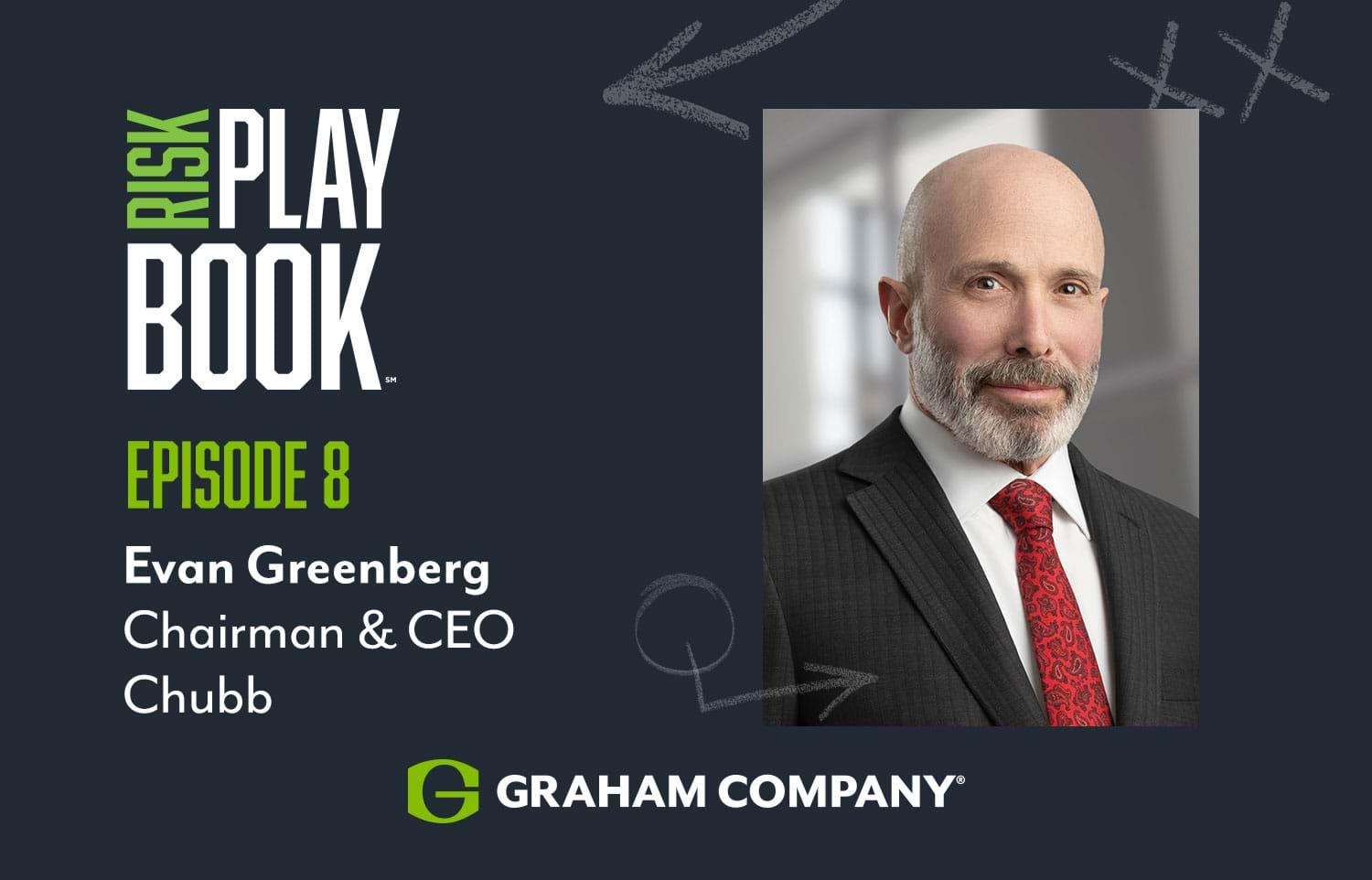
Share:


RECENT POSTS


Stay Cyber Safe this Season: Avoid These Common Holiday Shopping Scams

Stay Cyber Safe this Season: Avoid These Common Holiday Shopping Scams

Dec 01, 2025


The WA Cares Act and the Future of Long-Term Care Insurance

The WA Cares Act and the Future of Long-Term Care Insurance

Nov 14, 2025


No Matter Your Age, Consider Long-Term Care Coverage

No Matter Your Age, Consider Long-Term Care Coverage

Nov 04, 2025


AI is Everywhere: Understand the Risks

AI is Everywhere: Understand the Risks

Oct 14, 2025

RELATED POSTS

Introducing Risk Playbook, A Graham Company Podcast

April 27, 2021

Introducing Risk Playbook, A Graham Company Podcast

Risk Playbook gives you an inside look at the evolving landscape of business risk, as told by the most reputable leaders from a cross-section of industries. No high-level executive has made it to where they are today without taking a few calculated risks. In today’s competitive environment, the best leaders know how to evaluate strategic risks and opportunities to propel their organizations forward while protecting their bottom lines.

Join host Mike Mitchell as he sits down with key business leaders to discuss the lessons they’ve learned throughout their careers and the entrepreneurial mindset that will help you come out on top. 

Graham Company is an insurance broker and risk management consultant. Information and recommendations shared in this podcast discussion should be evaluated by your organization’s attorneys and internal team before inclusion in any company policy or risk management plan.

Subscribe on: Spotify, Amazon, Google Podcasts, Apple

Share:


RECENT POSTS


The WA Cares Act and the Future of Long-Term Care Insurance

The WA Cares Act and the Future of Long-Term Care Insurance

Nov 14, 2025


No Matter Your Age, Consider Long-Term Care Coverage

No Matter Your Age, Consider Long-Term Care Coverage

Nov 04, 2025


AI is Everywhere: Understand the Risks

AI is Everywhere: Understand the Risks

Oct 14, 2025


National Safety Month: Why Roadway Safety Is Everyone’s Business

National Safety Month: Why Roadway Safety Is Everyone’s Business

Jun 02, 2025

RELATED POSTS

Home
Contact
Events
Company News
News
Branding
Privacy Policy
Terms of Use
Manage Cookies
Graham Company

Follow us

Graham Company
Home
Contact
Events
News
Branding
Privacy Policy
Terms of Use

Follow us

Thank you for your submission.

Sorry! something went wrong. Please try again.

© Copyright . The Graham Company. All Rights Reserved. Site by Brand X Republic